
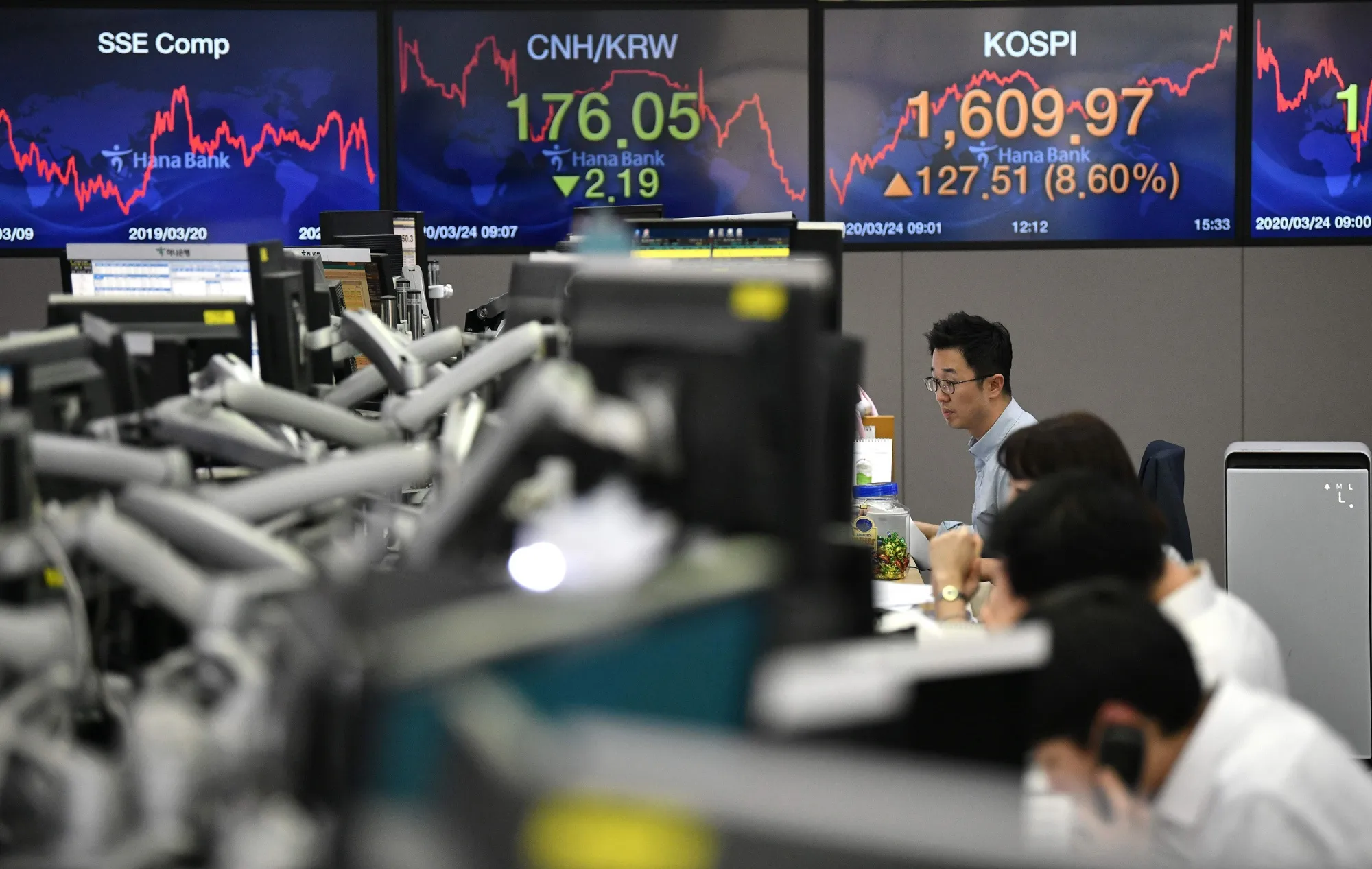
Korean investors moved heavily into U.S. markets during July as domestic shares experienced sharp selling pressure.
South Korean retail traders purchased about $4.5 billion worth of U.S. stocks during the month, according to official data. Meanwhile, domestic equities faced heavy selling after a strong rally had attracted significant retail interest. Consequently, many traders appeared to seek opportunities outside their home market.
However, the shift does not necessarily mean investors abandoned their previous market strategies. Instead, many continued targeting artificial intelligence, semiconductor, and leveraged products through U.S.-listed securities. Therefore, their geographic allocation changed while their broader investment themes remained largely intact.
Korean investors also showed unusual interest in U.S.-listed depositary receipts connected to companies based in South Korea. Around $840 million of July’s purchases went toward one major Korean semiconductor company’s American depositary receipts. That company ranked among the most heavily purchased U.S. securities by Korean retail traders.
The American-listed shares traded at a noticeable premium compared with equivalent shares available in South Korea. Such differences can create unusual conditions because investors can access essentially similar company exposure through different markets.
Market observers have described these pricing differences as potential signs of speculative enthusiasm. Furthermore, greater volatility in American-listed versions can increase risks for investors seeking alternative trading opportunities.
Leveraged exchange-traded products also attracted considerable attention from South Korean retail traders during July. Four of the ten most purchased U.S. securities involved leveraged products, according to available market data.
One semiconductor-focused leveraged fund ranked as the most popular U.S. security among these purchases. The product seeks to provide three times the daily performance of a semiconductor index. However, that structure can magnify both gains and losses when market conditions change quickly.
Other popular products tracked major technology indexes while using leverage to increase daily market exposure. Consequently, traders could face substantially larger movements than those experienced through conventional investment funds.
The investment shift became especially notable because South Korea’s domestic market had recently experienced significant turbulence. Retail traders had previously concentrated on semiconductor companies and leveraged products during the earlier market rally.
When domestic shares declined, some investors reduced positions in Korean markets while increasing purchases of American securities. Nevertheless, the underlying preference for artificial intelligence and semiconductor exposure appeared largely unchanged.
That pattern suggests some traders may have viewed U.S. markets as deeper and more liquid alternatives. Moreover, American technology companies offered investors continued access to artificial intelligence themes during domestic market weakness.
Korean investors increased their U.S. stock purchases substantially compared with June. July’s total also approached the roughly $5 billion recorded during January.
At the same time, margin borrowing in South Korea dropped sharply after reaching elevated levels earlier. The decline suggested that some retail traders were reducing risk within their domestic portfolios.
Still, the movement into U.S. equities does not appear large enough to significantly influence the broader American market. The U.S. market remains substantially larger and receives major participation from institutional investors.
Therefore, Korean retail buying represents only a small portion of total U.S. market activity. However, concentrated purchases could still affect individual stocks, leveraged funds, and thinner areas of trading.
Korean investors have previously demonstrated strong interest in specialized U.S. technology themes during periods of market excitement. Those episodes show how concentrated retail activity can create larger price movements within specific securities.
Furthermore, the growing availability of leveraged products across international markets may increase volatility. These instruments can magnify daily market movements and potentially accelerate trading activity during periods of uncertainty.
Overall, South Korean retail traders appear to be changing their market destination rather than abandoning their preferred investment themes. Their recent activity highlights continued enthusiasm for artificial intelligence, semiconductors, and high-growth technology assets.
The trend also demonstrates how quickly retail investors can redirect capital when domestic market conditions deteriorate. As a result, individual U.S. securities could experience greater volatility even without broader market disruption.
Korean investors therefore remain an important group to monitor within specific U.S. technology and leveraged products. Their activity may not reshape the entire American market, but concentrated flows could influence selected securities.

