
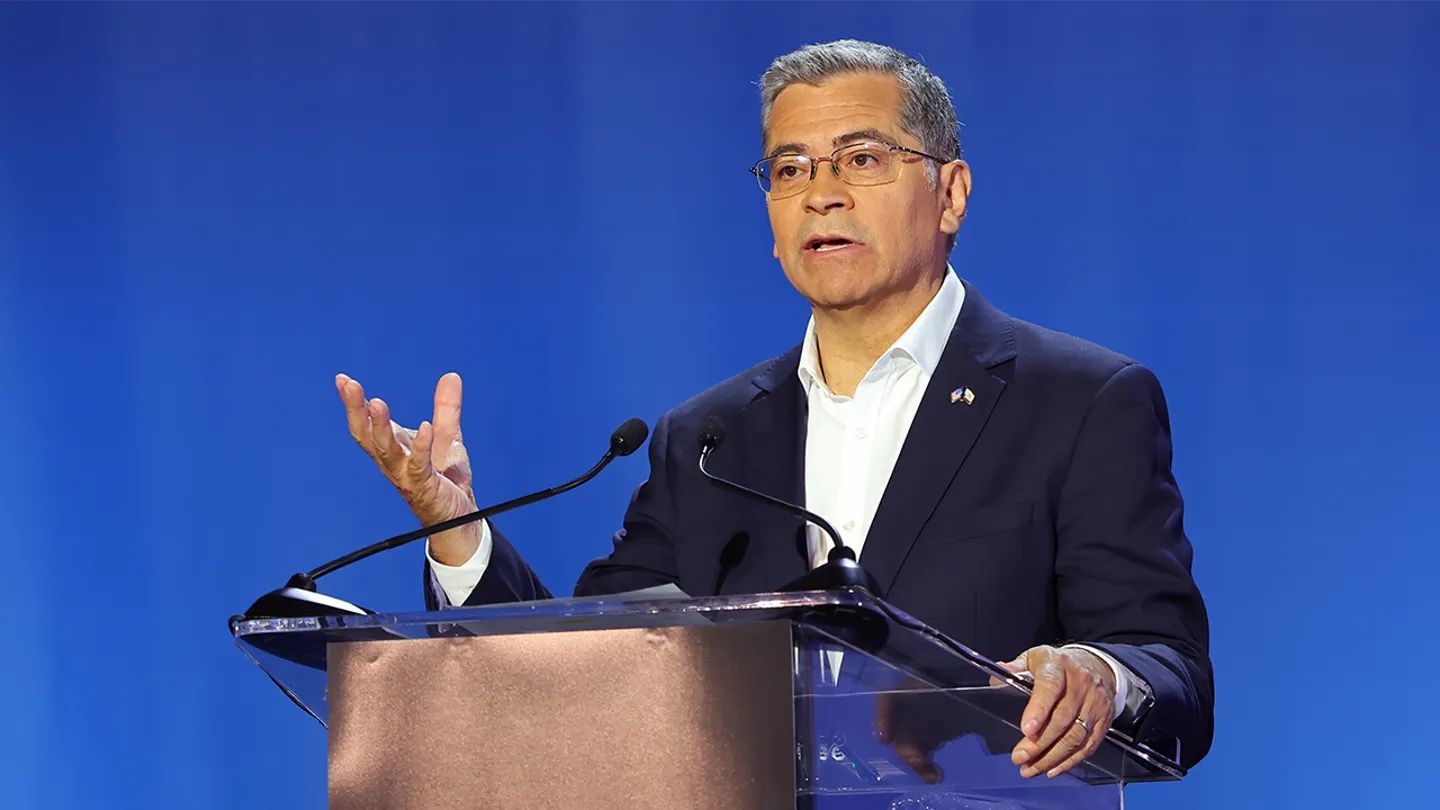
Governor race results placed Republican Steve Hilton and Democrat Xavier Becerra at the front of California’s closely watched contest. With ballots still undergoing review, both candidates appeared positioned to advance toward November’s general election.
California voters headed to the polls to help determine who could succeed Gov. Gavin Newsom. Because term limits prevent Newsom from seeking another term, the race attracted an unusually large field.
Early returns showed Hilton and Becerra leading a crowded group of candidates seeking statewide office. Consequently, political observers shifted attention toward a potential head-to-head matchup later this year.
Hilton, a conservative commentator and former political strategist, received support from President Donald Trump. Meanwhile, Becerra entered the race with experience as California’s attorney general and a former cabinet secretary.
Speaking to supporters after initial results emerged, Hilton emphasized economic concerns affecting California residents. Additionally, he argued that voters increasingly seek solutions to rising living costs across the state.
Hilton credited his campaign’s message for helping attract support during the competitive primary contest. Furthermore, he pledged to focus on affordability issues if voters elect him governor.
Becerra also celebrated the early results and thanked supporters for helping advance his campaign. He described the outcome as a reflection of California’s ability to create opportunities for diverse communities.
The governor’s race operates under California’s unique primary system, which places all candidates on one ballot. Therefore, the two candidates receiving the highest vote totals advance regardless of party affiliation.
Businessman and environmental advocate Tom Steyer remained in third place as vote counting continued. However, additional mail-in ballots and provisional votes still awaited processing across multiple counties.
Several other notable candidates participated in the contest, creating one of the largest fields. Consequently, voters considered a broad range of political backgrounds, priorities, and governing approaches.
Among the candidates were local elected officials, former lawmakers, and current public administrators. As a result, competition remained intense throughout the lengthy campaign season.
Political analysts noted that California had not experienced such an open gubernatorial contest in decades. Earlier speculation centered on several high-profile Democrats who ultimately declined to enter the race.
The campaign also unfolded against a backdrop of major statewide and national issues. Meanwhile, public debates frequently focused on economic concerns, immigration policies, public safety, and recovery efforts.
Another major development reshaped the race when a prominent Democratic contender withdrew earlier. Consequently, several remaining candidates gained opportunities to increase support among undecided voters.
Steyer invested substantial personal resources into his campaign while outside groups spent heavily as well. Therefore, voters encountered extensive advertising efforts across television, digital platforms, and other media.
The governor’s race also highlighted shifting political dynamics within California’s evolving electoral landscape. Additionally, candidates worked to build coalitions capable of attracting support beyond traditional party bases.
As vote counting continues, officials have not yet certified the final results. Nevertheless, the governor’s race appears increasingly likely to feature Hilton and Becerra competing for California’s highest office in November.