
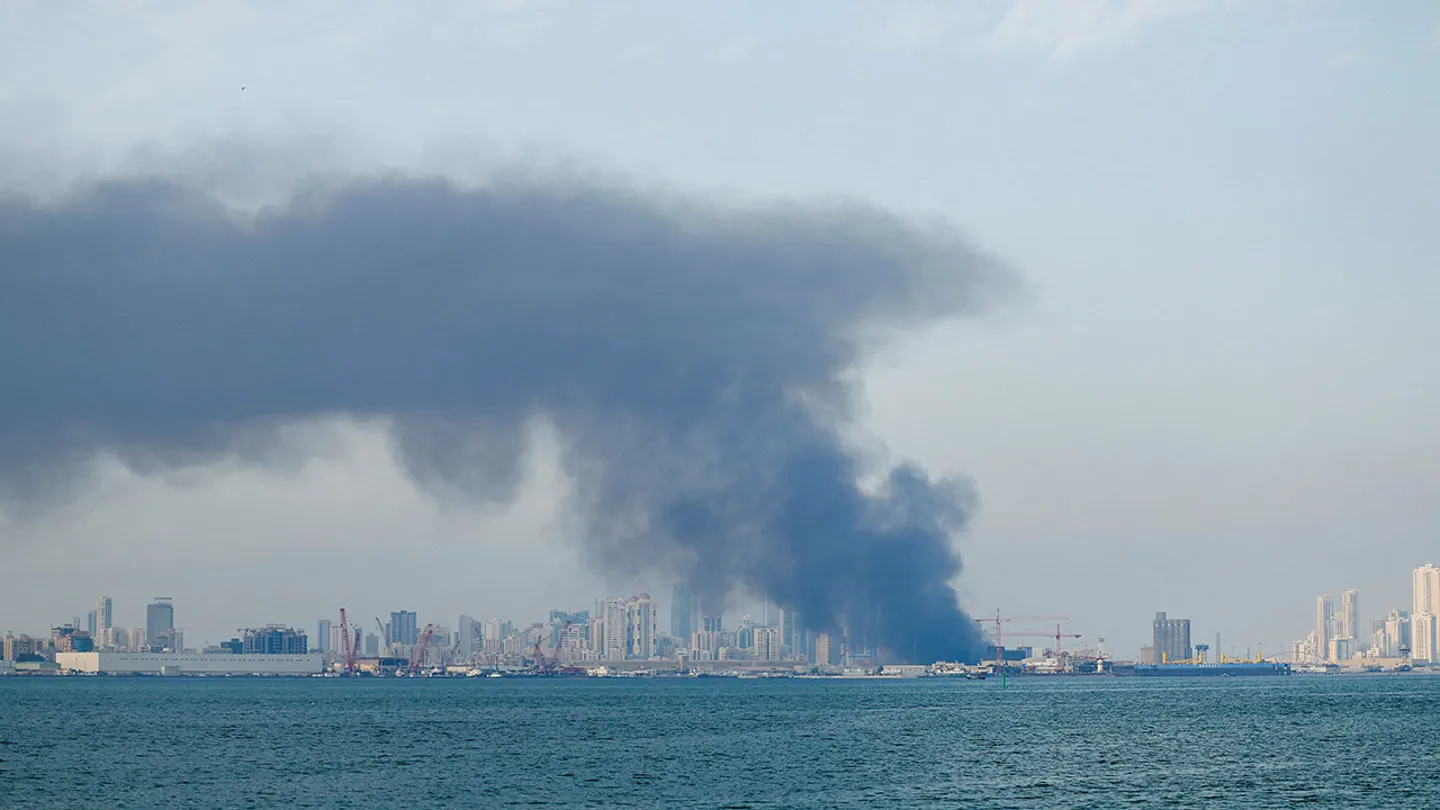
Gulf Condemnation intensified after several Gulf nations strongly criticized Iran following a drone attack on Bahrain, raising fresh concerns about regional security and the future of a recently signed ceasefire framework.
The attack occurred after several days of escalating military activity across the region. On Friday, Iran struck a cargo ship traveling through the Strait of Hormuz. In response, the United States carried out overnight airstrikes against Iranian missile, drone, and radar sites. Iran then launched drone strikes targeting Bahrain on Saturday. Bahrain hosts the U.S. Navy’s Fifth Fleet, making the incident particularly significant for regional security.
The latest developments have created new uncertainty surrounding the memorandum of understanding signed last week by President Donald Trump and Iranian President Masoud Pezeshkian. The agreement was designed to reduce hostilities and encourage diplomatic progress after months of heightened tensions.
The Gulf Cooperation Council responded quickly to the attack. Secretary-General Jasem Mohamed AlBudaiwi described Iran’s actions as treacherous and warned that the strikes could undermine ongoing efforts to restore peace across the Middle East. The organization represents Bahrain, Kuwait, Oman, Qatar, Saudi Arabia, and the United Arab Emirates.
Bahrain confirmed that several Iranian drones entered its territory during the attack. Government officials described the incident as a flagrant threat to national security. Authorities have not identified the exact locations targeted during the operation.
Bahrain’s Foreign Ministry also stated that the attack occurred while regional and international efforts focused on reducing tensions. Officials said the incident placed responsibility on Tehran for disrupting diplomatic initiatives and weakening regional stability.
The Gulf Condemnation expanded as additional member states released official statements supporting Bahrain. Kuwait described the drone strikes as a dangerous threat to regional peace and stability. Officials also reaffirmed their commitment to Bahrain’s security and national sovereignty.
The United Arab Emirates issued a similar statement supporting Bahrain and condemning the attack. Saudi Arabia and Qatar also criticized the operation, saying the strikes violated Bahrain’s sovereignty and international law.
Oman did not immediately issue a public statement regarding the incident. Throughout the broader conflict, Oman has maintained a neutral position and frequently served as a mediator between Washington and Tehran. The country also continues discussions with Iran regarding a joint framework for future administration of navigation through the Strait of Hormuz.
Iran’s Revolutionary Guard later claimed responsibility for the drone strikes during a televised announcement. The organization said it targeted several locations connected to what it described as the U.S. military presence in the region. Officials did not specify which sites were struck.
Authorities have not reported any casualties or significant property damage resulting from the drone attack. The incident occurred only days after U.S. Secretary of State Marco Rubio met with Gulf allies in Bahrain to discuss regional security and diplomatic cooperation.
The Gulf Condemnation highlights growing concerns among regional governments as leaders seek to preserve diplomatic progress while responding to new security challenges. The latest developments also underscore the fragile nature of current ceasefire efforts as military actions continue to test regional stability.

