
Military drills between the United States and South Korea face major changes after President Donald Trump ordered reductions. The directive arrived just before the annual Ulchi Freedom Shield exercise begins across the Korean Peninsula. Trump argued that the exercises cost American taxpayers substantially while sending an unnecessarily hostile signal toward North Korea. Meanwhile, Pyongyang has continued testing ballistic missiles, creating fresh concerns about regional security and military readiness.
The Pentagon received Trump’s directive Sunday, only one day before the scheduled exercises were due to begin. The annual training program normally brings American and South Korean forces together for large-scale defensive preparations. This year’s exercise was expected to involve approximately 18,000 South Korean personnel alongside American forces.
About 28,500 U.S. service members remain stationed in South Korea under the longstanding security alliance. Therefore, the exercises play an important role in maintaining coordination between both countries’ armed forces. However, Trump’s latest decision signals renewed questions about how Washington wants to conduct future exercises.
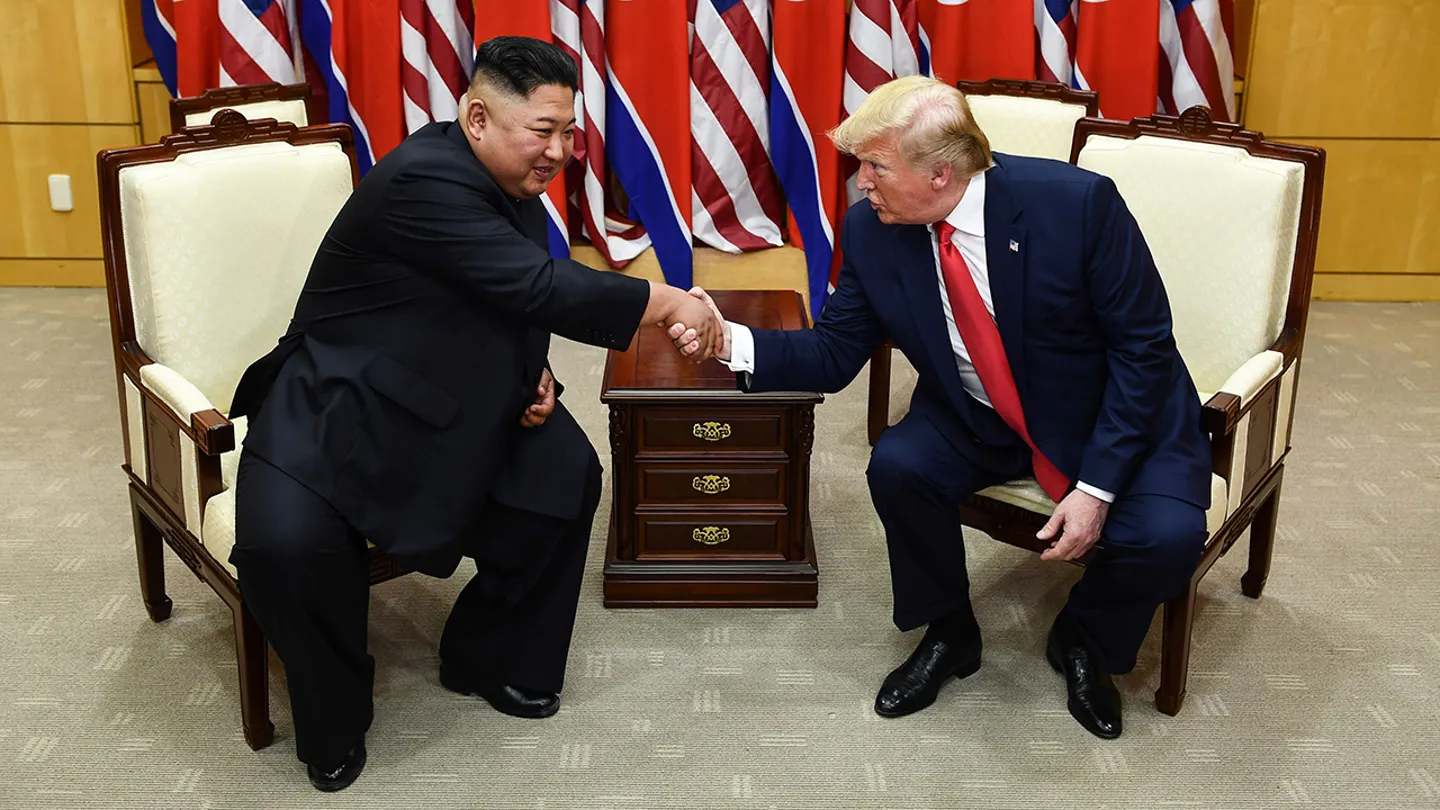
Trump has argued that previous exercises cost the United States too much money. Additionally, he said the training sends an inappropriate message toward North Korean leader Kim Jong Un. The president also pointed to his relationship with Kim while explaining his objections to the longstanding military arrangement.
Furthermore, Trump connected his decision to a separate disagreement involving South Korea and Iran. He said South Korean President Lee Jae Myung declined an American request involving efforts against Iran’s nuclear capabilities. Consequently, Trump’s comments linked the alliance discussion with broader disagreements surrounding Washington’s current foreign policy priorities.
North Korea, meanwhile, continues expanding its missile testing activity despite repeated international warnings. Pyongyang conducted two ballistic missile launches within six days earlier this month. U.S. Indo-Pacific Command subsequently said officials were consulting closely with regional allies following those launches.
American officials assessed that the latest missile launch did not immediately threaten American personnel, territory, or allied countries. Nevertheless, Washington reiterated its commitment to protecting its interests throughout the Indo-Pacific region. The continuing tests have therefore kept North Korea’s military capabilities firmly within regional security discussions.
North Korean authorities have consistently criticized joint exercises between Washington and Seoul. Pyongyang routinely describes those maneuvers as preparations for potential military action against North Korea. However, Washington and Seoul maintain that the exercises primarily strengthen defensive readiness and operational coordination.
The latest reduction therefore comes at a particularly sensitive moment for the Korean Peninsula. North Korea has continued developing weapons while strengthening military cooperation with Russia. Ukrainian President Volodymyr Zelenskyy has also warned that Russia provides North Korea opportunities to improve weapons through battlefield experience.
According to Zelenskyy, North Korean missiles and military equipment continue developing through cooperation with Russian forces. He warned that those improvements could eventually create additional risks for South Korea, Japan, and other regional allies. Therefore, developments involving North Korean weapons remain important beyond the immediate Korean Peninsula.
Trump has previously taken similar positions regarding American military exercises with South Korea. During his first presidential term, he criticized the exercises following his initial meeting with Kim. At that time, Trump described the maneuvers as expensive and unnecessarily provocative.
The latest decision consequently revives questions about the future structure of American military cooperation. South Korea continues relying heavily on its alliance with Washington for national defense. Meanwhile, North Korea continues expanding its missile capabilities despite diplomatic efforts and international pressure.
For now, military drills will continue under a reduced approach following Trump’s directive to the Pentagon. However, the decision could influence future discussions about American commitments across the Korean Peninsula. At the same time, Pyongyang’s latest missile activity ensures regional security concerns remain unresolved.

