
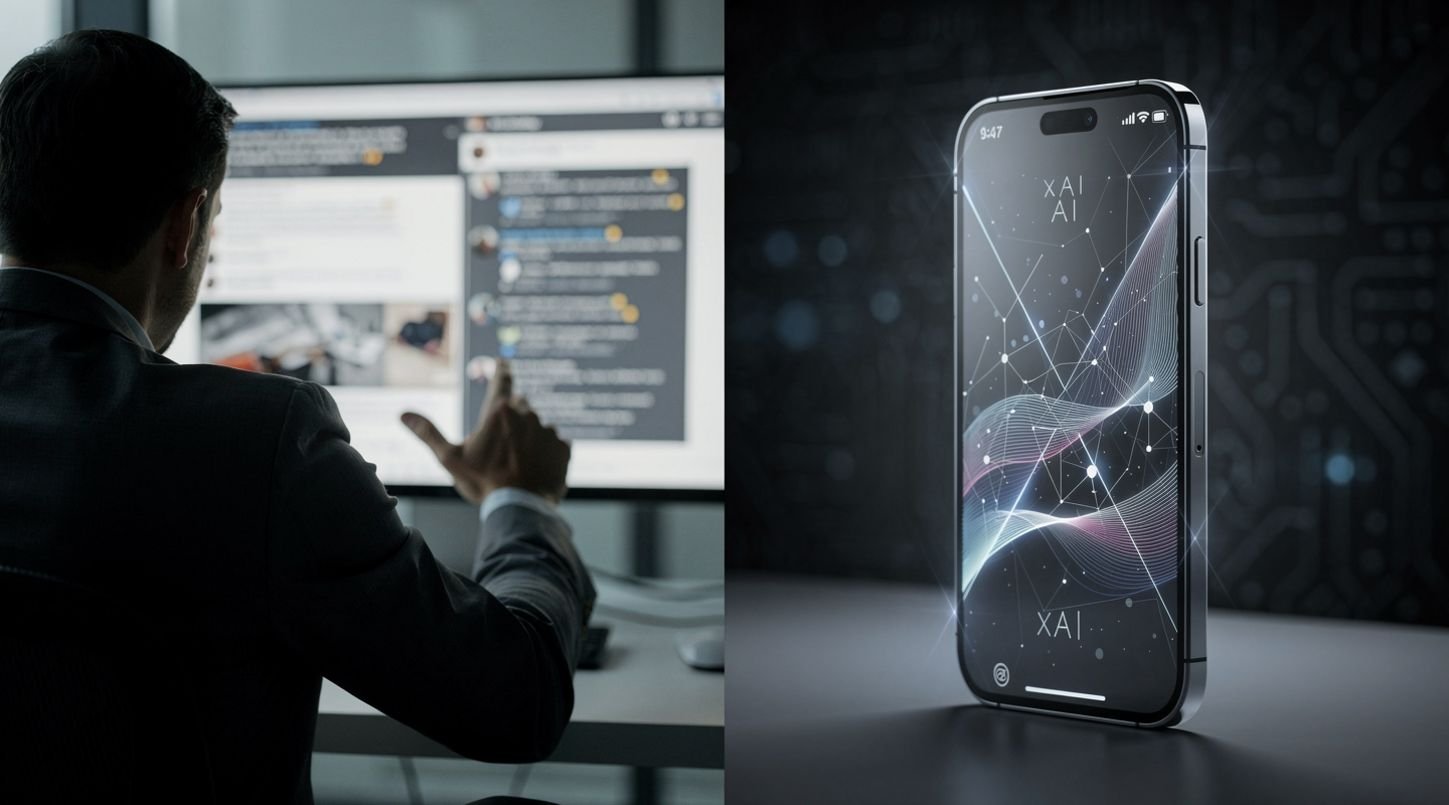
SpaceX AI Device has become the center of fresh industry discussion after reports suggested the company developed an early handset-like prototype. Although the project reportedly remains in its early stages, the concept has already attracted attention because it could expand SpaceX beyond rockets, satellites, and internet services.
According to recent reports, SpaceX introduced an early prototype of an artificial intelligence device during presentations for investors before its public market debut. The reported design appeared slimmer than many existing smartphones while maintaining a compact touchscreen form. However, executives reportedly described the project as an early concept, meaning engineers could still change its appearance and technical specifications before any commercial launch.
Elon Musk quickly rejected the reports and publicly denied that the information accurately described the company’s development efforts. Nevertheless, discussion surrounding the rumored device continued because SpaceX already possesses significant manufacturing expertise through its broader technology operations. Furthermore, the company has extensive experience producing advanced hardware for aerospace and communications products.
Industry observers noted that SpaceX also benefits from close cooperation with Tesla and xAI. Together, those businesses possess experience in hardware production, artificial intelligence software, and advanced computing technologies. Consequently, analysts believe the companies could combine their resources if they eventually decide to develop consumer electronics.
The reported prototype also aligns with SpaceX’s growing interest in wireless communications. Through its Starlink Mobile service, the company continues expanding connectivity beyond traditional satellite internet offerings. Therefore, some market analysts believe SpaceX may eventually compete more directly with established telecommunications providers through additional consumer products.
Several industry experts have even suggested that major telecommunications companies could become strategic acquisition targets if SpaceX seeks faster expansion. However, such purchases would require enormous financial resources and careful regulatory approval. Consequently, any acquisition would likely remain a long-term possibility instead of an immediate business objective.
Even so, uncertainty continues surrounding the reported device because SpaceX has not officially announced plans for mass production. Therefore, observers cannot determine whether the company intends to commercialize the product or simply explore future technology concepts. Early prototypes often change significantly before reaching commercial markets, and many experimental projects never become retail products.
Artificial intelligence remains a major focus across the technology industry. As a result, several companies continue exploring dedicated AI hardware instead of relying entirely on traditional smartphones. Developers hope specialized devices can deliver more natural interactions through software designed specifically for artificial intelligence rather than conventional mobile applications.
Reports also suggested the rumored product would operate using proprietary software instead of relying on existing mobile operating systems. Such an approach could allow tighter integration with AI technologies while reducing dependence on competing software platforms. Additionally, developers could optimize hardware and software together to improve overall performance.
The project reportedly incorporates technology from xAI, the artificial intelligence company associated with Elon Musk. Integrating advanced AI capabilities directly into the operating system could create faster responses while supporting more intelligent user interactions. However, company officials have not confirmed those reported technical details.
Competition within AI hardware continues growing as more technology companies explore entirely new product categories. Businesses increasingly search for alternatives to traditional smartphones by developing devices centered on conversational artificial intelligence and personalized digital assistance. Consequently, competition may intensify if multiple companies introduce similar products during the coming years.
However, previous attempts to launch dedicated AI devices produced mixed commercial results. Several products attracted early attention but struggled to achieve widespread consumer adoption after their releases. Those experiences demonstrate that technological innovation alone cannot guarantee long-term market success.
Consumers ultimately determine whether entirely new device categories gain lasting popularity. Companies must deliver practical everyday benefits while maintaining competitive pricing, reliable performance, and strong software support. Without those advantages, even advanced technology may struggle to attract mainstream buyers.
For now, SpaceX AI Device remains an unconfirmed concept surrounded by industry speculation. Musk’s public denial leaves many questions unanswered about the reported prototype and its future development. Nevertheless, interest continues because any successful entry into AI hardware could expand SpaceX beyond its traditional aerospace business. As artificial intelligence evolves rapidly, many observers will closely watch whether the company eventually introduces an official consumer device under the SpaceX AI Device strategy.