
A progressive surge is reshaping Democratic primary contests across the Midwest, creating new concerns about general election competitiveness. Wisconsin and Minnesota now represent important tests for Democrats navigating disagreements between progressive activists and moderate party leaders. Meanwhile, Republican candidates see opportunities to capitalize on divisions within the opposition ahead of November’s midterm elections.
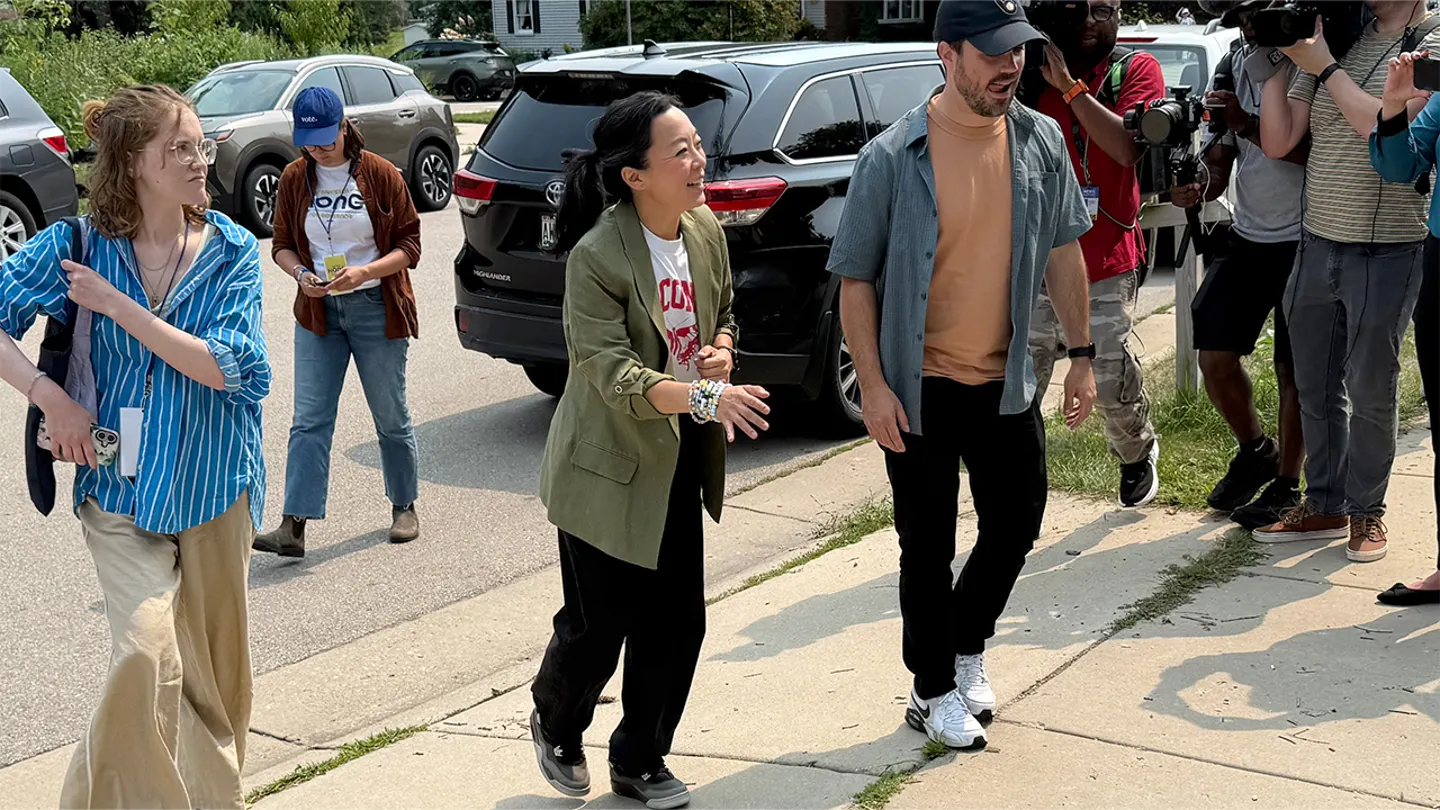
Wisconsin’s gubernatorial primary has attracted particular attention because state Rep. Francesca Hong has emerged among the leading Democratic contenders. Hong, a Democratic Socialists of America member, entered the final stage of the primary with support from several prominent progressive figures. However, her candidacy has also generated concerns among Democrats who worry about competing effectively in the general election.
Hong supports several progressive policies, including expanded paid leave and a substantial increase in Wisconsin’s minimum wage. She has also proposed temporarily halting new artificial intelligence data center construction while officials evaluate its broader effects. Furthermore, her campaign has faced renewed scrutiny over older social media posts concerning policing and national holidays.
Hong has rejected claims that she wants to eliminate police departments or reduce funding for public safety. Instead, she argues that her views have developed over time and emphasizes her commitment to community safety. She also acknowledged criticism surrounding earlier comments about Thanksgiving, saying her perspective has changed since making those remarks.
Republican Rep. Tom Tiffany currently leads the Republican gubernatorial field and has positioned himself as a strong opponent of socialism. Tiffany has received Trump’s endorsement and argues that Wisconsin could become a crucial barrier against increasingly progressive Democratic policies. Therefore, Republicans are closely watching the Democratic primary as they prepare for the general election.
Several prominent Democrats have expressed concerns that Hong could struggle against Tiffany if she wins the nomination. Party strategists worry that a more progressive nominee could affect Democratic candidates farther down the ballot. Consequently, Republican-aligned political groups have spent significant sums attempting to boost Hong during the Democratic contest.
The unusual spending strategy reflects a broader Republican calculation that progressive candidates could offer stronger opportunities in competitive general elections. However, Hong argues that voters should determine which candidate can win rather than allowing political strategists to make that judgment. She continues to campaign across Wisconsin while focusing on turnout and voter engagement.
Meanwhile, Minnesota presents another ideological contest within the Democratic Party. Lt. Gov. Peggy Flanagan and Rep. Angie Craig have emerged as leading contenders for the Democratic Senate nomination. The winner will compete for a seat currently held by retiring Democratic Sen. Tina Smith.
Minnesota has not elected a Republican senator since 2002, giving Democrats a substantial historical advantage. Nevertheless, Republicans believe a progressive nominee could create an opening in an increasingly competitive political environment. Flanagan has support from progressive leaders, including Sen. Bernie Sanders and Sen. Elizabeth Warren.
Republicans have their own competitive Senate primary, with conservative commentator Michele Tafoya among the leading candidates. Other contenders include former Navy SEAL Adam Schwarze, former Senate candidate Royce White, and retired Navy officer Tom Weiler. The eventual Republican nominee will attempt to overcome Minnesota’s long-standing Democratic advantage.
The Midwest contests follow a closely watched Democratic primary in Michigan, where progressive candidate Abdul El-Sayed narrowly defeated more moderate Rep. Haley Stevens. That result intensified discussion about the Democratic Party’s ideological direction heading into the November elections. As a result, Wisconsin and Minnesota have become additional tests of whether progressive candidates can translate primary victories into general election success.
Beyond the Midwest, voters in several other states are also participating in consequential primary contests. South Carolina Republicans are choosing a Senate nominee following the death of longtime Sen. Lindsey Graham. Trump has endorsed Graham’s sister, Sen. Darline Graham, who currently holds the seat on an interim basis.
The South Carolina contest also provides another opportunity to measure Trump’s influence within the Republican Party. His endorsement has not guaranteed victories during every primary this election cycle. Therefore, Tuesday’s contest could offer another indication of how effectively the president can shape Republican nominations.
Connecticut and Vermont are also holding notable statewide contests. Democratic Gov. Ned Lamont faces a primary challenge from state Rep. Josh Elliott in Connecticut. Meanwhile, Vermont Republican Gov. Phil Scott remains unopposed while seeking another term in office.
Alabama voters will additionally participate in special congressional primaries across several districts. Those contests follow a Supreme Court decision allowing the state to use a congressional map created by Republican lawmakers. Consequently, the Alabama elections could influence representation and national discussions surrounding congressional redistricting.
Overall, the progressive surge has placed Democratic primary battles under an increasingly intense national spotlight. While progressive candidates are gaining momentum among portions of the Democratic electorate, moderate leaders remain focused on November’s general election risks. Ultimately, Tuesday’s results could provide another indication of how voters want Democrats to position themselves for the 2026 midterm elections.

