
Iran Ceasefire Ends after President Donald Trump declared the temporary agreement with Tehran finished following renewed attacks on commercial shipping. Meanwhile, the United States launched a large-scale military response while tensions continued escalating across the Middle East and the strategically important Strait of Hormuz.
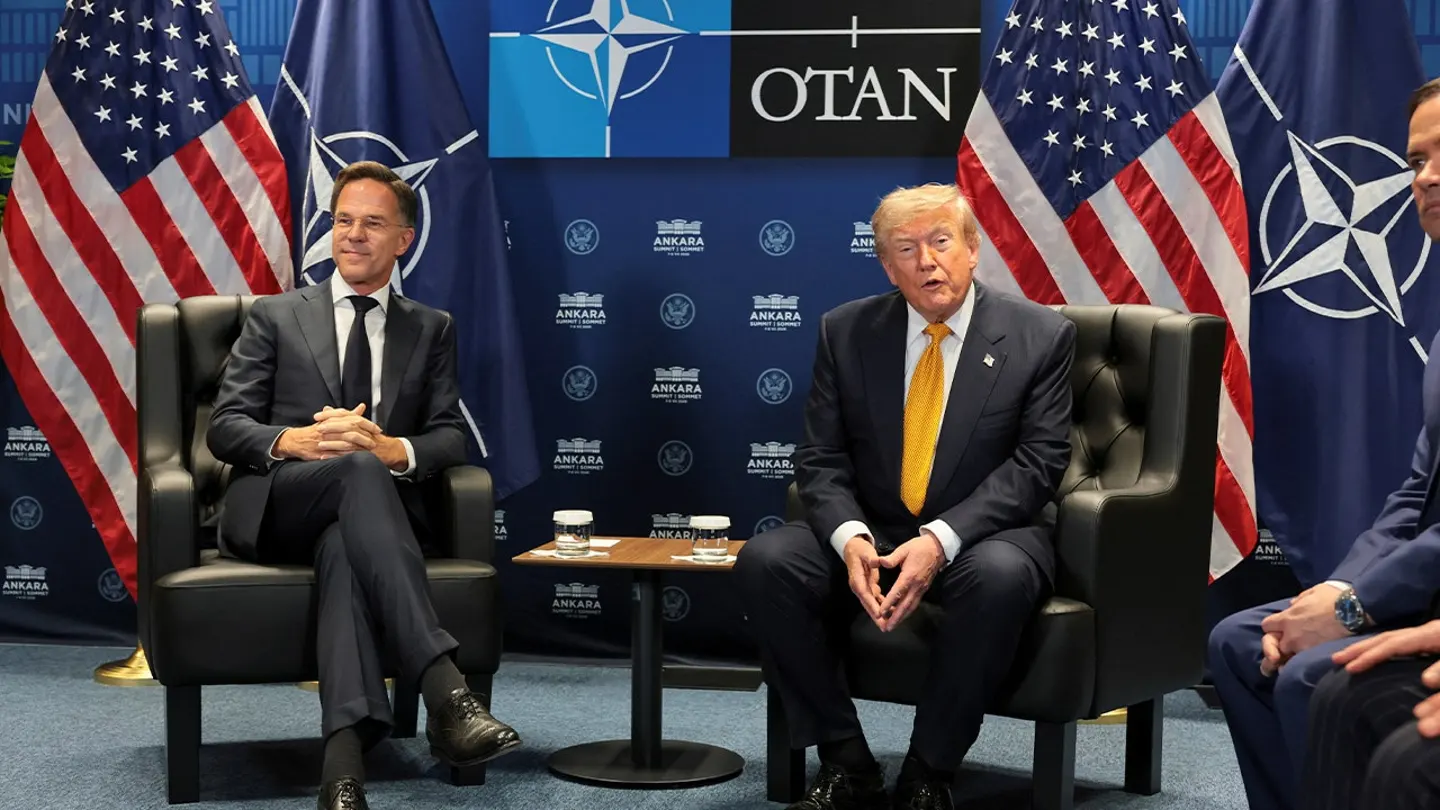
Trump made the announcement while meeting NATO Secretary-General Mark Rutte during the NATO Summit in Ankara, Turkey. Speaking to reporters, he said he no longer believed the ceasefire remained in effect. Furthermore, he questioned the value of continuing negotiations with Iran and criticized the country’s leadership in strong terms.
The latest developments followed several weeks of diplomatic efforts between Washington and Tehran. Previously, both sides had signed a memorandum of understanding that allowed commercial traffic to resume through the Strait of Hormuz. In addition, the agreement established a 60-day period for negotiations aimed at reaching a longer-term peace arrangement.
However, officials said Iran launched attacks against at least three commercial vessels traveling through the Strait of Hormuz on Monday and Tuesday. Consequently, the United States responded with military strikes targeting more than 80 locations inside Iran. The operation marked one of the largest recent military actions connected to the growing regional tensions.
Additionally, the Kuwaiti military announced that its air defenses intercepted two Iranian ballistic missiles and 13 drones on Wednesday. Those interceptions added to mounting security concerns across the Gulf as regional governments closely monitored the rapidly changing situation.
Trump said the United States carried out powerful strikes against what he described as dangerous Iranian targets. He also stated that American officials had temporarily paused negotiations to allow Iran time to hold funeral ceremonies for Supreme Leader Ali Khamenei. However, he argued that Iran instead launched attacks against commercial shipping during that period.
Moreover, Trump repeated his administration’s commitment to preventing Iran from developing nuclear weapons. He said the United States would continue pursuing its goal of denuclearizing Iran despite the collapse of recent diplomatic efforts.
Meanwhile, the administration also reversed oil sanctions waivers that had formed an important part of the earlier memorandum of understanding. Officials had previously offered those waivers as part of broader negotiations designed to reduce tensions and encourage continued diplomatic engagement.
Maritime authorities in the United Kingdom confirmed that a vessel near the coast of Oman suffered damage after a projectile struck it on Monday. Reports indicated the attack caused a fire aboard the vessel, although officials reported no immediate fatalities. Iranian state media claimed the ship ignored warnings issued by Iranian forces before the incident.
Separately, a U.S. official confirmed that the Saudi-flagged crude tanker Wedyan also sustained damage near the Strait of Hormuz. Then, on Tuesday, maritime authorities reported another tanker traveling through the strategic waterway had been struck by an unidentified projectile.
Iran has continued arguing that it should play a leading role in managing vessel traffic through the Strait of Hormuz. Iranian officials have also supported collecting fees from commercial ships using the critical maritime corridor. However, the Trump administration rejected that position and maintained that international navigation through the strait should remain open without such restrictions.
As regional tensions continue rising, Iran Ceasefire Ends with diplomatic talks now facing significant uncertainty. Although officials have not ruled out future discussions, Iran Ceasefire Ends after military action replaced negotiations as the immediate focus of both governments.

