
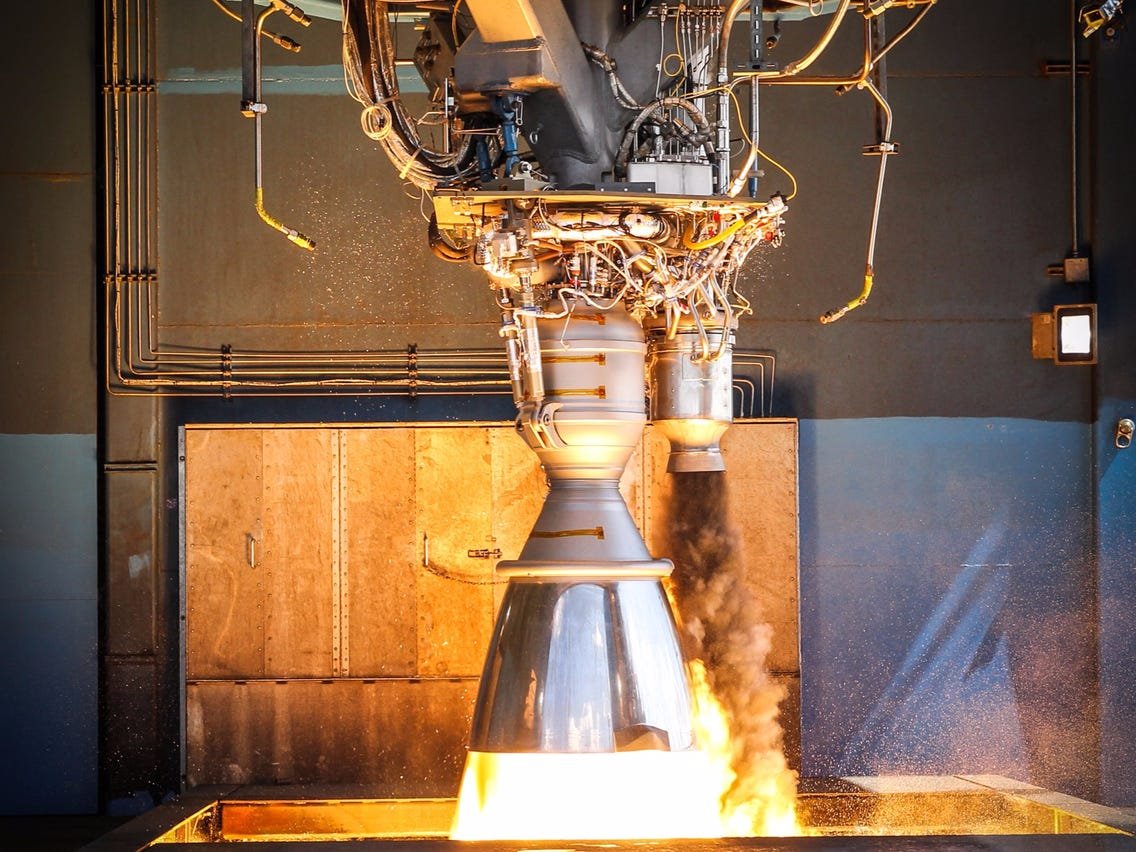
The engine test milestone marks a major achievement as Astrobotic completes a 300-second rocket engine burn during recent trials. This development signals important progress in advanced propulsion technology for future space missions. Engineers view this result as a key step toward more efficient deep-space travel systems.
An engine test milestone occurred during the testing of Astrobotic’s experimental Chakram rotating detonation rocket engine at NASA’s Marshall Space Flight Center in Alabama. The facility supported multiple test firings that demonstrated sustained engine performance under controlled conditions. Researchers recorded a total runtime exceeding 470 seconds across several tests.
The engine test milestone became more significant when the engine achieved a continuous 300-second burn without instability. The system maintained steady operation throughout the entire duration, which engineers consider a critical improvement. The engine also showed no visible damage after testing, increasing confidence in its durability.
This engine test milestone highlights the importance of rotating detonation technology, which differs from traditional rocket engines. Instead of steady combustion, the system uses continuous detonation waves traveling in a circular pattern. This method can improve thrust efficiency while reducing fuel consumption and engine mass.
The engine test milestone also demonstrated strong performance levels, with each engine producing over 4,000 pounds of thrust during operation. The system reached thermal steady-state conditions, which confirms stable heat management during long-duration firing. Engineers say this stability is essential for future mission reliability.
An engine test milestone provides valuable data for improving engine design and understanding combustion behavior under extreme conditions. Researchers analyzed thermal performance, structural strength, and fuel efficiency during the test campaign. These insights will guide future improvements in propulsion systems for space travel.
This supports the potential use of this technology in lunar landers, orbital transfer vehicles, and reusable spacecraft. Engineers believe the system could improve mission flexibility and reduce operational costs for long-distance space exploration. The design may also support future cislunar infrastructure development.
The engine test milestone places Astrobotic among companies advancing next-generation propulsion systems alongside other aerospace developers. Continued testing and refinement will determine how quickly this technology moves toward real flight applications. Researchers expect further progress as engineering challenges continue to be addressed.

