
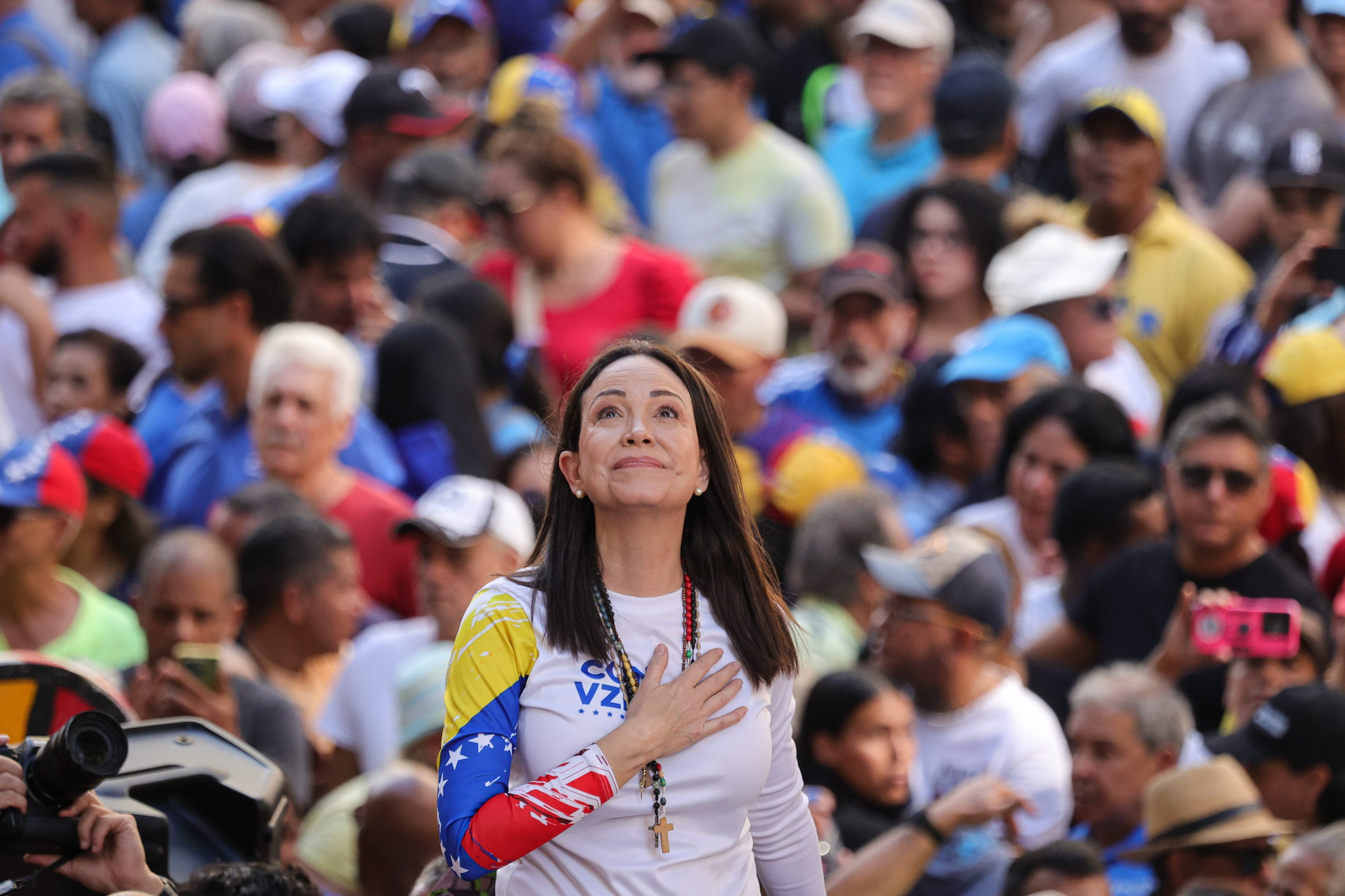
Venezuelan leader María Corina Machado outlined a Venezuelan energy revival during a major energy conference speech. She presented a vision of economic transformation following political changes that reshaped the country’s leadership landscape. Machado argued these developments could position Venezuela as a major partner for the United States energy interests. Additionally, she described the moment as a turning point that could unlock long-constrained economic potential. The Venezuela energy revival formed the centerpiece of her appeal to global energy executives attending.
Moreover, Machado emphasized Venezuela’s vast oil and natural gas reserves as critical assets for future growth. She highlighted that the country holds some of the largest proven oil reserves globally today. Furthermore, she pointed to significant natural gas resources that could strengthen international energy supply chains. She argued that previous policies restricted development and prevented the sector from reaching full capacity. However, she insisted that new leadership priorities would remove those barriers and encourage private investment.
At the same time, Machado credited recent political shifts for enabling reforms aimed at rebuilding institutions. She stated that efforts had already begun to restore transparency and address corruption within key sectors. Additionally, she predicted that these reforms would attract international companies seeking stable investment environments. The Venezuela energy revival, she said, would transform the country into a reliable contributor to global markets. Consequently, she framed Venezuela as an emerging force capable of supporting regional economic stability.
Meanwhile, Machado also discussed plans for future elections, emphasizing the importance of credible democratic processes. She argued that transparent elections would reinforce investor confidence and strengthen long-term governance structures. Furthermore, she expressed optimism that voters would support policies favoring open markets and economic liberalization. She maintained that these shifts would signal a decisive break from past economic models. As a result, she portrayed the country as entering a new phase focused on growth and opportunity.
In addition, industry experts responded with both enthusiasm and caution regarding Venezuela’s prospects moving forward. Some analysts noted that the country must still overcome institutional challenges before attracting large-scale investment. Others acknowledged that resource potential remains significant despite years of economic decline and instability. The Venezuela energy revival continues to generate discussion about risks and opportunities within global energy markets.
Ultimately, Machado’s message underscored ambitions to reposition Venezuela as a central player in energy production. Observers expect further developments as reforms progress and international stakeholders evaluate emerging opportunities.

