
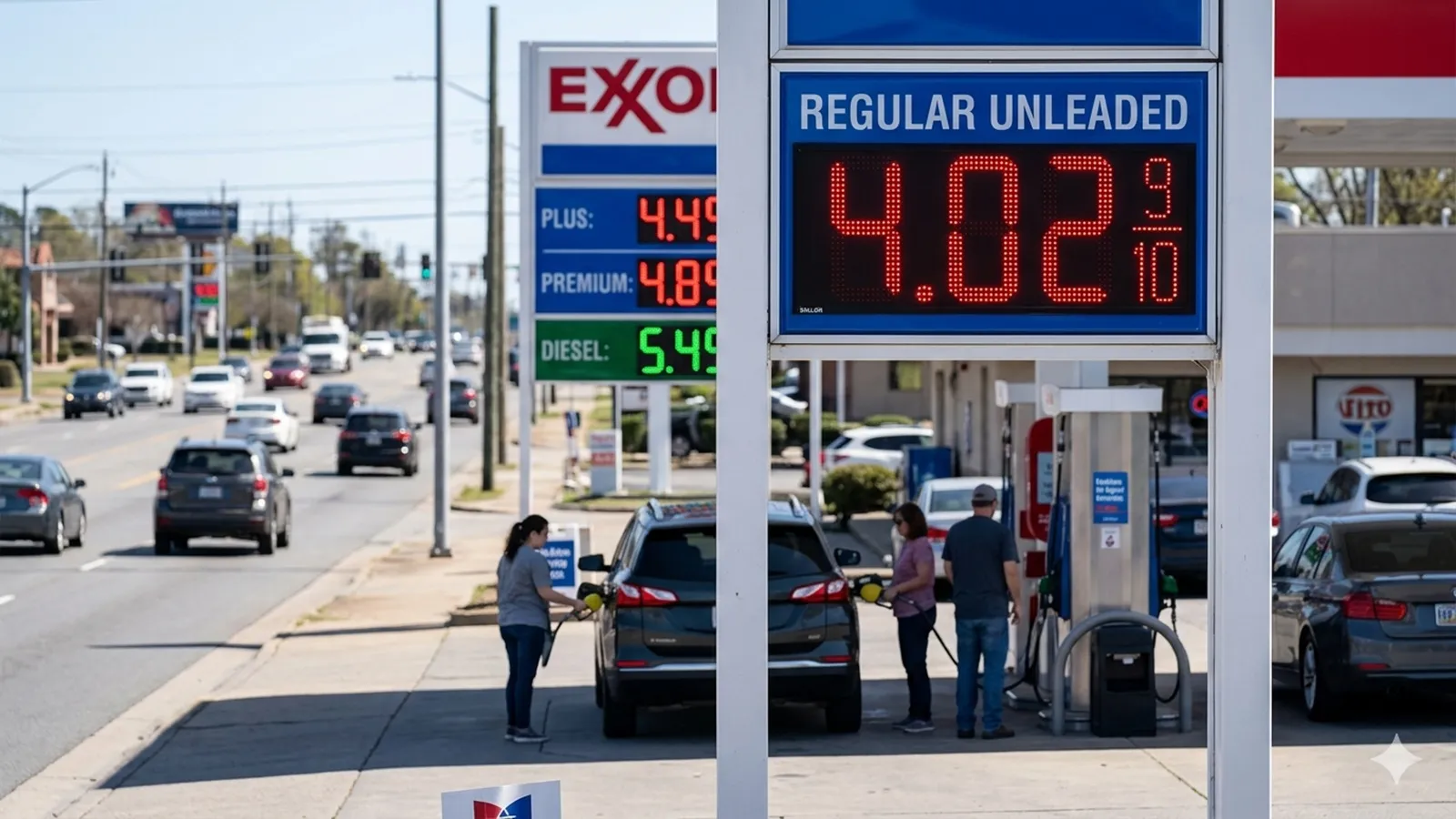
U.S. Gas Prices climbed back to an average of $4 per gallon as renewed conflict between the United States and Iran increased concerns about global energy supplies. The latest increase reflects growing market uncertainty as military tensions continue affecting oil prices.
The national average for regular gasoline reached the $4 mark again, according to automotive industry data. The current price stands significantly above last year’s average, when drivers paid closer to $3.14 per gallon.
However, fuel costs remain different across the country because each state faces unique market conditions. Local supply levels, transportation expenses, and regional taxes all influence the prices consumers see at gas stations.
Meanwhile, drivers in some states have already experienced prices above the national average for several weeks. Other regions continue reporting lower costs because of different fuel markets and supply situations.
U.S. Gas Prices first moved above $4 per gallon earlier this year as oil markets reacted to international tensions. Prices later declined after crude oil values dropped and temporary diplomatic progress reduced concerns about further escalation.
However, recent military developments changed market expectations and pushed energy prices higher again. Investors now worry that a larger conflict could affect important oil supply routes and create additional pressure on global markets.
Crude oil prices increased sharply as traders monitored developments between Washington and Tehran. Brent crude, which serves as an international benchmark, moved higher during Monday trading.
At the same time, U.S. crude prices also increased as investors evaluated possible supply disruptions. Higher oil costs often influence gasoline prices because fuel producers rely heavily on crude oil expenses.
The increase in fuel prices creates additional challenges for households already managing higher living costs. Rising gasoline expenses can affect transportation costs, grocery prices, and other consumer goods.
Furthermore, energy affordability remains an important issue for many Americans. Higher fuel costs could influence public discussions ahead of the upcoming U.S. midterm elections.
Although gasoline prices depend on multiple factors, international conflicts often create immediate market reactions. Traders closely watch political developments because uncertainty can quickly affect oil supply expectations.
U.S. Gas Prices continue showing how global events can impact everyday expenses for American consumers. Changes in crude oil markets, supply conditions, and geopolitical risks all contribute to fuel price movements.
Energy analysts continue monitoring the situation as tensions between the United States and Iran develop. Any further escalation could create additional volatility in oil markets and increase pressure on gasoline prices.
At the same time, markets remain focused on possible diplomatic solutions that could stabilize energy costs. However, continued uncertainty keeps fuel prices vulnerable to sudden changes.
Overall, U.S. Gas Prices have returned to the $4 average level as international tensions reshape energy markets. Consumers, businesses, and investors will continue watching oil developments closely as the situation evolves.