
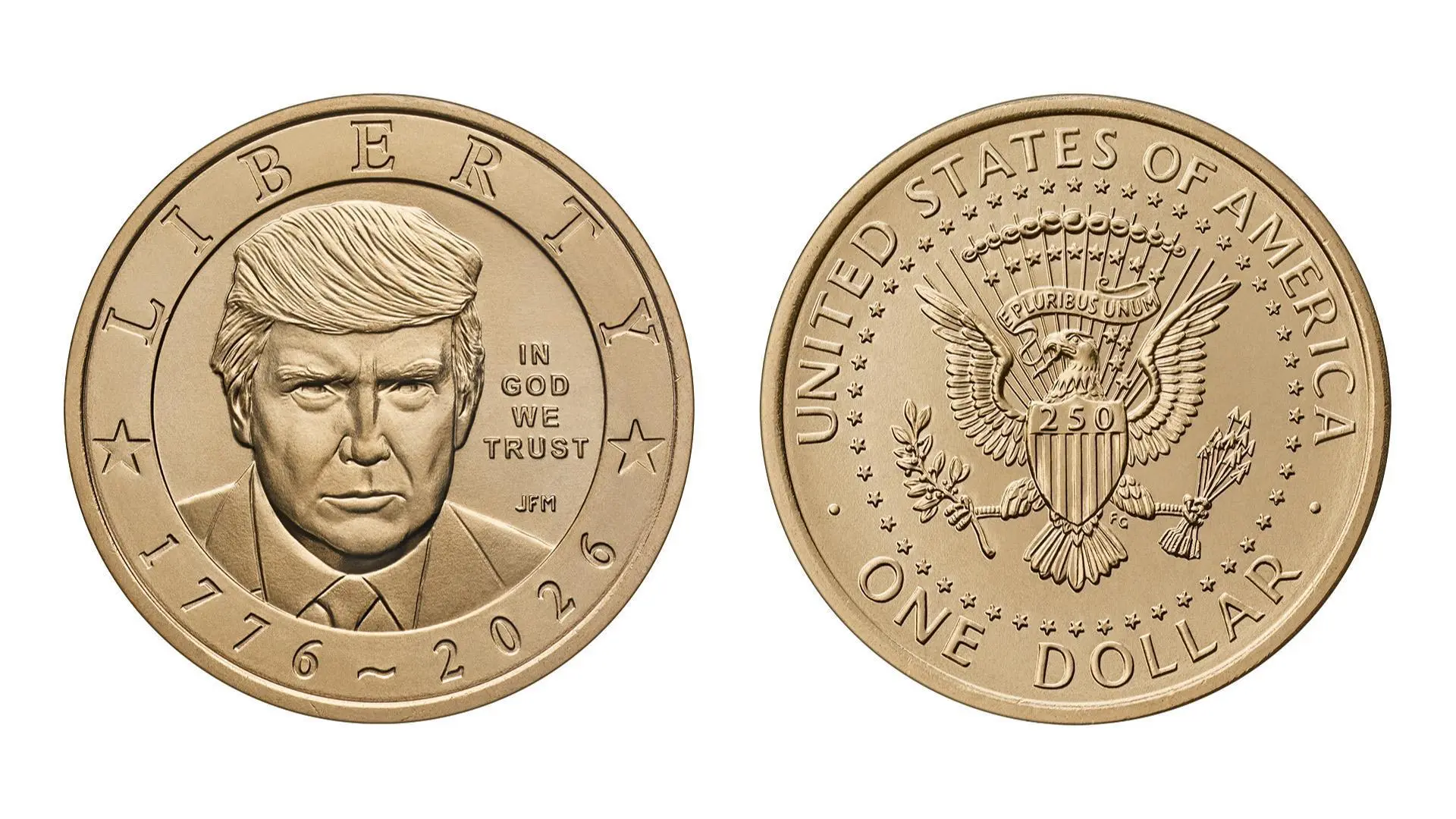
Trump $1 Coin has entered the market as a commemorative issue marking America’s upcoming 250th anniversary. The new dollar features President Donald Trump’s portrait alongside traditional national symbols and inscriptions. The release marks an unusual moment because living presidents have rarely appeared on American currency. It has also attracted strong attention from collectors following its initial release.
The United States Mint introduced the commemorative dollar on Wednesday as part of anniversary celebrations. Officials designed the coin to recognize the nation’s history, national identity, and upcoming independence milestone. Trump’s portrait appears alongside the words Liberty and In God We Trust on the design. Meanwhile, collectors can purchase the coins through authorized sales channels and designated Mint locations.
The Mint initially priced a roll containing 25 coins at $61, while a bag of 100 cost $154.50. However, supplies became unavailable on the Mint’s website only hours after sales began. The early shortage indicates strong interest among collectors following the coin’s release. In addition, vending machines at the Mint’s Washington location offered customers another purchasing option.
Although the coin features a golden appearance, it does not contain actual gold. Instead, the Mint produced the dollar primarily from copper, with several other metals completing its composition. Those materials include zinc, manganese, and nickel, which give the coin its distinctive appearance. Therefore, its golden color does not indicate that the commemorative dollar contains precious metals.
The release has also drawn attention to longstanding rules governing portraits on American currency. Federal restrictions generally prevent the government from placing living people’s portraits on United States banknotes. However, those restrictions operate differently for coins, creating an important distinction between notes and commemorative issues. That distinction has helped officials explain the legal basis for Trump’s appearance.
The Trump administration has also pointed to legislation enacted during Trump’s first presidential term. The Circulating Collectible Coin Redesign Act established rules governing the redesign of certain American commemorative coins. The law restricts portraits of living individuals on the reverse side of coins. However, it does not explicitly impose the same restriction on the obverse side.
Trump’s portrait appears on the obverse, or heads side, of the newly released dollar. Therefore, officials have argued that the coin does not violate the relevant restrictions concerning living people’s portraits. This distinction has become particularly important as the administration considers additional currency designs featuring Trump’s likeness.
Earlier this year, Treasury Secretary Scott Bessent discussed plans for a potential $250 note featuring Trump. However, existing federal rules create significant legal complications for such a proposal. Unlike commemorative coins, American banknotes face longstanding restrictions against displaying living people’s portraits. Consequently, lawmakers would need to address the existing legal framework before such a note could proceed.
American history provides one notable precedent involving a living president and commemorative currency. In 1926, officials issued a commemorative half-dollar featuring President Calvin Coolidge during America’s 150th anniversary celebrations. That example demonstrates that a living president has previously appeared on commemorative American coinage. Nevertheless, the new dollar represents another notable chapter in that history.
Trump $1 Coin combines historical commemoration, collecting interest, and questions surrounding American currency regulations. At the same time, the release reflects preparations for the country’s 250th independence anniversary. For collectors, the early shortage could increase attention surrounding the commemorative issue. For policymakers, the release may also encourage further discussion about presidential portraits and currency laws.
Trump $1 Coin ultimately represents a commemorative issue rather than an ordinary dollar intended for everyday transactions. Its release connects Trump’s presidency with a major national anniversary while highlighting an unusual aspect of American currency history. The coin’s legal foundation also demonstrates the different rules governing presidential portraits on banknotes and coins.

