
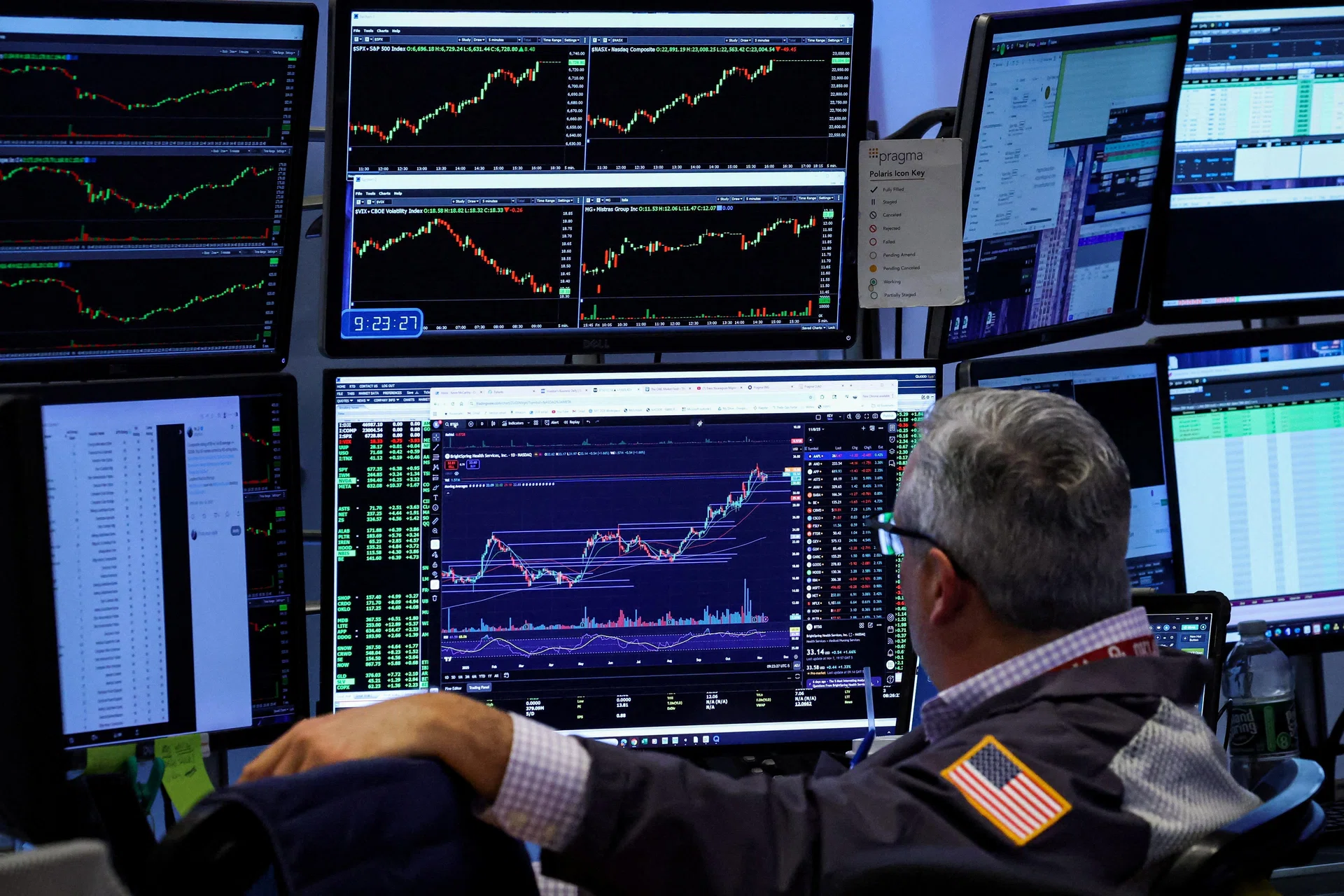
Jobs report remained the primary focus for investors as financial markets prepared for another busy trading session. Traders closely monitored stock futures because upcoming employment data could shape expectations for future interest rate decisions. Consequently, market participants adopted a cautious approach before the highly anticipated economic report arrived.
U.S. stock futures moved lower before the opening bell after initially showing modest gains during overnight trading. However, investor sentiment weakened as attention shifted toward the latest labor market figures. As a result, futures tied to major stock indexes slipped into negative territory before regular trading began.
The previous trading session ended with mixed results despite strong early momentum across several major indexes. The Dow briefly climbed to a record level before giving back most of its gains later. Meanwhile, both the S&P 500 and the Nasdaq Composite finished the session with moderate losses.
Technology shares created much of the market weakness during Wednesday’s trading activity. Semiconductor companies experienced particularly sharp declines as investors reduced exposure to the sector. Therefore, the technology-heavy Nasdaq faced greater selling pressure than broader market indexes throughout the day.
Several leading semiconductor companies recorded significant losses as traders continued shifting money into different market sectors. This movement reflected changing investment strategies rather than broad concerns about overall economic conditions. Even so, technology stocks remained under pressure as investors reassessed valuations after months of strong performance.
Despite recent weakness, some market analysts believe the sector rotation reflects a healthy development for the broader stock market. They argue investors continue moving capital between industries instead of leaving the market entirely. Consequently, this pattern may support longer-term market stability if additional sectors continue attracting investment.
Analysts also noted that cyclical industries could benefit from fresh investor interest during the second half of the year. Furthermore, stronger participation across multiple sectors may reduce dependence on technology companies for overall market growth. Many investors consider broader participation a positive sign for the durability of the current market rally.
Jobs report expectations dominated investor discussions before the scheduled government release. Economists forecast the economy added approximately 115,000 new positions during June. Additionally, traders hoped the figures would provide fresh insight into hiring conditions across the United States economy.
Employment data often influences expectations surrounding future monetary policy decisions. Therefore, investors carefully evaluate hiring trends alongside inflation and consumer spending data. Strong employment growth could support continued economic expansion, while weaker figures may increase expectations for policy adjustments later this year.
Financial markets frequently react quickly after major labor reports become available. Consequently, traders prepared for potentially higher volatility immediately following the scheduled release. Many investors avoided making significant portfolio changes until they reviewed the latest employment numbers.
Asian markets also experienced notable declines during Thursday’s trading session. South Korea’s major stock indexes recorded some of the steepest losses among regional markets. Large technology companies led the decline as investors sold semiconductor shares throughout the session.
Japan’s primary stock index also finished lower, although another major benchmark managed to post a slight gain. Meanwhile, Australia’s benchmark index remained relatively unchanged as investors monitored global market developments. These mixed performances highlighted different regional reactions to the same economic uncertainty.
European markets also traded slightly lower shortly after opening. Most regional sectors struggled to maintain positive momentum as investors adopted a cautious stance. Furthermore, uncertainty surrounding the upcoming U.S. employment figures contributed to restrained trading activity across Europe.
Global investors continue monitoring economic indicators because they influence financial markets around the world. Strong employment, stable inflation, and healthy corporate earnings often support investor confidence. Conversely, disappointing economic data can encourage more defensive investment strategies across multiple asset classes.
Looking ahead, the latest Jobs report will likely shape market expectations during the coming weeks. Investors will continue evaluating employment trends alongside corporate earnings and inflation data. Ultimately, these economic indicators will help determine the direction of financial markets as the second half of the year unfolds.