
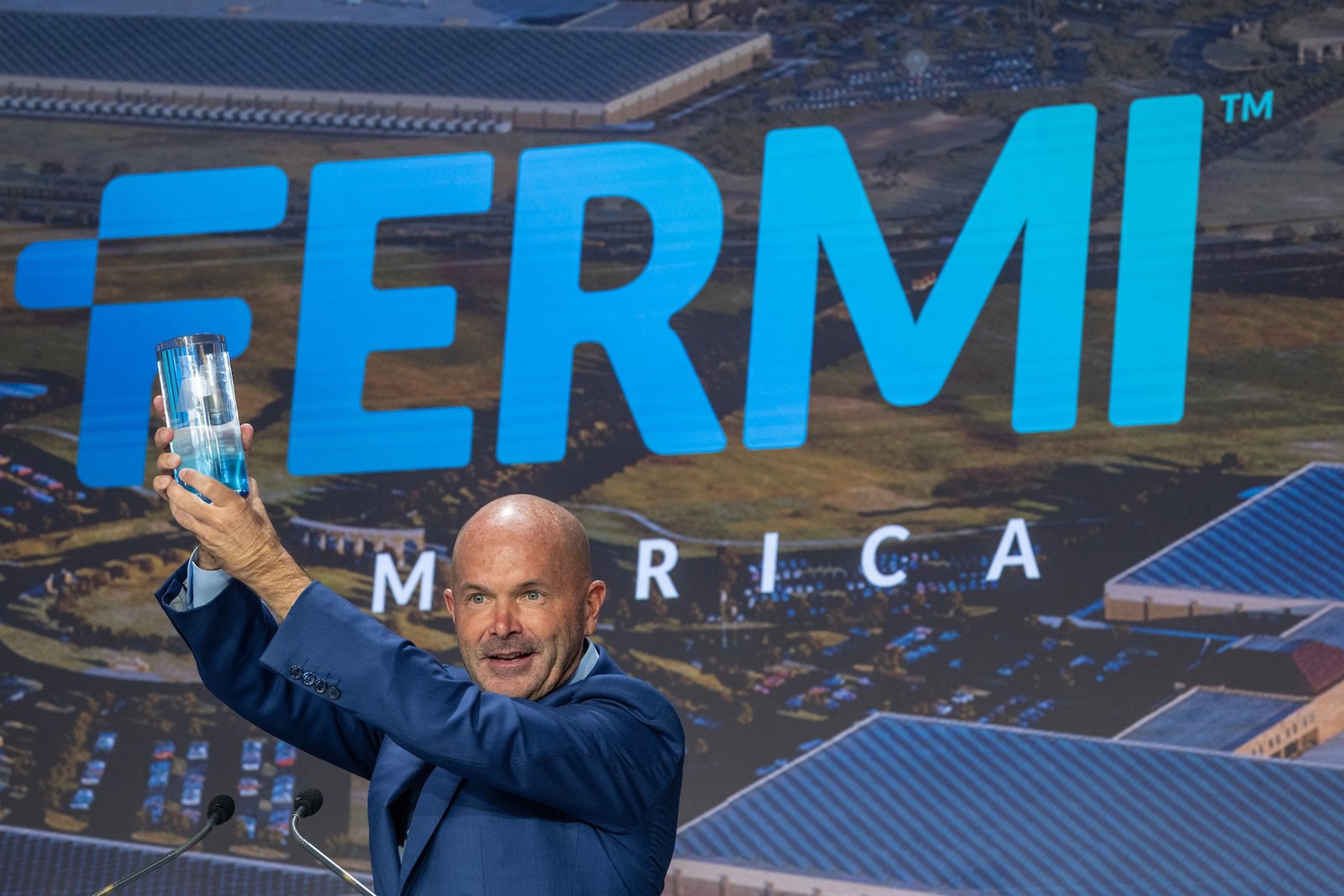
Fermi CEO Lee McIntire will lead the nuclear power company as it develops its Texas AI energy campus.
Fermi America has appointed Lee McIntire as chief executive, ending a leadership vacancy that lasted more than three months. The company announced the appointment on Wednesday as it prepares to advance its ambitious nuclear energy development plans.
McIntire already serves as an independent director on Fermi’s board. Additionally, he brings extensive executive experience from major infrastructure and energy projects developed throughout his career.
Before joining Fermi’s leadership team, McIntire held chief executive roles at CH2M Hill and TerraPower. TerraPower, founded by Bill Gates, focuses on developing advanced nuclear energy technologies for future power needs.
Meanwhile, Fermi America continues developing Project Matador in Amarillo, Texas. The planned AI campus aims to combine large-scale data center operations with nuclear power generation.
The company expects nuclear reactors eventually to provide electricity for data centers operating at the planned campus. Consequently, Fermi faces significant construction, regulatory, financing, and infrastructure challenges as development progresses.
The CEO appointment follows a major leadership change earlier this year. Fermi removed co-founder Toby Neugebauer and chief financial officer Miles Everson from their positions in April.
At that time, the company outlined a broader strategic restructuring known internally as Fermi 2.0. The changes included leadership transitions and plans involving the company’s corporate operations and headquarters.
Now, the Fermi CEO appointment comes alongside another important development involving Project Matador. Earlier this week, Fermi announced TensorWave as the first customer to sign a binding lease agreement.
That agreement gives Fermi an important commercial milestone as it works toward establishing the planned AI infrastructure campus. Moreover, securing a customer provides greater visibility into potential future demand for the company’s planned power capacity.
The announcements have also affected investor sentiment surrounding Fermi and its development strategy. The company’s stock has gained substantially since the beginning of the week following the latest business developments.
However, the company still faces a lengthy process before Project Matador can reach full-scale operations. Construction schedules, project costs, nuclear approvals, grid connections, and financing will remain critical factors.
McIntire now takes charge during this crucial stage of Fermi’s development. His previous experience with large infrastructure projects could prove particularly important as the company moves from planning toward construction.
Fermi chairman Marius Haas said McIntire has extensive experience delivering complex projects over several decades. Haas also highlighted McIntire’s existing knowledge of Fermi after serving on its board.
Furthermore, the chairman emphasized the importance of completing the company’s projects according to schedule and within planned budgets. Safety will also remain a central priority as Fermi advances its nuclear power strategy.
The company’s leadership believes the next phase will focus heavily on construction and power delivery. Therefore, McIntire’s responsibilities will extend beyond corporate management and include overseeing major infrastructure execution.
Fermi CEO McIntire also enters the role with familiarity with the company’s recent growth and strategic direction. That experience could help provide continuity following the leadership changes announced earlier this year.
Project Matador represents the central element of Fermi’s strategy to connect nuclear energy with rapidly expanding artificial intelligence infrastructure. As AI data centers require increasing amounts of electricity, companies increasingly seek reliable sources of large-scale power.
Fermi aims to position its nuclear development plans within that growing demand for dependable electricity. Nevertheless, the project’s success will ultimately depend on execution, regulatory progress, construction performance, and customer commitments.
For now, the Fermi CEO transition gives the company a permanent leader as it enters a critical development period. The appointment also coincides with renewed commercial momentum surrounding Project Matador and its first binding customer agreement.
As a result, Fermi enters its next stage with new leadership, an announced customer, and a major infrastructure project ahead.