
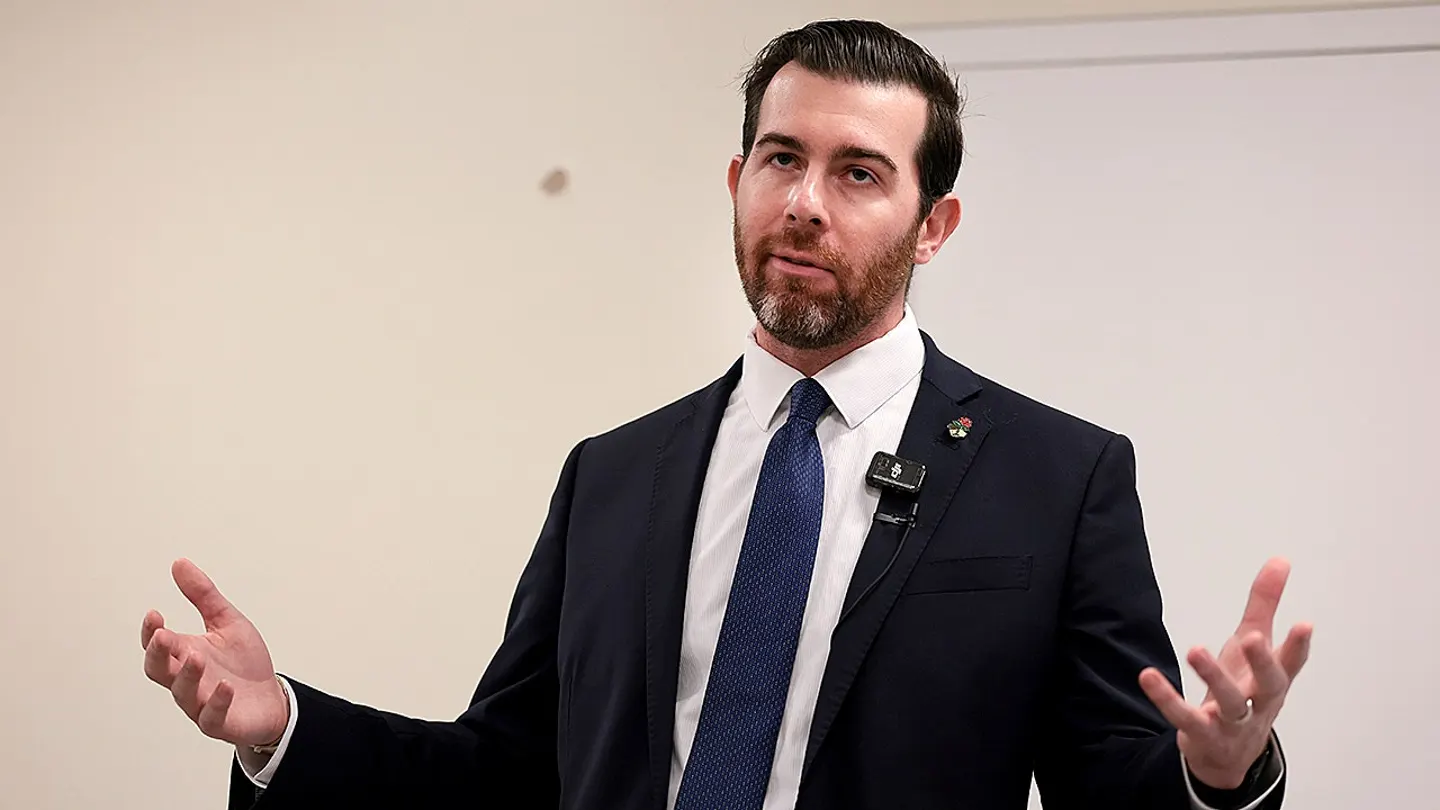
Democratic Socialism has become a central point of conflict between longtime Democratic strategist James Carville and Florida candidate Oliver Larkin. The disagreement reflects broader tensions within the Democratic Party over ideology, leadership, and electoral strategy. Larkin, a Democratic Socialists of America member, is challenging Democratic Rep. Jared Moskowitz in Florida’s newly redrawn 25th Congressional District. Meanwhile, Carville has repeatedly criticized the growing influence of socialist candidates in Democratic primary contests nationwide.
The dispute intensified after Larkin questioned whether established Democratic strategists should continue directing the party’s political strategy. During a recent campaign appearance, Larkin argued that Democrats need fresh ideas and new leadership. He also suggested that longtime party figures increasingly struggle to influence the direction of Democratic politics. Carville responded by dismissing Larkin’s criticism and sharply questioning the approach associated with DSA candidates.
Carville has spent decades as one of the Democratic Party’s most recognizable political strategists and commentators. He gained national prominence after helping Bill Clinton win the presidency during the 1992 election campaign. Since then, Carville has frequently advocated pragmatic Democratic strategies while criticizing what he considers excessive ideological positioning. More recently, he has expressed concern about socialist candidates defeating moderate Democrats during competitive primary elections.
Larkin, meanwhile, represents a younger generation of progressive activists seeking greater influence within the Democratic Party. The 33-year-old candidate previously worked on Bernie Sanders’ 2016 presidential campaign before pursuing congressional politics. He is the only DSA-endorsed House candidate competing in a closely watched congressional swing district this election cycle. His campaign has received support from several prominent progressive voices outside the traditional Democratic establishment.
Larkin argues that Democratic Socialism can compete successfully across different regions and political environments. He has maintained that progressive candidates should contest elections nationwide rather than limiting their campaigns to heavily Democratic districts. Furthermore, he says Democratic leaders should welcome activists who can attract younger voters and expand the party’s coalition. His argument directly challenges strategists who favor more moderate candidates in competitive districts.
Carville has taken a sharply different position regarding the direction of the Democratic Party. He has criticized recent primary victories by socialist and far-left candidates, warning about their potential electoral consequences. However, his comments do not represent a formal position from the entire Democratic Party. Instead, they reflect an ongoing internal debate between moderate strategists and progressive activists.
Larkin faces a difficult primary against Moskowitz, who represents a more centrist wing of the party. Moskowitz has received support from Democratic congressional leaders and established political organizations. His campaign emphasizes his record in Congress and presents him as a practical candidate for a competitive district. Conversely, Larkin has focused heavily on progressive economic and political policies during his campaign.
The Florida contest therefore carries significance beyond the candidates themselves and their immediate congressional race. A Larkin victory could strengthen arguments from progressive activists seeking greater representation within Democratic institutions. On the other hand, a Moskowitz victory could reinforce the position of Democrats favoring moderate candidates in competitive districts. Consequently, Tuesday’s result could influence future debates over Democratic electoral strategy.
Larkin has also criticized established Democrats for potentially alienating voters who support more progressive policies. He argues that party leaders should avoid excluding activists who could become important parts of future Democratic campaigns. In his view, younger progressive voters represent an increasingly important constituency that Democratic leaders cannot afford to ignore. Carville, however, continues questioning whether socialist policies can consistently attract voters beyond strongly Democratic communities.
The disagreement illustrates a broader struggle over how Democrats should compete in changing political environments. Progressive activists want the party to embrace stronger positions on economic inequality, labor, healthcare, and other issues. Meanwhile, moderates argue that candidates must appeal to independent voters and politically mixed districts. As a result, primary contests increasingly serve as battlegrounds over the party’s future direction.
Democratic Socialism will likely remain a significant issue as Democrats assess their performance in upcoming congressional elections. The Florida primary provides another test of whether progressive candidates can overcome established Democratic incumbents. At the same time, Carville’s criticism demonstrates that prominent party strategists remain concerned about the movement’s growing visibility. Ultimately, voters in Florida’s 25th District will determine whether Larkin’s message can overcome Moskowitz’s established political support.
Democratic Socialism has therefore become more than an ideological label within this particular primary contest. It now represents a broader debate over leadership, electoral strategy, generational change, and the Democratic Party’s future. Tuesday’s result could offer another indication of whether progressive candidates are gaining lasting influence among Democratic voters. For now, the public clash between Carville and Larkin underscores the depth of that internal debate.

