
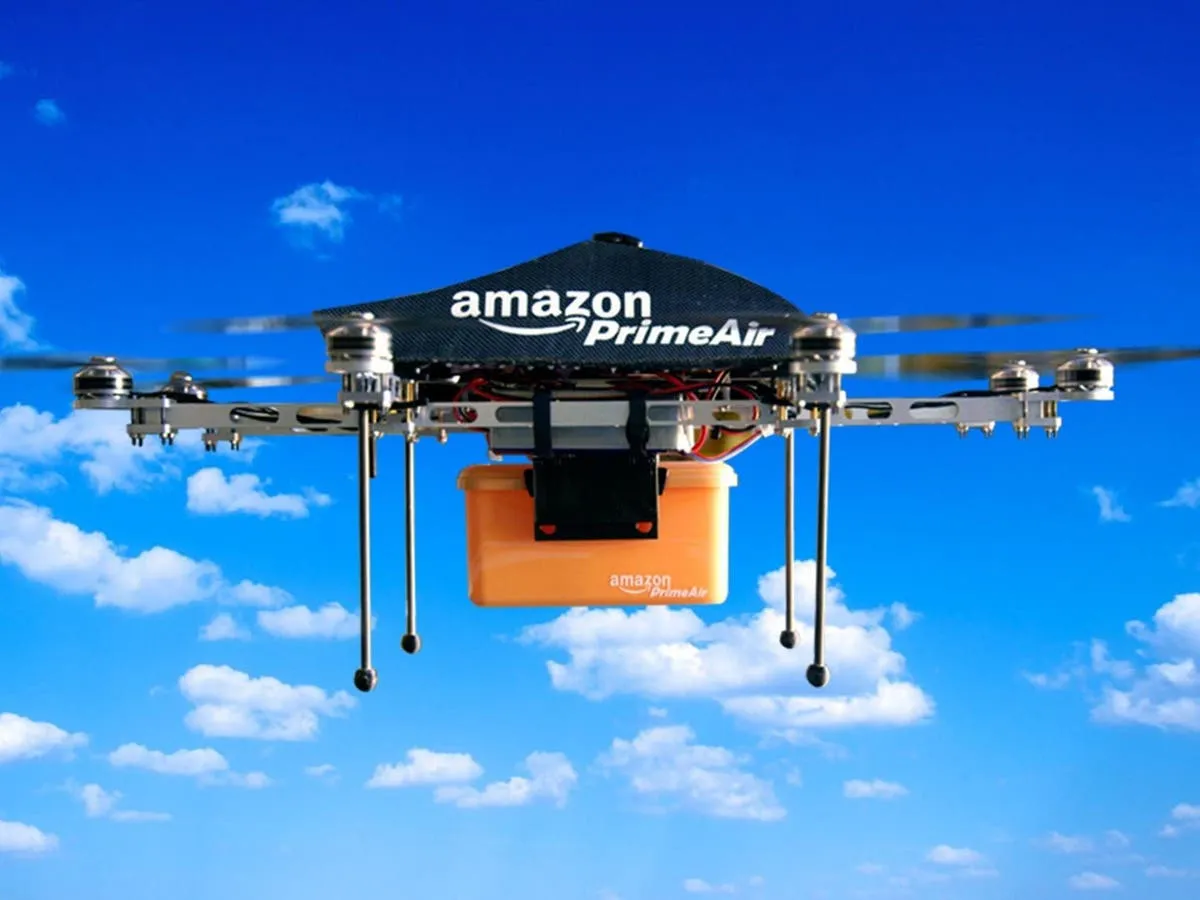
Amazon drone delivery is set for major expansion as the company targets nearly 500 U.S. cities and towns this year.
The planned expansion would significantly increase Prime Air’s current reach across the United States. Amazon says the service could operate in roughly six times more locations by December.
The company also expects to complete one million drone deliveries during 2026. Prime Air has already completed hundreds of thousands of deliveries this year, while daily volumes continue increasing.
Amazon’s latest expansion follows years of development, regulatory challenges, technical setbacks, and limited early deployments. The company first introduced its drone delivery vision in 2013, promising deliveries of small packages within about 30 minutes.
However, the ambitious project encountered several obstacles before reaching broader commercial use. Regulatory restrictions delayed expansion, while technical difficulties and community concerns created additional challenges.
Amazon received an important regulatory approval in 2024 that allowed longer-range drone operations. Consequently, the company expanded beyond its original locations around Dallas and Phoenix.
Prime Air now operates across 11 metropolitan areas, with several additional markets expected to launch soon. Meanwhile, residents in some communities continue raising concerns about noise, privacy, and possible effects on property values.
Despite those concerns, Amazon continues investing in faster delivery options for its customers. The company increasingly promotes same-day and ultra-fast delivery services alongside its traditional Prime shipping model.
Most Prime Air deliveries currently arrive within approximately one hour after customers place their orders. Nevertheless, Amazon says some deliveries have reached customers only a few minutes after checkout.
The drones currently carry packages weighing up to five pounds within a roughly 7.5-mile operating radius. Amazon has recently expanded the product range available for drone delivery through changes to its fulfillment infrastructure.
The company now connects some drone operations with larger robotic sorting facilities. As a result, customers can potentially choose from more products than earlier drone programs allowed.
Amazon also continues testing a new delivery system designed to handle fragile goods more carefully. The system uses a retractable tether to lower packages gently toward the ground.
That approach could help Amazon deliver products such as eggs and other delicate perishables. Currently, the company releases many packages from approximately 13 feet above the delivery area.
Furthermore, Amazon faces competition from other companies developing commercial drone networks. Industry rivals have already expanded into multiple U.S. markets while building broader delivery operations internationally.
Amazon therefore needs to increase both delivery volume and geographic coverage to remain competitive. The company’s one-million-delivery target represents a significant step toward making drones part of everyday logistics.
However, Prime Air still faces safety concerns following previous incidents involving its aircraft. In October, two Amazon drones collided with a construction crane in Arizona.
The incident triggered investigations involving federal aviation and transportation authorities. Amazon subsequently reviewed its detection technology and improved its algorithms to address real-world performance issues.
Amazon also faced another regulatory investigation after a drone damaged an internet cable while leaving a customer’s property. That incident occurred in Texas and added another safety concern for the growing program.
Moreover, Amazon’s challenges extend beyond the United States as the company expands internationally. British authorities recently investigated a Prime Air drone crash involving a residential garden in England.
Amazon said the drone landed safely and caused no injuries during the British incident. The company also indicated that the aircraft may have encountered an object extending above a moving vehicle.
Despite these setbacks, Amazon continues pursuing wider commercial adoption for its drone technology. The company believes faster delivery can strengthen its logistics network and improve customer convenience.
Amazon drone delivery could therefore become a more visible part of the company’s fulfillment strategy. However, achieving widespread adoption will depend on regulatory approvals, operational reliability, and continued public acceptance.
For now, Amazon’s expansion plans signal stronger confidence in autonomous delivery technology across major American markets. The company’s one-million-delivery target will also provide an important measure of Prime Air’s progress.