
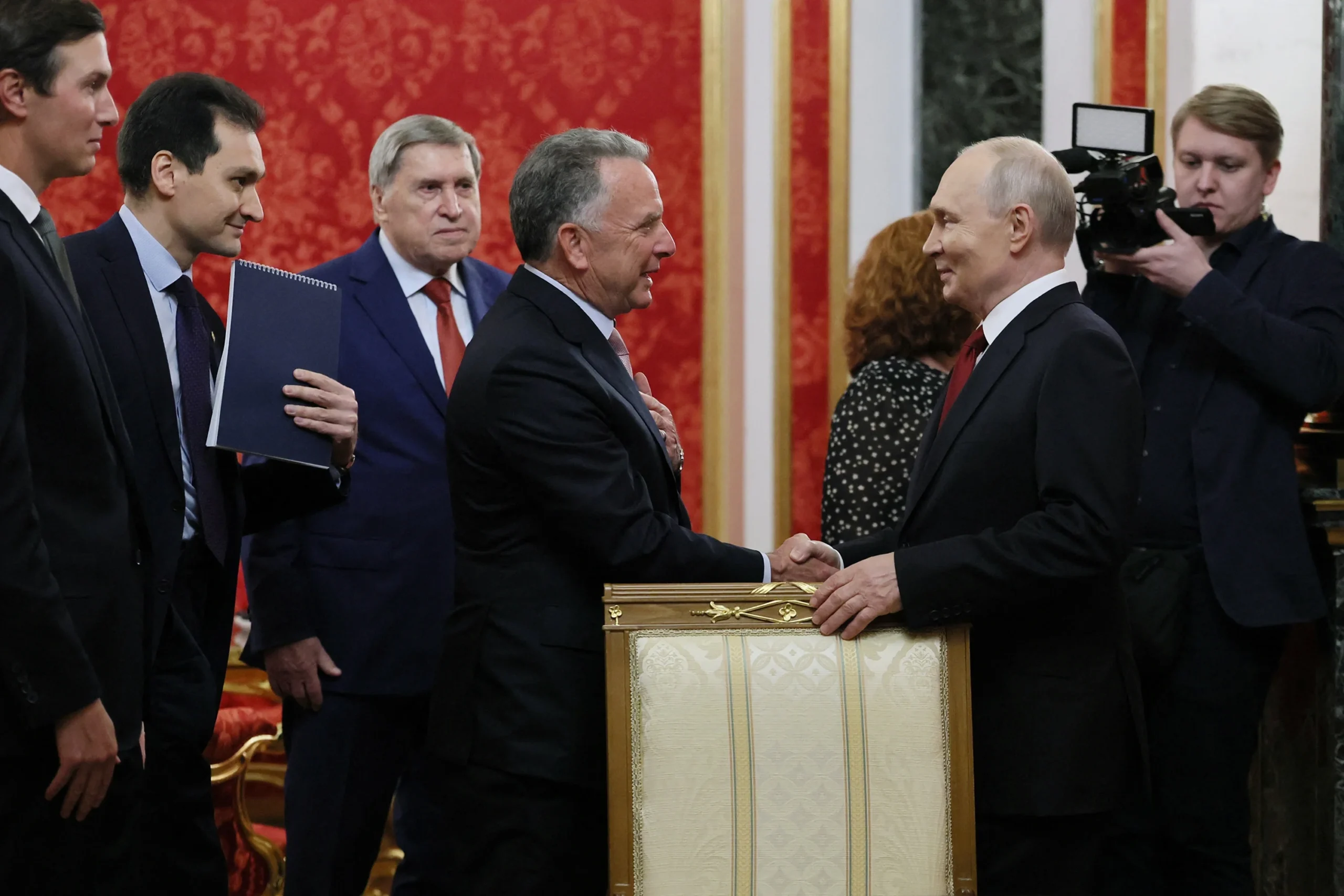
US envoys Steve Witkoff and Jared Kushner held talks with Ukrainian President Volodymyr Zelenskyy in Kyiv as Washington renewed efforts to end the war. The discussions followed a meeting with Russian President Vladimir Putin in Moscow one day earlier. However, the latest diplomatic effort produced no major breakthrough, while Moscow and Kyiv remained divided over several important issues. The talks nevertheless continued a broader US effort to bring the two sides closer to a potential agreement.
Witkoff and Kushner made their first official visit to Ukraine during the latest diplomatic push. Because the conflict has closed Ukraine’s airspace, the American envoys traveled by train from Poland into Kyiv. Their arrival came after Putin announced a three-day ceasefire to support the delegation’s safety during its movements between Russia and Ukraine. Meanwhile, American officials continued exploring possible areas of agreement while acknowledging the difficulties surrounding the negotiations.
Zelenskyy held three rounds of discussions with the American representatives during their visit. National security advisers from the United Kingdom, France, and Germany joined the final meeting as European allies participated directly. According to Zelenskyy, the discussions covered military assistance and the weapons Ukraine expects to need during the coming months. In particular, Kyiv requested Patriot missile systems and other supplies while seeking continued support from Washington and its European partners.
Zelenskyy also warned that Ukraine could need additional military assistance during the winter if fighting continues. He described the potential requirements as a winter package designed to help Ukraine withstand another season of combat. Furthermore, he expressed appreciation for the presence of European representatives during the discussions. He said their participation demonstrated that Ukraine and its partners remained aligned on the country’s security needs.
The latest talks followed discussions between Witkoff, Kushner, and Putin in Moscow. Those negotiations also failed to produce an immediate agreement or public breakthrough. Putin’s foreign policy adviser Yuri Ushakov described the Moscow meeting as constructive, direct, and useful. However, he did not disclose specific progress on the central disputes separating Russia and Ukraine. The discussions also included economic matters and possible future projects involving Russia and the United States.
The diplomatic process has faced repeated challenges over territorial questions and other major disagreements. Moscow and Kyiv remain divided over possible territorial concessions, including the future of the Donbas region. Previous rounds of negotiations have failed to produce a formula that satisfies both governments. As a result, the latest meetings provided another opportunity for both sides to communicate, but they did not resolve the main differences.
The broader US effort to end the conflict has also lost momentum during recent months. Earlier discussions between Trump and Putin did not produce a settlement despite expectations that direct engagement could accelerate negotiations. Nevertheless, the Trump administration has continued using diplomatic channels to encourage further talks. The latest meetings in Moscow and Kyiv therefore represented another attempt to maintain that diplomatic process.
At the same time, the security situation has continued to deteriorate across parts of Ukraine. Ukrainian officials expect the conflict could extend into the winter, creating additional pressure on military resources and civilian infrastructure. Kyiv has also raised concerns about future Russian missile and drone attacks against Ukrainian cities. These developments have increased the importance of securing additional military support from Washington and European governments.
Russia has continued military operations while seeking further control over the Donbas region. Russian drones have targeted Kyiv and other locations, contributing to continuing pressure on Ukrainian cities. Meanwhile, Ukraine has launched drone attacks against Russian energy infrastructure in an effort to affect Moscow’s war capacity. Ukrainian forces have also struck targets deeper inside Russia as the conflict continues to expand beyond the immediate front lines.
Despite the lack of a breakthrough, the meetings in Kyiv kept diplomatic communication active between Washington and Kyiv. Witkoff and Kushner also gained an opportunity to discuss Ukraine’s immediate military requirements following their conversation with Putin. However, significant questions remain about how negotiators can bridge differences over territory, security guarantees, and the future of disputed regions.
Washington continues to face the challenge of balancing peace negotiations with Ukraine’s requests for military assistance. Kyiv wants stronger security guarantees from the United States and European allies to discourage future Russian attacks. Meanwhile, Moscow continues pursuing its own strategic objectives and has shown limited willingness to accept Ukraine’s preferred terms. Consequently, the path toward a settlement remains uncertain despite continued diplomatic engagement.
The latest meetings therefore produced continued dialogue rather than a decisive agreement. American officials remain involved in discussions with both sides, while European governments continue supporting Ukraine’s security requirements. Meanwhile, the fighting shows few signs of ending soon, according to Ukrainian officials who expect further Russian attacks during the winter.
For now, the diplomatic process remains active, but major obstacles continue to prevent a comprehensive peace agreement. Witkoff and Kushner’s visit demonstrated Washington’s continued effort to engage both Moscow and Kyiv directly. However, the absence of a breakthrough highlights the difficulty of resolving the conflict after years of fighting and failed negotiations.
The Ukraine talks could continue as American and European officials search for areas where both sides might accept compromises. Until negotiators resolve the central disputes, particularly territorial questions and security guarantees, an agreement will remain difficult. Nevertheless, the latest discussions show that diplomatic channels remain open despite the continuing military conflict and sharp disagreements between Russia and Ukraine.
The immediate outlook therefore remains uncertain, with further negotiations likely to depend on developments on the battlefield. At the same time, Ukraine continues preparing for additional fighting while requesting stronger international support. The United States remains engaged in diplomacy, but the latest meetings produced no agreement capable of ending the war.

