
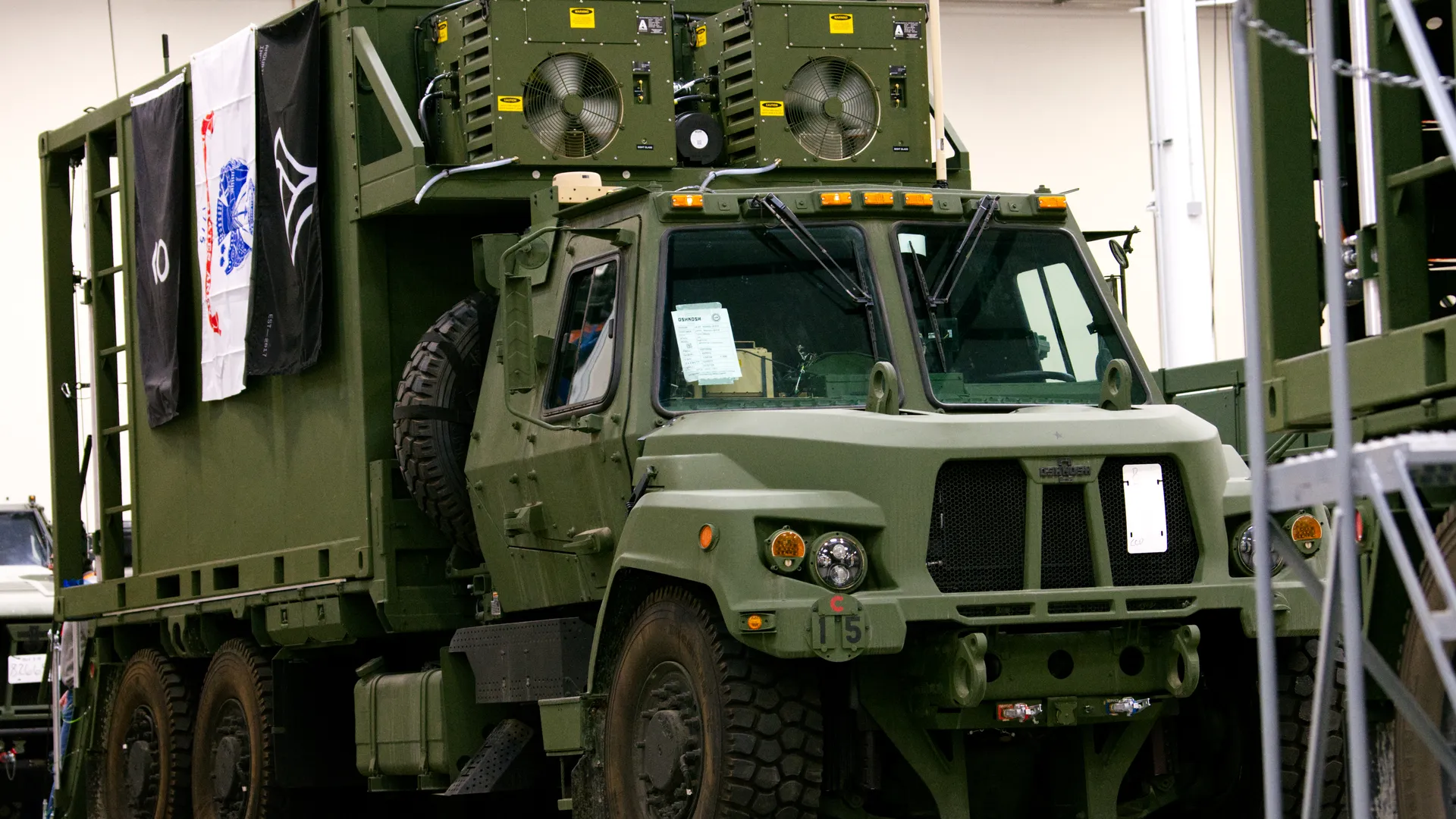
TITAN System production will expand after the U.S. Army awarded contracts worth $192 million to Palantir and Anduril. The agreements move the next-generation battlefield intelligence technology from development into broader production.
Palantir will receive approximately $127 million under the latest production agreements. Meanwhile, Anduril will receive approximately $65 million for its role in developing and integrating specialized hardware.
The contracts cover eight TITAN systems that the Army expects to receive during the next 18 months. Four systems will use an advanced configuration, while four others will use the basic configuration.
The Army designed TITAN to collect, combine, and distribute intelligence from multiple sources across the battlefield. Furthermore, the system can combine information from sensors and intelligence assets operating across land, air, and space.
Palantir will oversee the overall production effort under the Army’s latest arrangement. Meanwhile, Anduril will develop ruggedized equipment designed to operate reliably under demanding military conditions.
The basic version will serve as a mobile division-level intelligence asset for Army units. Officials plan to mount that configuration on vehicles designed to provide greater mobility during military operations.
The advanced version will support higher-level intelligence and command operations across larger formations. Therefore, the Army expects those systems to provide capabilities for corps-level and broader multidomain operations.
Because each unit will receive relatively few systems, Army officials emphasize protecting them during battlefield operations. Consequently, mobility and survivability remain important considerations as the service moves toward production.
The Army has worked on the TITAN System for several years through testing, prototyping, and operational experimentation. Earlier prototypes reached military units in the Pacific and Europe during 2022 for evaluation.
Those early deployments helped Army personnel identify technical challenges in different environments. For example, soldiers testing the system in the Philippines encountered humidity-related problems that earlier testing had not revealed.
The Army subsequently used soldier feedback to improve the system’s environmental performance and overall reliability. Officials now say additional engineering work has addressed concerns involving operations in challenging climates.
Moreover, the service continues incorporating feedback from personnel who have tested different TITAN configurations. That approach allows developers to adjust the technology according to conditions encountered during realistic military exercises.
Army officials say the system can accelerate the process of identifying and locating potential targets. Furthermore, automated functions can help reduce the time between receiving sensor information and making targeting decisions.
The technology also combines information from multiple sensors into a shared intelligence picture. As a result, military personnel can potentially gain a more comprehensive understanding of activity across an operating environment.
The Army also plans to continue integrating TITAN with additional military vehicles during the production phase. Officials say those efforts will help ensure the technology works effectively across different transportation platforms.
In addition, the Army is developing a vehicle-independent version of the TITAN System. That configuration could allow personnel to transport the equipment inside a vehicle or operate it from a stationary location.
The flexible design could prove useful when military units operate in areas without reliable access to cloud-based services. In those circumstances, the system could process information from nearby sensors and other locally available sources.
That capability could become particularly important in environments where communications networks face disruption or limited connectivity. Therefore, the Army wants TITAN to continue supporting intelligence operations even when conventional network access becomes unavailable.
Several other defense companies will also contribute capabilities to the broader production effort. Those companies include L3Harris Technologies, Sierra Nevada, Strategic Technology Consulting, and World Wide Technology.
Their contributions will support different aspects of the system’s development, integration, and operational capabilities. Meanwhile, Palantir and Anduril will remain central participants in the production arrangement announced by the Army.
The latest contracts represent an important transition for a program that has spent years in development. Instead of relying primarily on prototypes, the Army can now begin expanding production and preparing systems for operational units.
However, the service will continue testing and integration work alongside production activities. This approach allows Army officials to address remaining technical issues while preparing additional systems for delivery.
TITAN System development therefore reflects the Army’s broader effort to modernize battlefield intelligence capabilities. The service increasingly wants military units to combine information quickly and operate effectively across multiple domains.
The new contracts also demonstrate continued investment in technologies designed for mobile and distributed military operations. As battlefield communications become more contested, systems that can process information locally may become increasingly important.
For now, the Army expects the first eight production systems to arrive over the next 18 months. Meanwhile, continued testing and integration will help determine how effectively the technology performs across different operational environments.
Overall, the $192 million agreements mark a significant step for Palantir, Anduril, and the Army’s intelligence modernization efforts. The program will now move further toward production while developers continue refining its mobility, connectivity, and battlefield performance.

