
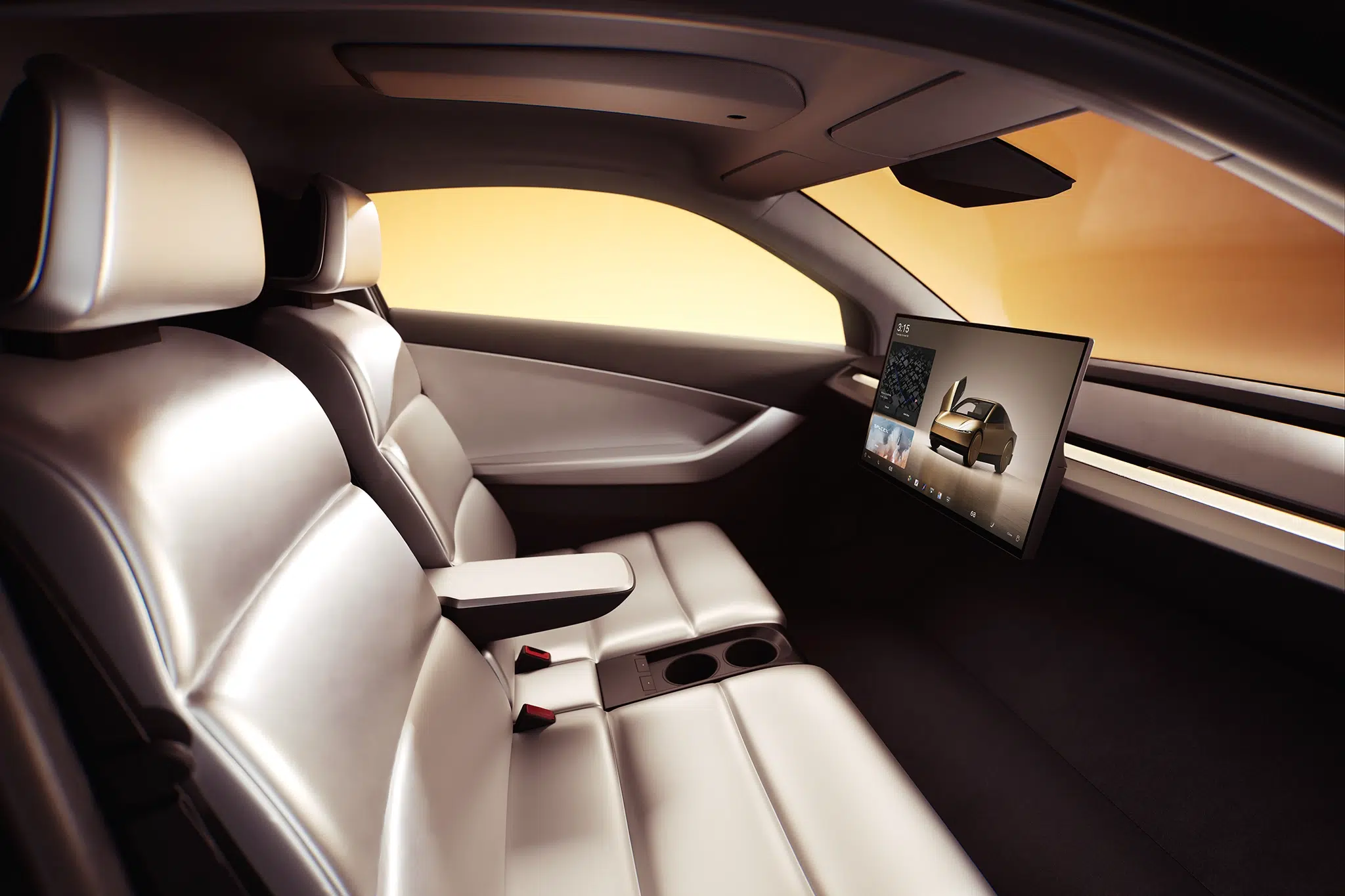
Cybercab Controls now appear to give Tesla technicians a touchscreen method for manually moving the autonomous vehicle. New footage from Texas shows a production Cybercab maneuvering around a busy charging location in Austin. During testing, the vehicle stopped slightly outside the ideal position for its charging cable.
As a result, a technician inside the vehicle used controls displayed on the central touchscreen. The virtual controls allowed the technician to move the Cybercab forward and backward without traditional driving hardware. The demonstration highlights an unusual feature of Tesla’s purpose-built robotaxi design.
Unlike conventional vehicles, the Cybercab does not include a steering wheel, physical pedals, or traditional steering controls. Instead, Tesla designed the vehicle around autonomous operation and its Full Self-Driving software. Therefore, passengers should not expect to control the vehicle manually during ordinary journeys.
However, technicians still need ways to reposition the vehicle during servicing, charging, testing, and unusual situations. The touchscreen system appears designed specifically to provide limited manual capability when necessary. During the Texas test, the technician held virtual directional buttons on the display.
The vehicle then moved away from the charging position before returning to a better alignment. Consequently, the demonstration shows how Tesla can provide manual functionality without installing conventional driving equipment. This approach also allows the company to maintain the Cybercab’s minimalist interior design.
The system would likely prove most useful during slow movements around charging stations, service areas, and production facilities. Furthermore, technicians could use the interface when autonomous driving cannot position the vehicle correctly. The feature gives Tesla another option for handling situations that require small, controlled vehicle movements.
Tesla has continued testing steering-wheel-free Cybercabs in Texas as preparations for commercial operations accelerate. Meanwhile, the company has expanded testing activity around Austin and other nearby metropolitan areas. Those developments make the touchscreen driving system particularly relevant to Tesla’s upcoming deployment plans.
Recent fleet preparations suggest Tesla wants the Cybercab ready for broader robotaxi operations. Before passengers use these vehicles widely, technicians must have reliable methods for handling unusual operational situations. The touchscreen system could provide one such method without changing the vehicle’s driverless design.
The Cybercab represents a significant departure from conventional transportation technology. By removing traditional controls, Tesla can dedicate more interior space toward passengers and autonomous operation. At the same time, eliminating physical controls creates new engineering requirements for maintenance and unexpected situations.
The touchscreen solution appears to address some of those requirements while preserving the vehicle’s overall design. Moreover, the feature demonstrates how Tesla continues adapting its vehicles around autonomous transportation rather than conventional driving.
The technology also reflects Tesla’s broader approach to developing purpose-built autonomous vehicles. Rather than simply modifying an existing model, the company designed the Cybercab around driverless operation from the beginning. That strategy could eventually simplify fleet operations if the vehicles require fewer traditional mechanical components.
Nevertheless, Tesla must ensure technicians can safely handle situations where autonomous systems cannot complete basic movements. The latest footage provides another indication that the company has considered those practical challenges. Cybercab Controls offer a digital alternative to conventional steering and pedal systems during limited manual maneuvers.
With commercial testing approaching, attention will increasingly focus on how the Cybercab performs outside controlled environments. Tesla’s upcoming deployment could provide more information about the vehicle’s autonomous capabilities and operational reliability. For now, the touchscreen demonstration shows that Tesla has developed a backup method for moving the Cybercab manually.
The system keeps the vehicle’s cabin free from traditional controls while giving technicians another way to reposition it. As Tesla prepares for wider robotaxi operations, this feature could become an important part of maintaining its autonomous fleet.

