
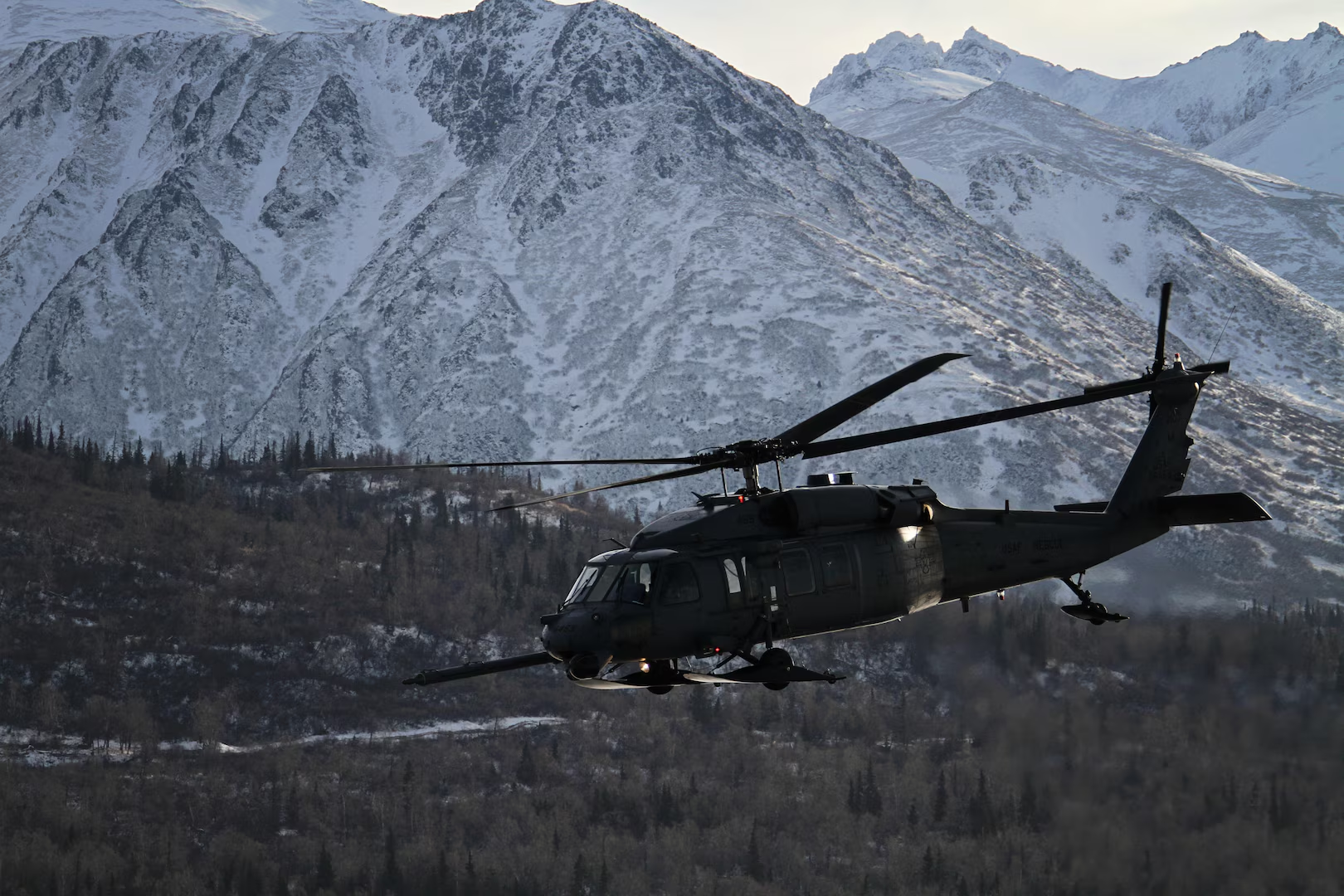
Rescue Mission crews from the Alaska Air National Guard rescued four survivors after a plane crashed on Montague Island. The incident occurred August 30 near a coastal sandbar roughly 60 miles southeast of Seward. Officials said the Alaska Rescue Coordination Center began coordinating the response after receiving an emergency locator signal connected to a Cessna 180 aircraft. Following the alert, coordinators contacted the 176th Wing search and rescue duty officer, who dispatched a helicopter carrying specially trained pararescue personnel toward the remote crash location.
However, rescuers faced challenging conditions when they reached the coastal area surrounding the aircraft. Officials expressed concerns that loose sand and beach debris could create problems during the helicopter’s landing. Therefore, the crew chose to land a short distance from the crash site instead of approaching the aircraft directly. The pararescuemen then traveled toward the plane and located four people who had managed to escape the overturned aircraft. Although the plane had flipped over, officials said it appeared largely intact when rescuers reached the area.
The rescue team quickly established contact with the four survivors and assessed their condition before beginning the evacuation. Because the crash occurred on a remote island, rescuers needed to transport the occupants to a location with greater medical resources. The helicopter subsequently carried all four survivors from Montague Island to Providence Alaska Medical Center in Anchorage. After arriving at the hospital, civilian medical personnel took responsibility for their continued evaluation and treatment. The operation therefore provided the survivors with a direct route from the isolated crash site to professional medical care.
The successful operation also demonstrated the importance of rapid coordination during aviation emergencies in Alaska’s remote regions. Montague Island’s coastal terrain can create additional challenges for aircraft and emergency crews, particularly when landing conditions remain uncertain. In this case, rescuers adjusted their approach after considering the risks created by sand and debris near the crash site. That decision allowed the helicopter crew to maintain a safer position while specialized personnel reached the survivors on the ground.
Furthermore, the emergency locator signal played an important role in helping authorities organize the response. Once the signal reached the Alaska Rescue Coordination Center, officials could begin determining the appropriate resources for the mission. The rescue team then combined helicopter transportation with specialized pararescue personnel to reach the isolated location. This coordination helped reduce delays and allowed the survivors to receive medical attention after leaving the crash site.
The Alaska Air National Guard regularly supports search and rescue operations across the state, where vast distances can complicate emergency responses. Military rescue crews can provide specialized aircraft and personnel when incidents occur far from major population centers. Consequently, their capabilities become particularly important when emergencies happen in remote coastal or mountainous areas. The Montague Island operation showed how aviation resources and trained rescue personnel can work together during difficult circumstances.
Authorities have not announced the specific cause of the crash, and additional details about the incident remain under review. Meanwhile, the four survivors were transported safely to Anchorage after rescuers reached them on the remote island. The operation ultimately ended with all four people transferred to civilian medical personnel for further care. The Rescue Mission highlights the role of coordinated emergency services in protecting people involved in aviation accidents across remote areas of Alaska.