
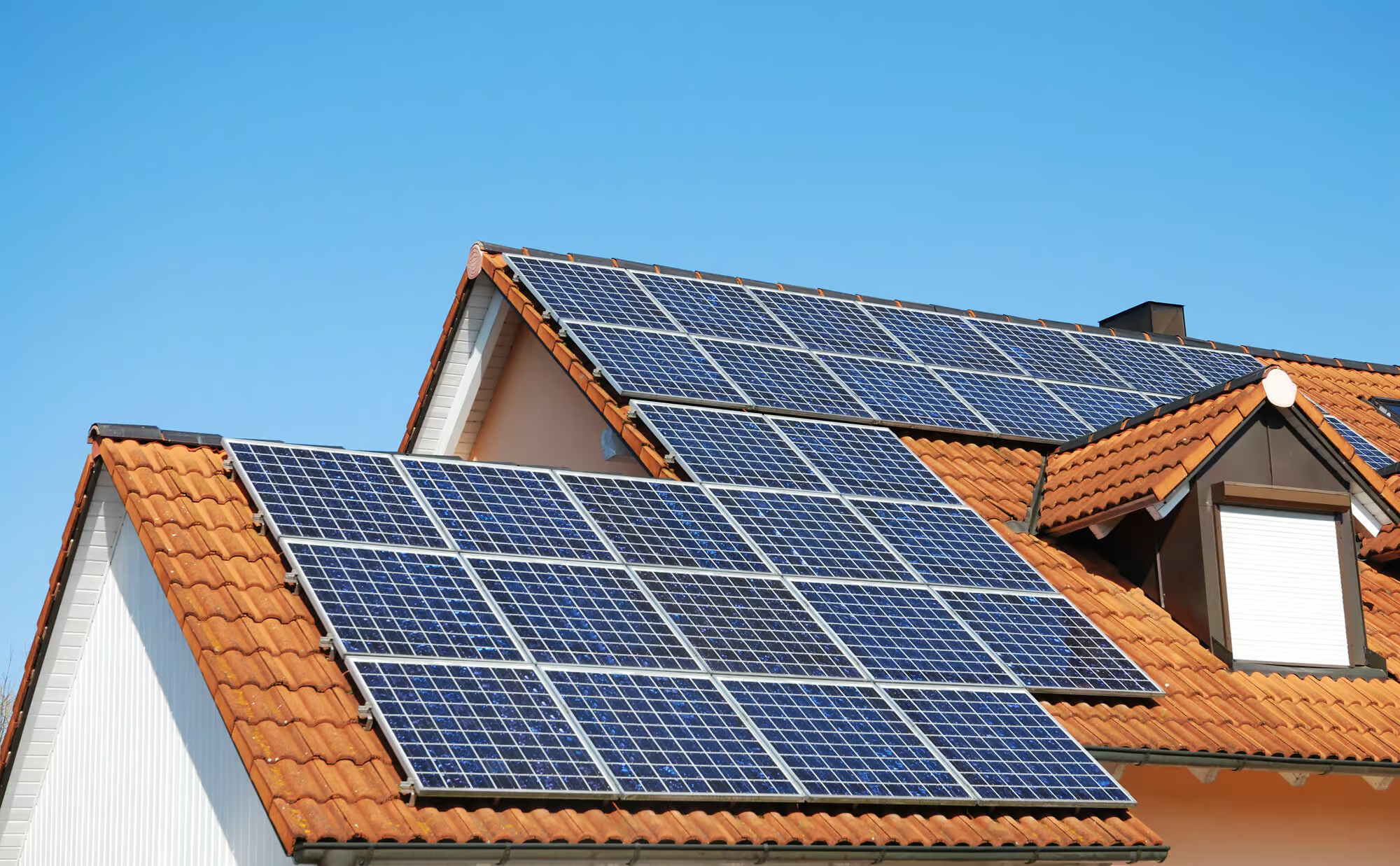
California lawmakers have approved legislation that could make Plug-In Solar easier for residents to install at home. The measure now heads to Governor Gavin Newsom, who could sign it into law.
The legislation focuses on small solar systems that connect directly to standard household electrical outlets. Unlike traditional rooftop installations, these systems can operate without extensive rewiring or expensive installation work.
The bill received support from lawmakers across both major political parties before passing through California’s legislature. If Newsom approves the measure, residents could begin purchasing compatible systems under simplified state requirements.
The proposed changes could make solar power more accessible to renters and homeowners with unsuitable rooftops. Additionally, households without enough money for traditional solar installations could gain another option.
Plug-in solar systems can sit on balconies, rooftops, or suitable backyard structures. Depending on their size, these systems can generate electricity that offsets part of a household’s normal consumption.
Supporters argue that the technology could reduce electricity costs while expanding access to renewable energy. Furthermore, simpler installation requirements could encourage more Californians to consider small-scale solar generation.
The legislation would replace a more complicated interconnection process with a free online registration system. Consequently, residents could face fewer administrative requirements before installing qualifying solar equipment.
Traditional rooftop solar systems often require significant installation work and additional expenses. Therefore, advocates believe plug-in systems could provide a practical alternative for households unable to pursue larger installations.
The proposed rules would limit each home’s plug-in solar capacity to 1,200 watts. Systems would also need to connect through standard outlets and offset electricity used at the property.
Additionally, qualifying equipment would need to meet state and national electrical standards. Independent safety organizations would also need to certify the systems before customers could legally use them.
Another requirement would prevent electricity from flowing back into the power grid during outages. This safeguard aims to protect utility workers and customers during maintenance and emergency situations.
However, several major California utilities raised concerns about the legislation during the approval process. Their objections focused primarily on worker safety, grid reliability, and enforcement of certification requirements.
Some utilities later reduced their opposition after lawmakers strengthened safety provisions within the legislation. Labor groups representing utility workers and firefighters also moved toward neutral positions after those changes.
Supporters nevertheless argue that the new rules strike an important balance between accessibility and safety. They believe California can expand residential solar while maintaining safeguards for electricity workers and customers.
The measure follows similar efforts in other parts of the United States. Several states have introduced policies supporting smaller solar systems that consumers can install with fewer barriers.
California could become one of the largest potential markets for the technology because of its enormous residential population. Moreover, the state already has extensive experience with renewable energy and household solar installations.
Advocates often point to European markets where balcony solar has gained significant popularity. Those examples demonstrate how smaller systems can complement traditional renewable energy infrastructure.
Plug-In Solar could particularly benefit renters who cannot make permanent changes to their buildings. It could also help residents living in apartments or properties with unsuitable roofs.
Supporters estimate that a single 400-watt panel could cover a meaningful portion of an average renter’s annual electricity consumption. Larger systems could provide enough electricity to operate appliances such as refrigerators, internet equipment, and window air conditioners.
However, consumers will still need to choose equipment that meets California’s final technical requirements. Existing products may require additional certification or modifications before they qualify under the new framework.
If Newsom signs the legislation, compatible systems could reach California consumers during spring 2027. That timeline would give manufacturers time to develop products that satisfy the state’s safety and performance standards.
The proposal could therefore create a new market for smaller residential renewable energy systems. At the same time, regulators will need to ensure that manufacturers and consumers follow the new safety requirements.
Plug-In Solar represents a significant shift toward simpler residential solar adoption in California. If successful, the policy could encourage other states to consider similar approaches to affordable household renewable energy.

