
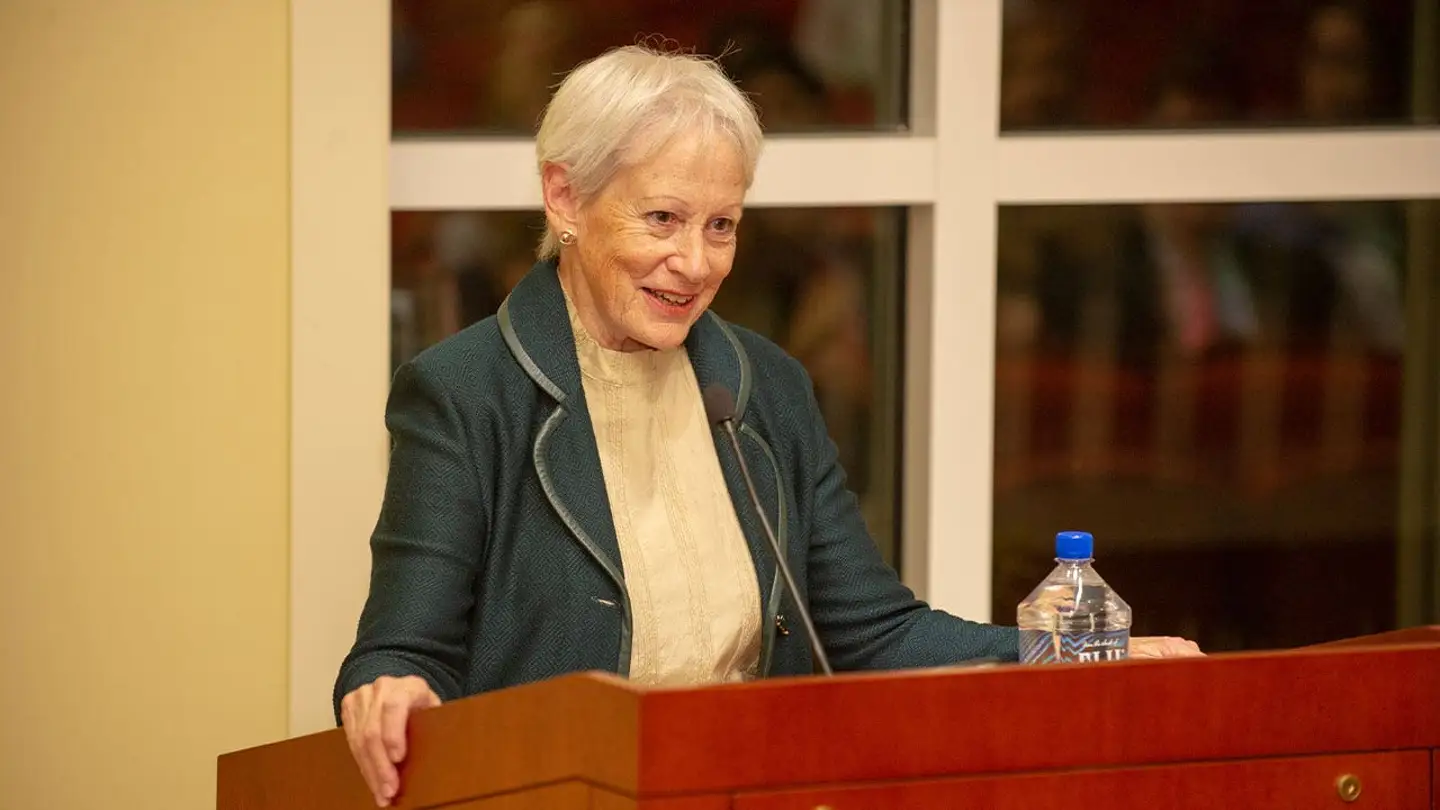
Nancy Kassebaum, the trailblazing Kansas Republican who served three terms in the U.S. Senate, has died at 94. Her family said she died Friday from natural causes after a long career in public service.
Kassebaum made history when Kansas voters elected her in 1978, sending her to Washington without family ties through marriage. At the time, her victory represented a significant breakthrough for women seeking influential positions within national politics.
She ultimately served 18 years in the Senate before retiring from office in 1997. Throughout those years, she developed a reputation as a moderate Republican who sometimes challenged her party’s leadership.
Moreover, Kassebaum frequently emphasized independent judgment rather than strict loyalty to Republican positions. Her approach earned respect among colleagues while also occasionally creating friction with conservative members.
Her political background also shaped her public career from an early age. Kassebaum was the daughter of former Kansas Gov. Alf Landon, who unsuccessfully represented Republicans during the 1936 presidential election.
Nevertheless, she established her own political identity after entering the Senate. By the time she prepared to retire, she ranked among only eight women serving in the chamber.
Furthermore, Kassebaum became the only woman chairing a Senate committee during that period. Her committee leadership demonstrated how quickly her historic election translated into broader influence.
Kassebaum also became known for bipartisan cooperation during an increasingly divided political environment. In particular, a major 1996 health insurance law carried her name alongside Democratic Sen. Ted Kennedy.
Their collaboration reflected Kassebaum’s willingness to negotiate across party lines on major national issues. However, her independent voting record sometimes placed her directly against powerful conservative interests.
For example, she supported legislation banning certain assault weapons during President Bill Clinton’s administration. She later recalled receiving unusually angry correspondence following that controversial Senate vote.
Despite those disagreements, Kansas voters repeatedly rewarded her political independence and continued support. She won reelection with approximately 76% of the vote in 1984 and 74% in 1990.
Kassebaum’s personal life also connected her to another prominent figure in American politics. In 1996, she married former Tennessee Sen. Howard Baker shortly before leaving the Senate.
Their marriage marked an unusual milestone because both spouses had previously served as United States senators. Baker later served as President Ronald Reagan’s chief of staff and ambassador to Japan.
After leaving Congress, Kassebaum continued participating in public affairs through bipartisan initiatives and commissions. She later served on a campaign finance reform commission during the Clinton administration.
Over time, however, her political views increasingly diverged from the Republican Party’s direction. She eventually supported Democratic candidates in Kansas, including former Democratic Gov. Laura Kelly.
Kassebaum also criticized President Donald Trump following the January 6, 2021, attack. She publicly argued that the situation had crossed an unacceptable line and called for Trump’s impeachment.
Despite her evolving political positions, Kassebaum retained a strong connection with Kansas throughout her life. Her public identity remained closely associated with the state and its people.
Nancy Kassebaum’s legacy therefore extends beyond her historic Senate election and three-term congressional career. She helped demonstrate that women could gain national influence while maintaining independent political identities.
Her career also reflected a period when bipartisan cooperation played a larger role within Congress. Ultimately, Kassebaum remained remembered for her Kansas roots, moderate approach, and willingness to challenge party expectations.

