
Satellite servicing is entering a new phase as Northrop Grumman prepares robotic spacecraft for extended orbital operations.
Northrop Grumman has begun transitioning from traditional satellite life-extension vehicles toward robotic systems designed for broader servicing missions. The company recently separated an older Mission Extension Vehicle from an Australian communications satellite after more than one year.
The spacecraft had helped maintain the satellite’s position while extending its operational capabilities in orbit. Now, Northrop plans to replace that system with newer spacecraft carrying robotic equipment and modular propulsion technology.
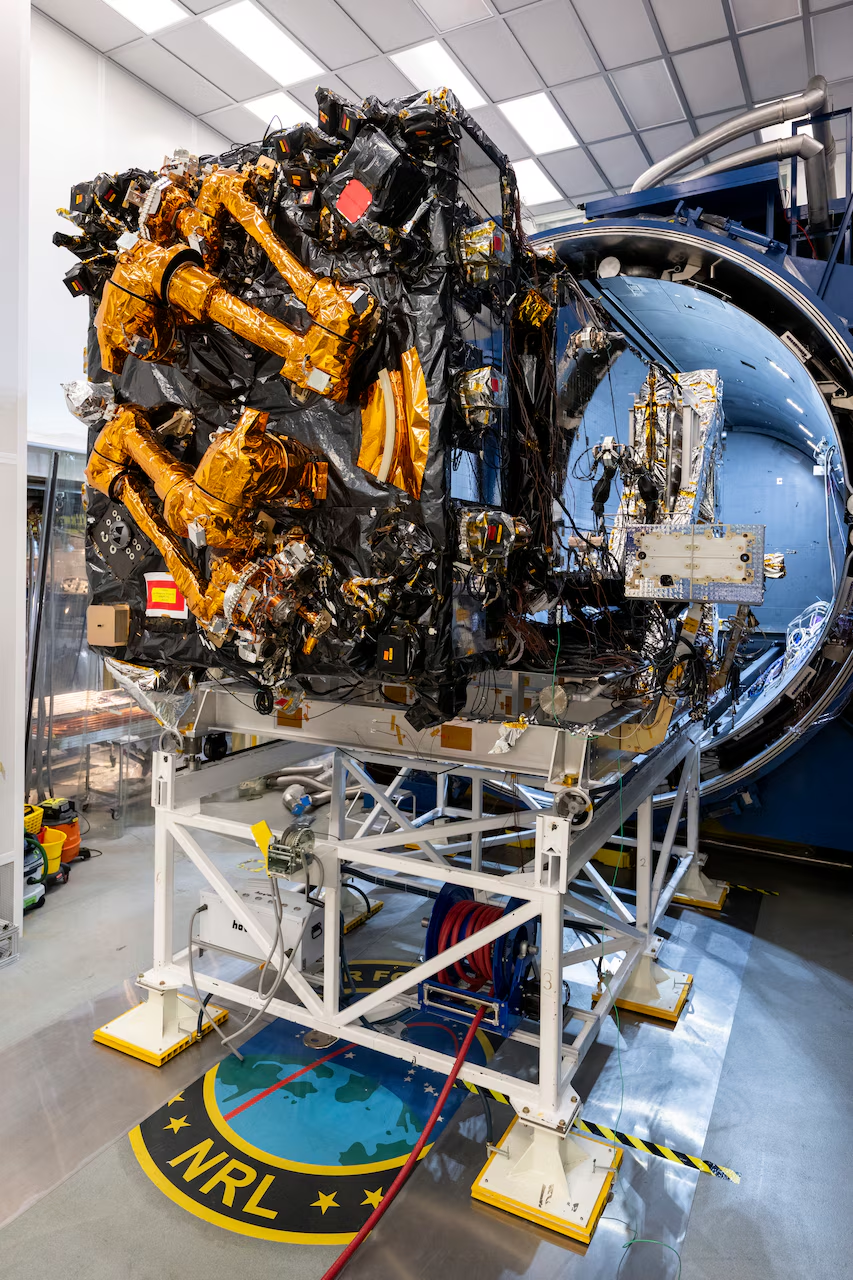
Four new spacecraft launched into orbit during July aboard a Falcon 9 rocket. One spacecraft, called the Mission Robotic Vehicle, carries two robotic arms designed for complex satellite servicing operations.
The remaining three spacecraft, known as Mission Extension Pods, provide propulsion capabilities for satellites requiring additional orbital support. Together, these vehicles represent a different approach to extending spacecraft lifespans without replacing entire satellites.
The new spacecraft are traveling toward targets located roughly 27,000 miles above Earth. During 2027, the robotic vehicle should attach one propulsion pod directly to the Optus communications satellite.
That process could allow the older satellite to remain operational for several additional years. Consequently, operators could continue generating value from spacecraft that might otherwise reach the end of their useful missions.
Many satellites eventually stop operating because they lack enough fuel to maintain their required orbital positions. Their computers, communications equipment, and sensors can remain functional despite those propulsion limitations.
Satellite servicing could therefore provide operators with an alternative to launching expensive replacement spacecraft. Furthermore, declining launch costs and improving space technology have helped make orbital maintenance increasingly practical.
Northrop has already demonstrated satellite life extension through two Mission Extension Vehicles currently operating in orbit. Those vehicles have collectively extended the operating lives of several communications satellites.
However, the new robotic system changes how Northrop intends to provide those services. Satellite operators can purchase and retain the propulsion pods attached permanently to their spacecraft.
Meanwhile, the Mission Robotic Vehicle can move between different customers instead of remaining attached permanently. This arrangement could reduce servicing costs while allowing one robotic spacecraft to support multiple satellites.
The technology also presents considerable engineering challenges because spacecraft must approach and connect while traveling thousands of miles per hour. The robotic vehicle must position its arms accurately before attaching propulsion equipment to another spacecraft.
Additionally, Northrop designed the robotic vehicle for refueling while operating in orbit. That capability could eventually demonstrate technologies required for more advanced maintenance and upgrades beyond simple propulsion support.
The company sees potential applications across several satellite markets, including large spacecraft operating in higher orbits. Such missions could benefit because replacing expensive satellites often requires substantial launch costs and lengthy preparation.
Northrop also expects future servicing missions could involve satellite upgrades and orbital adjustments. Therefore, the robotic platform could eventually perform more complex tasks than extending spacecraft lifespans.
Defense applications represent another potential market because governments operate numerous valuable satellites in high orbits. The involvement of advanced military research organizations also highlights the strategic importance of robotic servicing technology.
Nevertheless, Northrop has emphasized that its spacecraft focus on maintenance and servicing missions. The company views these capabilities as tools for improving the reliability and longevity of space infrastructure.
At the same time, other companies are developing robotic systems for lower Earth orbits. These efforts demonstrate growing interest in repairing or extending spacecraft instead of immediately replacing damaged assets.
Satellite servicing could ultimately reshape how operators manage expensive spacecraft throughout their orbital lifetimes. As robotic technology improves, maintenance, repairs, upgrades, and refueling could become increasingly routine activities in space.
For Northrop, the latest spacecraft represent an important step toward creating a flexible orbital infrastructure. The company now aims to move beyond individual life-extension missions toward broader robotic servicing capabilities.

