
Boeing Quarterly Loss widened during the second quarter as higher costs tied to the Air Force One program weighed on financial performance. Despite the larger-than-expected loss, the aircraft manufacturer reported higher revenue, stronger cash flow, and increased commercial aircraft deliveries across its business operations.
The company reported second-quarter results that exceeded revenue expectations but fell short of earnings forecasts. Additional investment in the delayed Air Force One program significantly affected profitability during the reporting period.
Boeing recorded a $280 million charge related to the development of two next-generation Air Force One aircraft. Company executives said additional investment supported continued progress on the long-running government aviation project.
Management still expects to deliver the first aircraft during 2028 despite ongoing development challenges. Executives emphasized that complex aerospace programs require continuous work before reaching final completion.
The company generated second-quarter revenue of $24.56 billion, representing an 8% increase compared with the same period last year. Higher sales reflected stronger performance across several business divisions, including commercial aviation operations.
Commercial aircraft deliveries continued improving as production levels increased throughout the quarter. Boeing delivered 171 commercial aircraft during the period, marking a 14% increase from the previous year’s total.
The manufacturer also continued expanding production of its popular 737 Max aircraft family. Current production reached approximately 47 aircraft each month, while management plans additional increases over time.
Although earnings disappointed investors, the company reported stronger cash generation than expected during the quarter. Free cash flow reached $631 million, significantly outperforming market expectations for negative cash flow.
Improved cash generation reflected stronger aircraft deliveries and continued operational improvements across manufacturing facilities. Better financial performance also supported ongoing investment in future aircraft development programs.
Boeing reported a net loss of $428 million, compared with a net loss of $612 million during the same quarter last year. Although losses narrowed year over year, adjusted earnings remained weaker than market forecasts.
After excluding one-time charges and special items, the company reported an adjusted loss of 76 cents per share. Analysts had expected a considerably smaller quarterly loss before the financial results announcement.
Company leadership acknowledged that additional work remains necessary despite recent operational improvements. Executives stressed that maintaining safety, product quality, and reliable delivery schedules remains their highest priority.
Management believes stronger operational execution will improve overall competitiveness during the second half of the year. Leaders also expressed confidence that continued teamwork will support future financial performance.
Boeing Quarterly Loss came as several delayed aircraft development programs continued progressing toward important certification milestones. The company expects regulatory approval for additional aircraft models over the coming months.
The 737 Max 7 remains one of the nearest certification targets within Boeing’s commercial aircraft portfolio. Successful certification would allow the manufacturer to begin broader customer deliveries for that model.
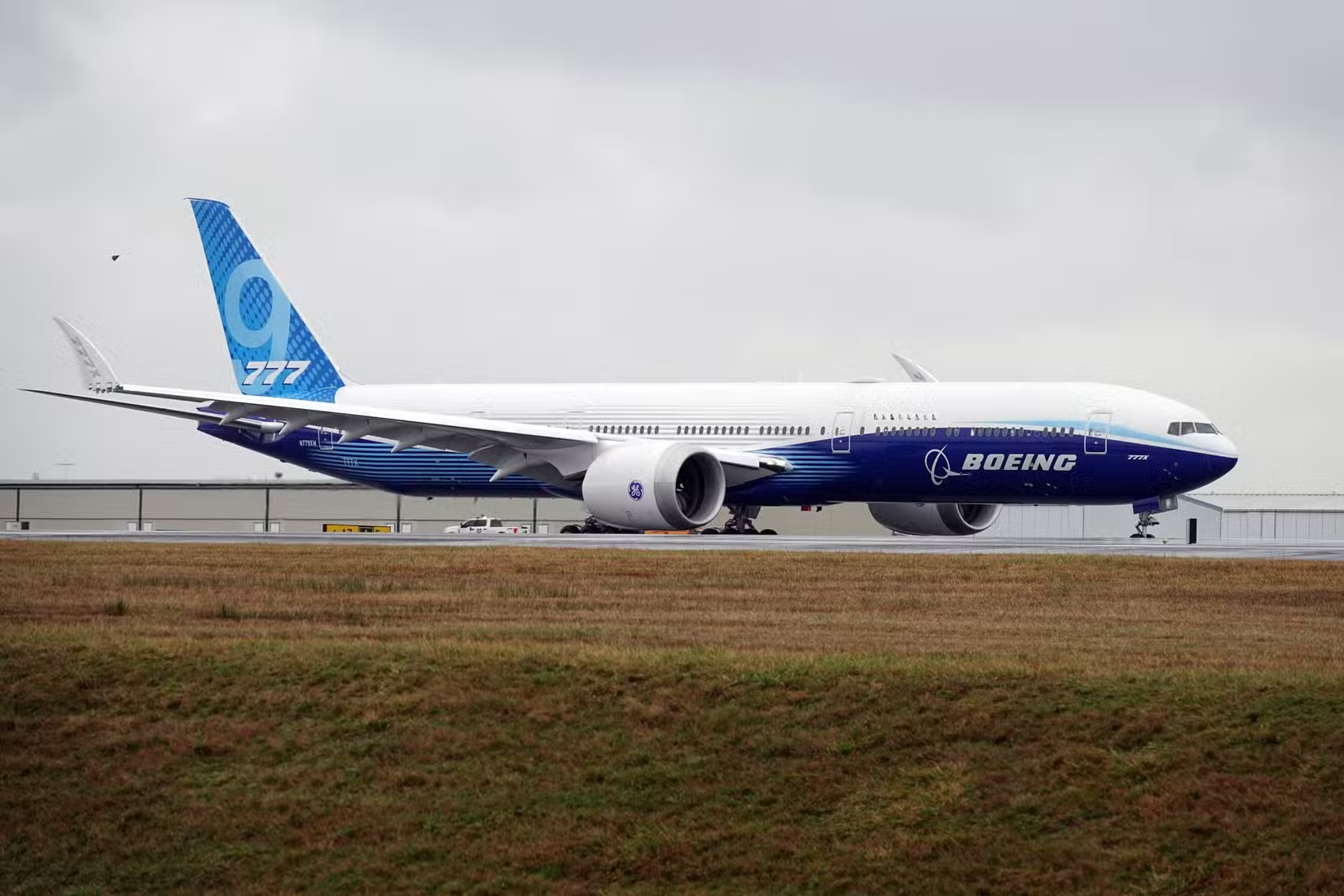
Industry observers also continue monitoring progress on the larger 737 Max 10 aircraft. Additionally, Boeing continues advancing certification work for the long-awaited 777X wide-body passenger aircraft.
Executives are expected to provide additional updates regarding certification timelines during discussions with financial analysts. Those conversations will likely address production plans, development progress, and future delivery expectations.
Boeing Quarterly Loss highlights the financial impact of complex government aircraft programs alongside continued commercial aviation recovery. Meanwhile, stronger revenue, increased aircraft deliveries, and improved cash flow demonstrate that broader business operations continue moving in a positive direction despite ongoing development costs.

