Peace negotiations between the United States and Iran face rising uncertainty as tensions increase in the Strait of Hormuz. The situation escalates under U.S. Iran ship seizure crisis, which now dominates diplomatic and market discussions.
First, a U.S. delegation prepares to travel for renewed talks with Iranian officials. However, Iran signals hesitation and questions participation. As a result, both sides struggle to maintain diplomatic momentum.
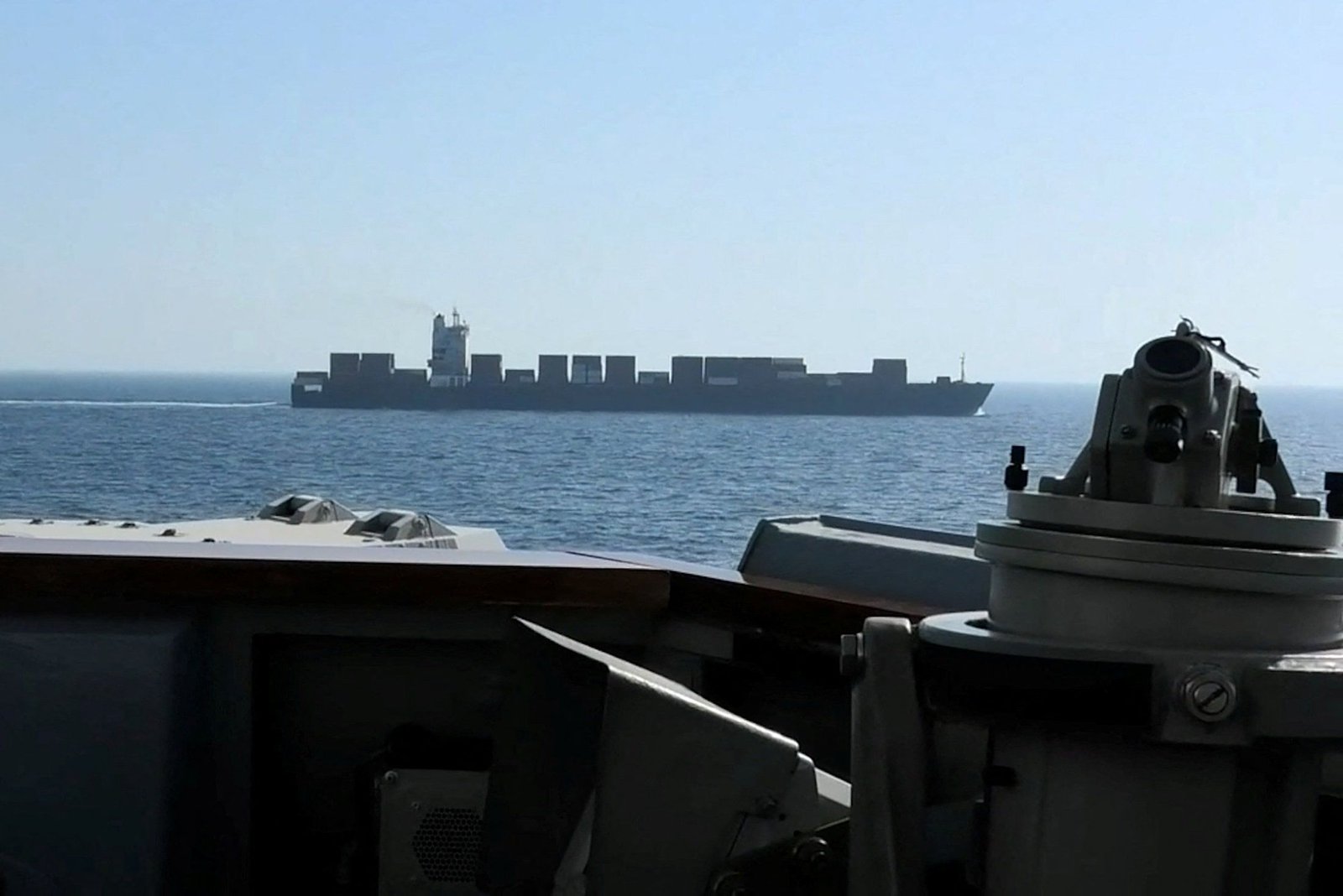
Meanwhile, military action intensifies tensions. U.S. forces seize an Iranian cargo vessel in the Strait of Hormuz. They target the ship after it ignores warnings to stop. Consequently, the operation escalates the ongoing dispute.
In addition, U.S. military forces disable the ship’s propulsion system during the operation. Marines then board the vessel and take control. They also begin inspecting cargo linked to sanctions enforcement.
President Donald Trump confirms the operation publicly. He states that U.S. forces stopped the vessel after repeated warnings. Therefore, Washington reinforces its enforcement of maritime restrictions.
However, Iran responds with strong opposition. The Iranian Revolutionary Guard warns of retaliation against U.S. forces. Although officials avoid details, tensions rise sharply across the region.
As a result, diplomatic talks face growing pressure. The situation now centers on U.S. Iran ship seizure crisis, which complicates peace negotiations. Both sides exchange warnings while avoiding direct escalation.
Furthermore, energy markets react immediately to the developments. Oil prices rise sharply as traders fear supply disruptions. The Strait of Hormuz plays a critical role in global energy transport.
Consequently, crude prices climb more than five percent in a single trading session. Traders respond quickly to risks involving shipping routes and military activity. Therefore, energy markets remain highly sensitive to political events.
In addition, investors worry about wider economic effects. Higher oil prices increase transportation and production costs globally. Airlines, shipping companies, and manufacturers face added pressure.
At the same time, geopolitical risk rises across financial markets. Investors reduce exposure to risky assets and shift toward safer investments. As uncertainty grows, volatility increases across global exchanges.
Meanwhile, diplomatic efforts continue despite rising tensions. Negotiators still aim to prevent further escalation. However, trust between both sides weakens after the ship seizure.
The Strait of Hormuz remains a key flashpoint. It carries a large share of global oil exports. Therefore, any disruption creates immediate global market reactions.
As the situation develops, analysts expect continued instability. The U.S. Iran ship seizure crisis shapes both political negotiations and energy market behavior. Investors now watch every development closely.