
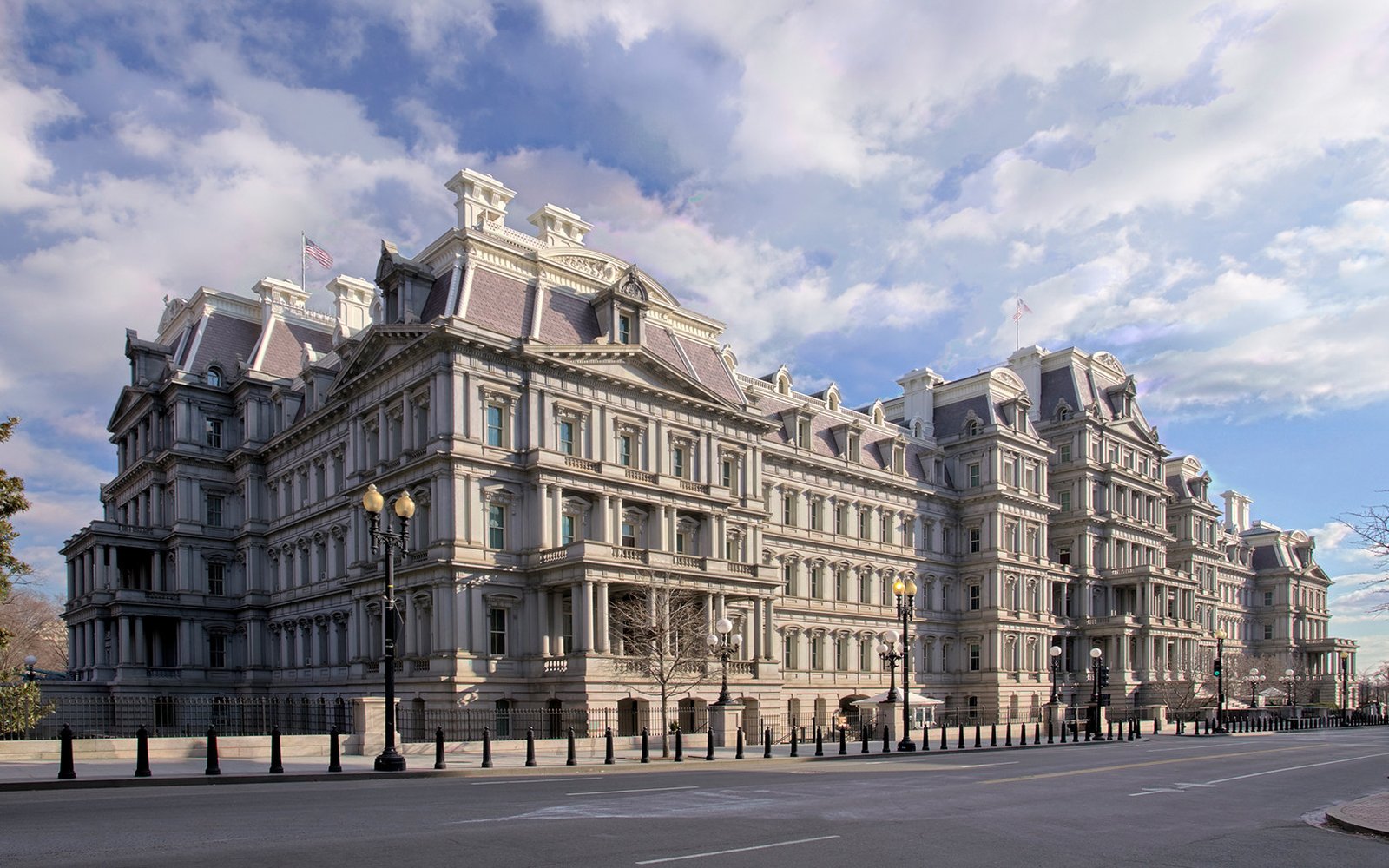
The white facade plan emerged after President Donald Trump proposed repainting the Eisenhower Executive Office Building in Washington, D.C. The proposal seeks to modify the building’s exterior appearance while reviewing long-standing maintenance concerns and architectural alignment.
The white facade plan focuses on the historic Eisenhower Executive Office Building located near the White House. Officials say the proposal aims to improve visual consistency between surrounding government structures and address ongoing preservation challenges.
The building dates back to 1888 and features a French Second Empire architectural style. It sits across from the West Wing and currently houses offices for senior White House staff, including national security personnel.
Supporters of the white facade plan argue that the building’s exterior has experienced deterioration over time. They say repainting or resurfacing could provide a practical solution to ongoing maintenance issues affecting the structure.
Critics of the white facade plan express concern about altering the historic character of the building. They argue that changes to the original stone exterior could reduce its architectural authenticity and cultural value.
The proposal includes detailed renderings that show how the building would look with a white exterior finish. These visual plans aim to help reviewers assess potential design changes more clearly during the evaluation process.
The white facade plan has been submitted to an architectural advisory commission in Washington for formal review. Officials expect the commission to analyze design compliance, preservation standards, and long-term maintenance considerations.
A public hearing has been scheduled for April 16, where commission members will review the proposal. During this session, experts and advisors will evaluate both technical and aesthetic aspects of the plan.
Administration officials argue that the building’s stone surface has shown signs of aging, including cracks and discoloration. They believe these issues highlight the need for updated maintenance strategies moving forward.
Opponents respond that alternative restoration methods could preserve the original appearance while still addressing structural concerns. They emphasize the importance of maintaining historical integrity in federal architecture projects.
The white facade plan has generated discussion among architects and preservation specialists across the country. Some view the proposal as a modernization effort, while others see it as a departure from historical design principles.
As the review process continues, officials will consider public feedback and expert analysis before making a final decision. The outcome will determine whether the proposed exterior changes move forward or remain under revision.

