
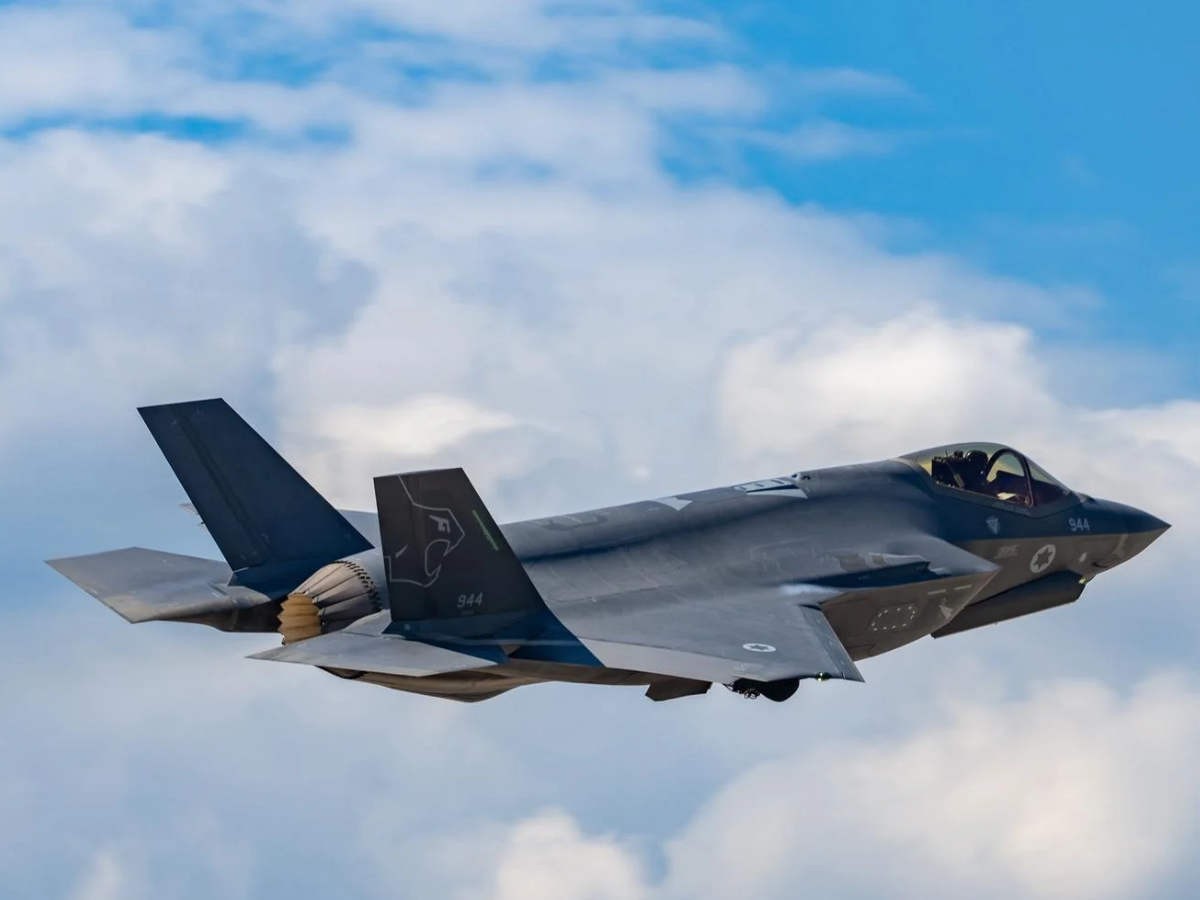
F-35 Air Combat entered a historic phase on Wednesday when Israel announced its stealth fighter downed an Iranian jet over Tehran. The reported engagement marks the first confirmed air-to-air kill involving a manned Iranian aircraft since the war erupted.
Israel’s military said one of its F-35 stealth fighters destroyed a piloted Iranian Air Force jet inside Iranian airspace. Officials identified the aircraft as a YAK-130 light fighter and trainer platform. The clash reportedly occurred as Israeli forces expanded operations across the Iranian capital.
Military officials explained that Israeli aircraft maintained operational freedom over Tehran during broad strike missions. During those operations, pilots encountered the Iranian jet and initiated engagement procedures. Subsequently, the F-35 fired and successfully eliminated the target.
If confirmed independently, the encounter would represent a dramatic escalation in the conflict’s aerial dimension. Until now, both sides largely avoided sustained dogfights involving piloted combat aircraft. Therefore, the F-35 Air Combat incident signals a notable shift in tactics.
Defense analysts emphasize that the YAK-130 primarily serves as a trainer aircraft with light attack capabilities. Nevertheless, Iran has adapted the platform for combat roles in recent years. Consequently, its deployment over Tehran suggests Tehran has begun committing more conventional air assets.
Moreover, the reported shootdown marks the first time in history that an F-35 fighter jet has destroyed a manned enemy aircraft in air-to-air combat. The fifth-generation jet, developed by Lockheed Martin, features advanced stealth characteristics and sensor fusion systems. Those capabilities allow pilots to detect and engage adversaries before opponents gain awareness.
Israeli officials did not release footage of the engagement but described the mission as part of sustained pressure operations. They stressed that Israeli forces continue to target strategic and military sites throughout Tehran. Meanwhile, Iranian authorities have not publicly confirmed the loss.
The F-35 Air Combat development also underscores deepening coordination between Israel and the United States. Joint operations reportedly intensified after earlier phases of the conflict expanded beyond limited strikes. As a result, air superiority has become a critical objective for both sides.
Regional observers now question whether Iran will respond by deploying additional fighter aircraft. Increased aerial confrontations could heighten risks of miscalculation and widen the war’s scope. At the same time, military planners on all sides remain alert to further escalations.
Ultimately, the F-35 Air Combat episode highlights how rapidly the conflict continues to evolve. By striking inside Tehran’s airspace and achieving a historic first, Israel signaled both capability and intent. The coming days will likely determine whether aerial engagements become a defining feature of this intensifying war.
F-35 Air Combat entered a historic phase on Wednesday when Israel announced its stealth fighter downed an Iranian jet over Tehran. The reported engagement marks the first confirmed air-to-air kill involving a manned Iranian aircraft since the war erupted.
Israel’s military said one of its F-35 stealth fighters destroyed a piloted Iranian Air Force jet inside Iranian airspace. Officials identified the aircraft as a YAK-130 light fighter and trainer platform. The clash reportedly occurred as Israeli forces expanded operations across the Iranian capital.
Military officials explained that Israeli aircraft maintained operational freedom over Tehran during broad strike missions. During those operations, pilots encountered the Iranian jet and initiated engagement procedures. Subsequently, the F-35 fired and successfully eliminated the target.
If confirmed independently, the encounter would represent a dramatic escalation in the conflict’s aerial dimension. Until now, both sides largely avoided sustained dogfights involving piloted combat aircraft. Therefore, the F-35 Air Combat incident signals a notable shift in tactics.
Defense analysts emphasize that the YAK-130 primarily serves as a trainer aircraft with light attack capabilities. Nevertheless, Iran has adapted the platform for combat roles in recent years. Consequently, its deployment over Tehran suggests Tehran has begun committing more conventional air assets.
Moreover, the reported shootdown marks the first time in history that an F-35 fighter jet has destroyed a manned enemy aircraft in air-to-air combat. The fifth-generation jet, developed by Lockheed Martin, features advanced stealth characteristics and sensor fusion systems. Those capabilities allow pilots to detect and engage adversaries before opponents gain awareness.
Israeli officials did not release footage of the engagement but described the mission as part of sustained pressure operations. They stressed that Israeli forces continue to target strategic and military sites throughout Tehran. Meanwhile, Iranian authorities have not publicly confirmed the loss.
The F-35 Air Combat development also underscores deepening coordination between Israel and the United States. Joint operations reportedly intensified after earlier phases of the conflict expanded beyond limited strikes. As a result, air superiority has become a critical objective for both sides.
Regional observers now question whether Iran will respond by deploying additional fighter aircraft. Increased aerial confrontations could heighten risks of miscalculation and widen the war’s scope. At the same time, military planners on all sides remain alert to further escalations.
Ultimately, the F-35 Air Combat episode highlights how rapidly the conflict continues to evolve. By striking inside Tehran’s airspace and achieving a historic first, Israel signaled both capability and intent. The coming days will likely determine whether aerial engagements become a defining feature of this intensifying war.

