
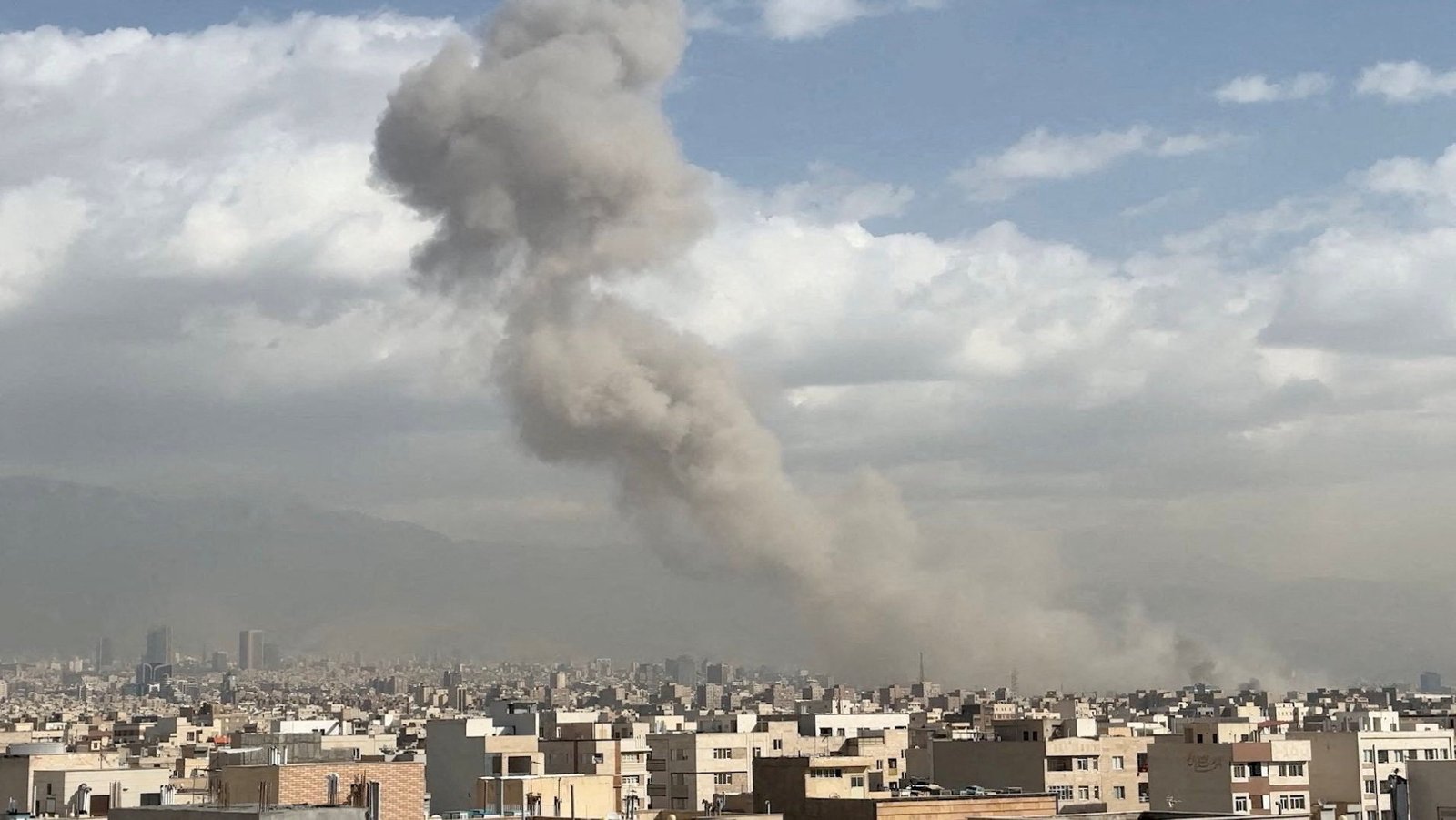
A massive Allied Air Campaign led by the United States and Israel is reshaping modern warfare across the Middle East. Military leaders say the operation demonstrates an unprecedented level of coordination between two powerful allied air forces. The unfolding Allied Air Campaign targets Iran’s missile infrastructure while establishing dominance over contested regional airspace.
Defense officials say the operation aims to dismantle Iran’s missile capabilities through sustained airstrikes and intelligence coordination. According to military commanders, American and Israeli aircraft now operate continuously across large portions of Iranian airspace. Leaders believe the campaign could achieve full operational control of the skies within days.
Military planners describe the mission as one of the most coordinated allied combat operations in modern history. Analysts emphasize that the scale of integration between the two militaries represents a new battlefield model. Instead of separate coalition actions, both nations are conducting synchronized strikes under a unified operational framework.
Israeli military officials say the campaign began with an unprecedented aerial assault involving roughly 200 fighter jets. The large-scale launch marked the biggest coordinated air operation in the history of the Israeli Air Force. Aircraft rapidly targeted missile launchers, radar systems, and air defense installations across multiple Iranian regions.
Within the first twenty-four hours, Israeli aircraft created an operational corridor allowing sustained strikes near Tehran. Military intelligence units gathered detailed targeting information through surveillance networks and intelligence partnerships. Those efforts enabled aircraft to hit hundreds of strategic sites during the initial assault phase.
Officials say aircraft dropped hundreds of precision munitions against approximately five hundred military targets. The strikes focused on missile launch facilities, command centers, and key defensive infrastructure. According to defense officials, the opening phase achieved a surprise rarely seen in modern combat operations.
Some analysts argue that the strategy represents a dramatic shift in how wars begin. Instead of gradually degrading military forces, planners immediately targeted senior political and military leadership. Experts say that the approach demonstrates the growing role of intelligence-driven warfare.
Defense specialists note that such operations would have been impossible only two decades ago. Advances in satellite intelligence, cyber capabilities, and precision weapons dramatically expanded modern strike capabilities. These technologies now allow allied forces to coordinate complex operations across vast geographic distances.
The operation also produced a historic aerial combat milestone during the early days of fighting. Israeli officials confirmed that an F-35 fighter jet shot down an Iranian aircraft during combat. The event marked the first known instance of an F-35 destroying a manned aircraft in battle.
Since the beginning of the operation, Israeli aircraft have flown more than 1,600 combat sorties. Military data indicates that forces deployed over 5,000 munitions during continuing strike missions. Those attacks reportedly destroyed hundreds of missile launchers and targeted more than six hundred military facilities.
Intelligence assessments suggested Iran planned to expand its ballistic missile stockpile significantly in the coming years. Israeli analysts estimated the country could possess thousands more missiles by the end of the decade. Officials, therefore, argue that the Allied Air Campaign aims to prevent that expansion before it becomes irreversible.
Despite the military successes, casualties continue to rise as fighting spreads across the region. Several American service members have died during operations, while others suffered injuries during combat missions. Iranian retaliation has also caused civilian deaths and injuries inside Israel and neighboring states.
Meanwhile, the conflict continues expanding beyond Iranian territory as regional forces confront multiple threats. Israeli military units have also conducted strikes against Hezbollah targets in southern Lebanon. The government mobilized thousands of reservists to sustain operations across several active fronts.
Military analysts emphasize that wars ultimately depend on endurance rather than technology alone. They argue that both sides will test each other’s political resolve and military resilience. As the conflict continues, the Allied Air Campaign may become a defining example of next-generation warfare.

