The United States has positioned major military assets across the Middle East for a highly kinetic campaign, as a former Pentagon official warned that forces now stand ready to execute any order from President Donald Trump.
Dana Stroul, who previously served as a senior Defense Department official, said American forces have adopted an expanded and sustained posture across the region. She explained that commanders can rapidly shift assets from other theaters to concentrate an overwhelming force in one operational area.
Stroul argued that the current deployment exceeds previous strike configurations seen during limited operations in 2025. At that time, U.S. forces conducted targeted strikes against Iranian-linked nuclear facilities without triggering wider regional conflict. Now, however, planners have broadened both offensive and defensive capabilities.
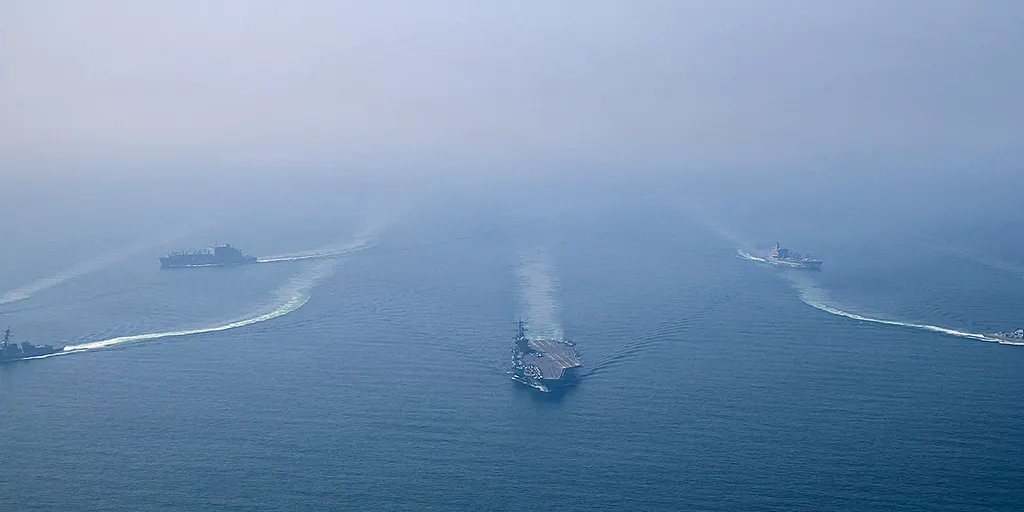
The Pentagon has deployed two aircraft carrier strike groups into the broader Central Command theater. The USS Gerald R. Ford recently moved eastward after transiting the Strait of Gibraltar. Meanwhile, the USS Abraham Lincoln continues operations in the Arabian Sea.
Naval aviation wings accompanying both carriers provide expanded strike reach and air superiority options. In addition, the military increased guided missile destroyer deployments throughout strategic waterways. Officials also positioned additional fighter aircraft, aerial refueling tankers, and layered missile defense systems.
Stroul emphasized that this posture allows rapid escalation if negotiations collapse. She stated that no regional actor matches the scale or speed of the current American force projection. According to her assessment, Iran remains significantly outmatched in conventional military capabilities.
Nevertheless, Washington and Tehran continue indirect nuclear discussions through Omani mediation. Diplomats plan another round of talks in Muscat as tensions simmer. While negotiations proceed, military planners maintain readiness for immediate action.
Stroul described Iran’s strategy as an attempt to combine public signaling with diplomatic delay. She argued that Tehran seeks leverage through rhetoric while avoiding confrontation. However, she maintained that American dominance remains clear in conventional terms.
Recent regional developments also weakened Iran’s network of allied militias and proxy forces. Sustained Israeli operations degraded groups that previously supported Tehran’s strategic depth. Consequently, analysts believe Iran faces constraints in rebuilding long-established capabilities quickly.
Still, U.S. officials frame the buildup as deterrence rather than inevitability. The presence of dual carrier groups signals leverage while preserving strategic flexibility. Military leaders continue coordinating closely with regional allies and partners.
Ultimately, Stroul stressed that readiness does not dictate action. Instead, she said political leadership will determine whether a highly kinetic campaign becomes reality. For now, American forces remain positioned, supplied, and prepared for whatever directive emerges from Washington.