
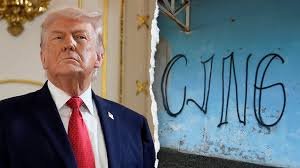
The Total Elimination Strategy reshaped America’s cartel fight and led to El Mencho’s downfall. U.S. officials confirmed Mexican forces killed Ruben Oseguera Cervantes during a weekend military raid. Authorities described the operation as a decisive blow against the violent Jalisco New Generation Cartel. However, American officials emphasized their intelligence support proved critical before the final assault.
President Donald Trump initiated the crackdown immediately after returning to the White House. On his first day, he directed officials to classify major cartels as foreign terrorist organizations. That designation unlocked broader surveillance authorities and tougher material support prosecution tools. Consequently, federal agencies rapidly expanded coordination across intelligence and law enforcement channels.
Soon afterward, Attorney General Pam Bondi issued guidance outlining a new enforcement philosophy. She instructed prosecutors nationwide to abandon incremental disruption efforts targeting cartel networks. Instead, she ordered teams to pursue leadership targets with urgency and aggressive coordination. This directive formally introduced the administration’s Total Elimination Strategy against transnational criminal organizations.
Meanwhile, the Drug Enforcement Administration intensified investigations into the cartel’s American distribution infrastructure. Officials reported the organization operated in nearly every American state. Investigators linked the cartel to fentanyl trafficking, extortion schemes, and human smuggling taxation. Therefore, authorities prioritized dismantling financial channels sustaining the cartel’s operations.
Within weeks, prosecutors secured extraditions of dozens of senior cartel figures from Mexico. Among them stood Antonio Oseguera Cervantes, brother of the slain cartel leader. Courts later sentenced Ruben Oseguera Gonzalez, known as El Menchito, to life imprisonment. Additionally, judges ordered billions in forfeitures tied to illicit narcotics proceeds.
At the same time, federal officials escalated pressure on fentanyl trafficking networks. The administration designated fentanyl as a weapon of mass destruction under federal authority. That classification enabled expanded military surveillance supporting border interdiction missions. Consequently, interdiction teams disrupted supply routes feeding American drug markets.
Financial warfare also intensified as Treasury officials targeted cartel-linked banking institutions. Sanctions severed several Mexican banks from the United States dollar system. Authorities argued that those institutions allegedly laundered proceeds benefiting cartel leadership structures. Furthermore, agents sanctioned luxury properties, generating substantial revenue for cartel operatives.
Later, federal agents launched a nationwide enforcement surge against cartel distribution cells. That coordinated sweep resulted in hundreds of arrests and multimillion-dollar asset seizures. Agents confiscated massive quantities of fentanyl powder and counterfeit pills. Officials stated those seizures represented millions of potentially lethal street doses.
Entering 2026, defense leaders created a joint counter-cartel task force structure. The task force integrated military, intelligence, and law enforcement capabilities. Officials described this expansion as the next operational phase. They insisted the Total Elimination Strategy would persist without hesitation.
Finally, Mexican forces executed the Tapalpa raid, eliminating the longtime fugitive leader. Afterward, U.S. officials confirmed they supplied intelligence assistance before the strike. White House representatives reiterated that narcotics traffickers would face relentless pursuit. Ultimately, authorities framed the outcome as validation of the Total Elimination Strategy.

