
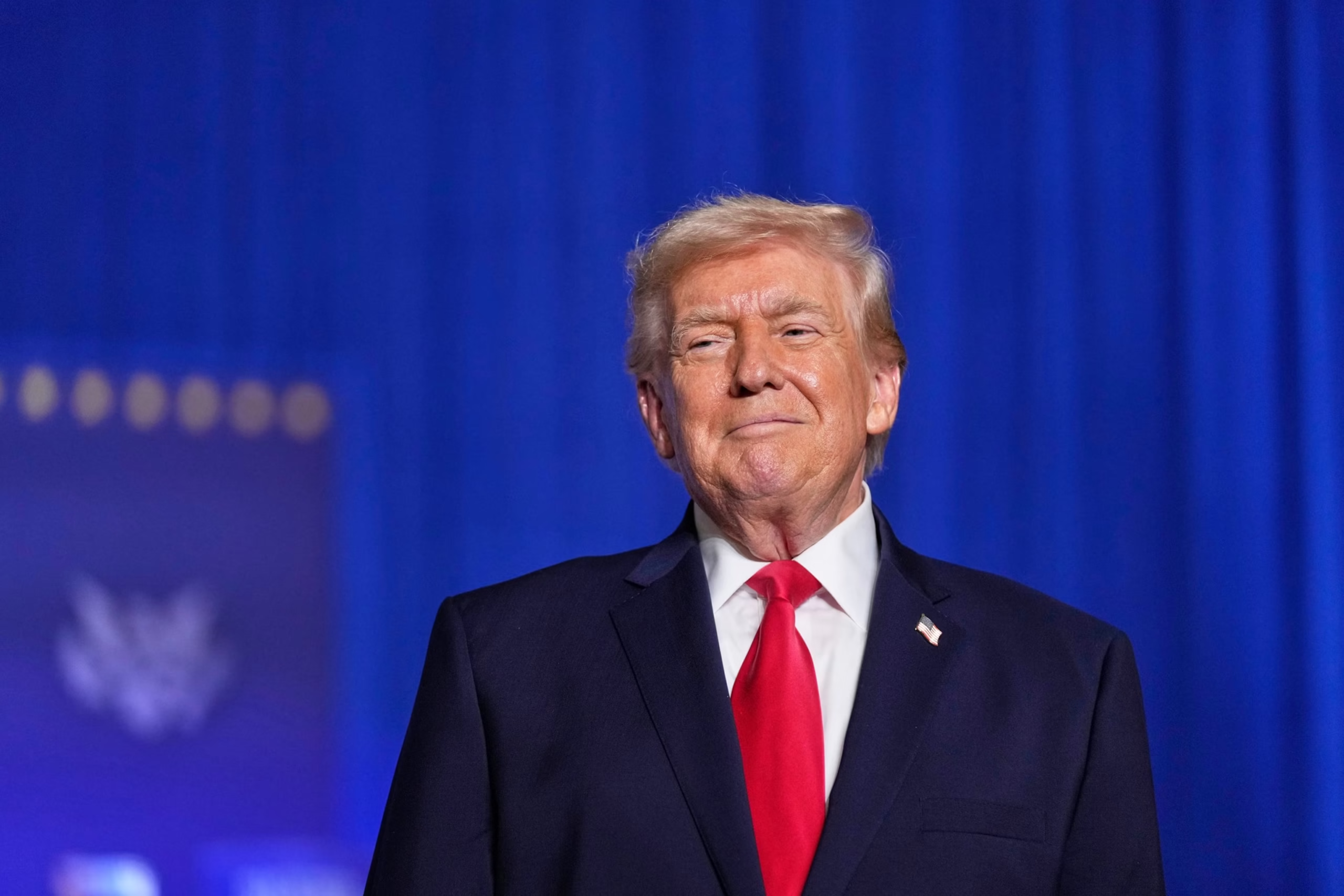
President Donald Trump recently defended controversial federal enforcement actions. He specifically cited a major crime decrease in Minneapolis. Trump attributes this change to the removal of thousands of criminals. Consequently, these claims ignite a heated national policy debate. The administration now scales back its substantial Minneapolis operation. Therefore, the situation presents a complex and evolving law enforcement story.
The President confidently stated Minneapolis crime rates fell sharply. He claimed a drop of twenty-five to thirty percent. Trump directly credited aggressive federal enforcement actions for this result. He described those arrested as hardened criminal elements. Moreover, he connected many to border security issues. These statements come from a recent television interview.
Trump further cited other cities with similar campaigns. He mentioned Washington D.C. as a primary example. The President described it now as a safe city. He also pointed to New Orleans and Memphis. He claimed those cities saw drastic crime reductions. Trump consistently frames this as a policy success.
The operational surge, named Operation Metro Surge, deployed many agents. These federal enforcement actions led to thousands of arrests. However, the tactics also sparked significant local backlash. Many residents and officials expressed public outrage. Community resistance grew steadily over several months. The operations clearly created a deep political divide.
Surprisingly, the administration then announced a major pullback. Officials decided to remove hundreds of federal agents. This decision followed tragic fatal shootings of residents. Trump suggested needing a softer touch presently. The drawdown aims for a complete departure soon. This pivot adds another layer to the story.
White House spokespeople reinforce the overarching crime narrative. They note historic national murder rate declines. They directly link this to administration law enforcement strategies. The broader promise involves restoring national law and order. This theme remains central to the President’s platform.
Critics, however, strongly question the cited crime statistics. They also challenge the operations’ methods and legality. The sudden scale-back fuels further skepticism and analysis. The debate extends into fundamental American values. It touches on immigration, policing, and federal power.
In conclusion, the Minneapolis situation remains highly fluid. Claims about successful federal enforcement actions face scrutiny. The ongoing drawback complicates the initial narrative. Ultimately, the long-term impact on community safety is unclear. The nation continues to watch this policy experiment unfold.