
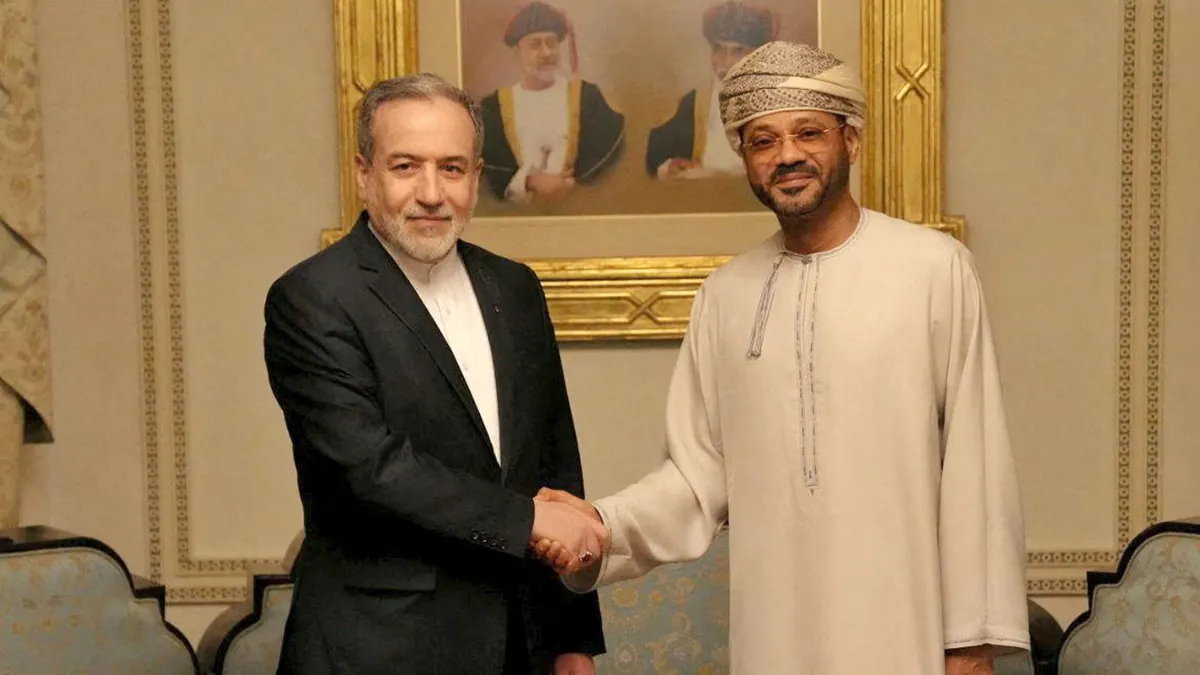
A top Iranian security official traveled to Oman just days after Tehran completed its first round of indirect nuclear negotiations with the United States. Ali Larijani serves as secretary of Iran’s Supreme National Security Council. His presence in the sultanate signals momentum behind the fledgling diplomatic process.
Larijani met with Omani Foreign Minister Badr al-Busaidi during his visit. Al-Busaidi has served as the chief intermediary between American and Iranian negotiators. Photographs from the meeting showed the two officials in conversation. Iranian state television reported that al-Busaidi handed Larijani an undisclosed letter.
The Iranian official also held a nearly three-hour meeting with Omani Sultan Haitham bin Tariq. Larijani then traveled to Qatar following his Oman stop. Qatar hosts the American military installation that bombed Iranian nuclear sites in 2025. The bombing concluded a brief but intense war between Israel and Iran.
Larijani used the diplomatic moment to criticize Israeli leadership. He accused Israel of playing a destructive role in the emerging negotiations. His comments came just before Israeli Prime Minister Benjamin Netanyahu traveled to Washington. Larijani warned Americans to remain alert regarding Zionist interference.
Officials from both Washington and Tehran described the initial talks positively. The first round lasted only a half-day in Muscat last week. Iranian Foreign Ministry spokesman Esmail Baghaei characterized the meeting as a measure of American seriousness. He said both sides addressed general principles rather than technical details.
Baghaei reiterated Iran’s core demands regarding its nuclear program. He insisted that Iran seeks only peaceful nuclear energy under international treaties. He also said Tehran would wait for next steps before addressing specifics. The spokesman expressed cautious optimism about continuing the diplomatic process.
Iranian Foreign Minister Abbas Araghchi also praised the talks. He called the Muscat meetings a good start to a long diplomatic pause. Araghchi said both sides conveyed their viewpoints in a positive atmosphere. He emphasized that continuation depends on consultations within each capital.
President Donald Trump also expressed optimism about the Iran nuclear talks. He told reporters aboard Air Force One that Tehran badly wants an agreement. Trump indicated flexibility regarding the timeline for reaching a deal. He compared the situation to past negotiations with Venezuela.
The president warned that consequences would be steep without an agreement. He described the American representative’s meeting with Iran as very good. Trump emphasized that the United States remains patient but prepared.
Oman’s Foreign Ministry characterized last week’s meetings as preparatory in nature. Officials focused on creating conditions for resumed diplomatic and technical negotiations. The sultanate has historically served as a trusted intermediary between Washington and Tehran. Its neutral position allows both sides to communicate without direct confrontation.
The Iran nuclear talks represent the first formal diplomatic contact since the 2025 conflict. American and Iranian representatives did not meet face to face in Oman. Instead each delegation held separate meetings with Omani mediators. This indirect format allows both sides to explore possibilities without political risk.
Regional observers view Larijani’s quick return to Oman as significant. His position on the Supreme National Security Council gives him direct influence over nuclear policy. His involvement suggests Tehran approaches these negotiations with serious intent. The nearly three hours with Oman’s sultan further indicates high-level commitment.
Iran continues to face multiple pressures that may drive its interest in talks. The country struggles with widespread anti-government protests. Economic sanctions have severely damaged the Iranian economy. The 2025 military strikes degraded but did not destroy Iran’s nuclear infrastructure.
American officials have not detailed their specific proposals for renewed negotiations. Washington has maintained maximum pressure sanctions since leaving the original nuclear deal. Trump has simultaneously expressed openness to a new agreement with Tehran. His administration now explores whether diplomacy can succeed where military action paused.
Both nations now enter a period of internal consultation regarding next steps. Iranian officials must return to Tehran and brief the Supreme Leader. American negotiators will report to Washington and await further instructions. Oman stands ready to facilitate another round when both sides prepare.
The coming weeks will determine whether this initial optimism translates into sustained diplomacy. Iran nuclear talks have collapsed before despite promising beginnings. Both capitals harbor deep mutual distrust after decades of confrontation. Yet the quick return of Iranian officials to Oman suggests something different this time.

