
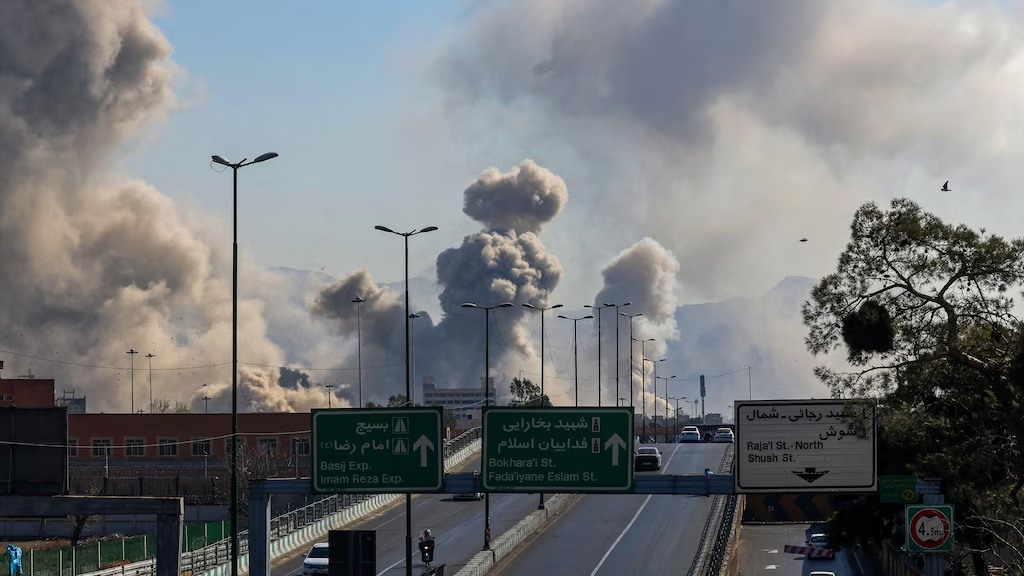
Escalating Iran Missile Attacks shook the Middle East on Thursday as explosions and interceptions were reported across several countries. The new wave of Iran Missile Attacks followed a dramatic naval clash after the United States sank an Iranian warship earlier this week. Consequently, regional governments raised alert levels while air defenses across multiple countries scrambled to intercept incoming threats.
Iran launched missiles and drones targeting Israel, American military positions, and several neighboring states across the region. Air raid sirens echoed throughout Tel Aviv and Jerusalem as Israeli defense systems intercepted incoming missiles. Military officials reported multiple successful interceptions while emergency teams monitored possible debris falling in populated areas.
Meanwhile, authorities in Azerbaijan accused Iran of launching unmanned aerial vehicles toward Nakhchivan International Airport and surrounding infrastructure. Defense officials condemned the incident and described the strike as an attack against civilian facilities without military justification. Investigators began examining the drones and gathering information about their capabilities and flight paths.
However, Iranian officials have not publicly acknowledged targeting Azerbaijan despite strong accusations from the country’s defense ministry. Azerbaijani leaders insisted Iran bears full responsibility for the incident and demanded international attention.
Elsewhere, Qatar activated its air defense network after detecting a missile heading toward the capital Doha. Authorities quickly evacuated residents living near the United States Embassy while interception systems neutralized the threat. Officials urged citizens to remain calm and rely only on verified government information during the emergency.
In the United Arab Emirates, falling debris from an intercepted projectile struck an industrial area in Abu Dhabi. Emergency crews secured the site while medical teams treated six injured workers, identified as Pakistani and Nepali nationals. Officials reported the injuries ranged from minor to moderate and confirmed no deaths occurred.
The latest Iran Missile Attacks followed the sinking of an Iranian warship by an American submarine. Military officials said the vessel was struck by a torpedo while sailing in international waters. The attack reportedly killed at least eighty-seven Iranian sailors while rescuers saved dozens from the wreckage.
United States defense leaders defended the strike and described it as a decisive operation during the ongoing conflict. Officials argued the naval action demonstrated American military capability and determination to dominate the battlefield.
Meanwhile, Iranian leaders strongly condemned the sinking and accused Washington of committing an atrocity at sea. Foreign Minister Abbas Araghchi criticized the United States Navy while religious leader Abdollah Javadi Amoli delivered a fiery televised speech. He called for resistance against the United States and Israel during a rare and aggressive public statement.
The broader conflict began earlier this week after American and Israeli forces launched major strikes inside Iran. Those operations targeted key leadership figures, missile launch sites, and nuclear-related facilities across the country.
As tensions continue rising, analysts warn that the conflict could expand further across the Middle East. Governments throughout the region now remain on high alert as Iran Missile Attacks continue threatening wider regional stability.

