
Greenland’s prime minister publicly declined a hospital ship offer from U.S. President Donald Trump after the American leader said he would dispatch a medical vessel to the Arctic island to address alleged healthcare concerns.
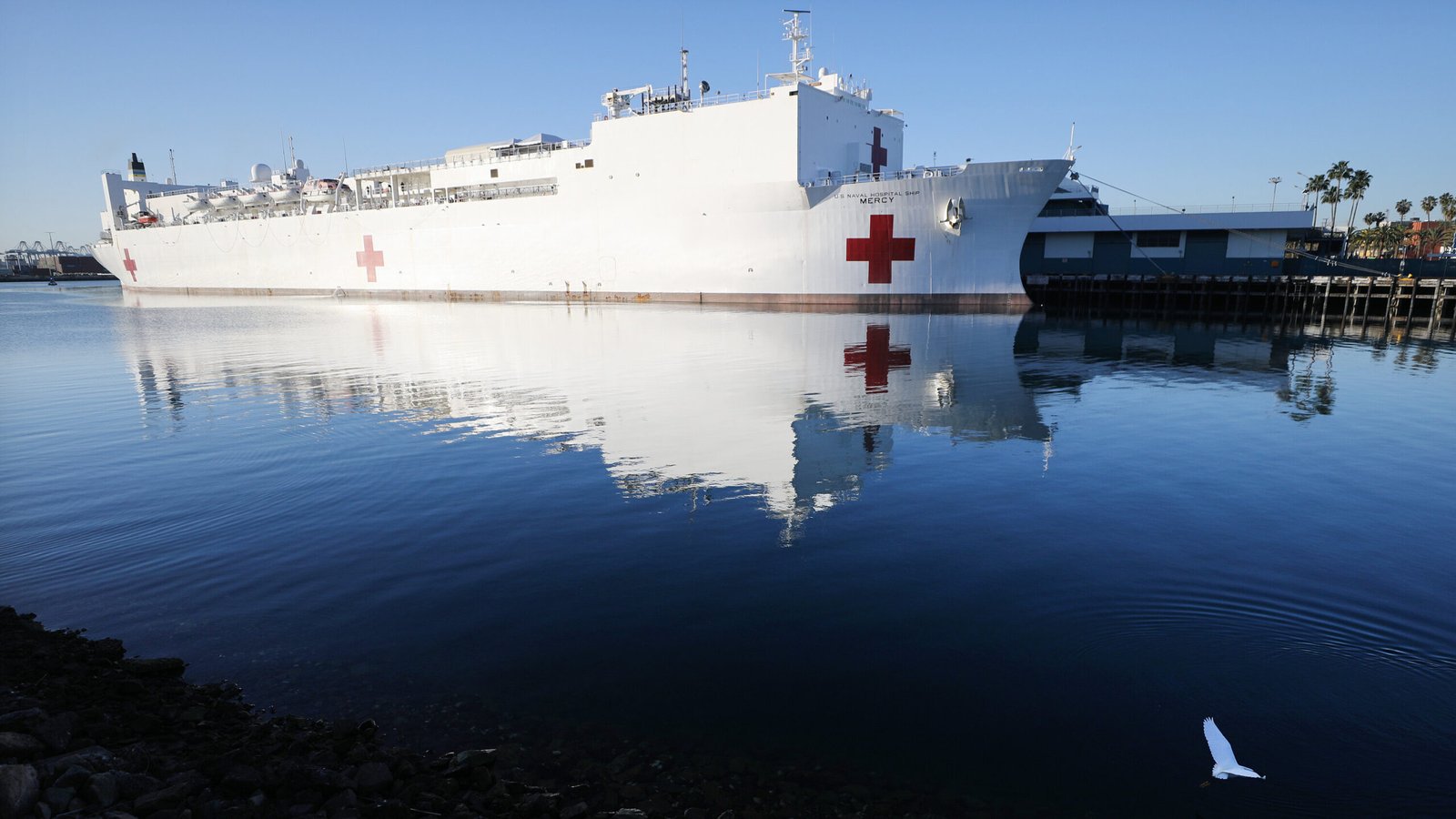
Trump announced on social media that he planned to send a ship stocked with medical supplies. He claimed that many residents were sick and not receiving adequate care. The post included an image resembling the USNS Mercy, a naval hospital vessel.
The USNS Mercy operates as one of two dedicated hospital ships in the United States Navy fleet. However, officials did not clarify whether Trump specifically intended to deploy that vessel. The White House also provided no operational details.
Greenland Prime Minister Jens-Frederik Nielsen responded swiftly and firmly to the proposal. He stated that Greenland would decline the hospital ship offer. Furthermore, he emphasized that the territory maintains a universal public healthcare system.
Nielsen noted that medical treatment remains free for Greenlandic citizens. He contrasted that structure with the United States healthcare model. Additionally, he urged Trump to engage through direct dialogue instead of public social media statements.
President Donald Trump has repeatedly expressed interest in strengthening U.S. ties with Greenland. In the past, he openly discussed acquiring the island, though he later said he would not pursue force. Since then, officials referenced a possible framework for future cooperation.
Greenland remains an autonomous territory within the Kingdom of Denmark. Danish and NATO leaders previously rejected suggestions that sovereignty could change. Consequently, diplomatic sensitivities continue shaping discussions about Arctic security and development.
Trump’s announcement followed a separate Arctic incident involving a U.S. submarine near Nuuk. Denmark’s Joint Arctic Command confirmed it evacuated a crew member requiring urgent medical treatment. However, authorities have not confirmed any direct connection between that evacuation and the hospital ship offer.
Meanwhile, Vice President JD Vance recently commented on broader negotiations involving Greenland and European partners. He suggested that discussions around future arrangements remain ongoing. Still, officials have released few concrete details about any agreement.
Despite rejecting the hospital ship offer, Nielsen said Greenland remains open to cooperation with Washington. Nevertheless, he stressed that discussions must occur respectfully and through official diplomatic channels. For now, Greenland’s leadership appears determined to assert both autonomy and confidence in its healthcare system.