
General Motors and Ford are expanding beyond traditional vehicles as they search for new growth opportunities in changing markets. The two automakers have competed for more than a century across sales, technology, and vehicle development. Now, however, their rivalry increasingly extends into defense manufacturing and energy storage. Both companies see opportunities to use existing factories, battery expertise, and large-scale manufacturing capabilities. At the same time, they face slower vehicle sales and significant costs from earlier electric vehicle investments.
The energy storage market represents one of the most promising opportunities for both companies. Energy storage systems can supply electricity to homes, businesses, data centers, and utility networks. Demand could increase as electricity consumption rises and companies seek greater control over energy costs. Therefore, automakers see battery technology as a potential way to create new revenue streams. Their existing battery investments could also help them enter this market without abandoning expensive manufacturing infrastructure.
GM and Ford have already invested billions of dollars in battery facilities designed for electric vehicle production. However, EV demand has not developed as quickly as both companies previously expected. Consequently, the automakers now want to use some of that capacity for other purposes. GM has explored several energy storage opportunities while continuing to develop battery technologies. Ford, meanwhile, plans to convert parts of existing battery facilities toward energy storage production.
Ford has committed billions of dollars toward its energy business and plans to convert a Kentucky battery plant. The facility could begin producing energy storage products by the end of 2027. Ford also plans to use part of another Michigan facility for residential energy storage cells. The company expects this business to become an important part of its broader strategy. Moreover, executives believe energy storage could help improve the financial performance of its electric vehicle operations.
GM has taken a similar approach by connecting its battery expertise with broader energy opportunities. Its defense division already develops power solutions that support military operations and specialized applications. Meanwhile, its battery joint venture produces cells that can serve energy storage customers. GM has also explored next-generation battery technologies that could support large-scale electricity storage. These efforts could eventually allow the company to compete more directly in the growing energy market.
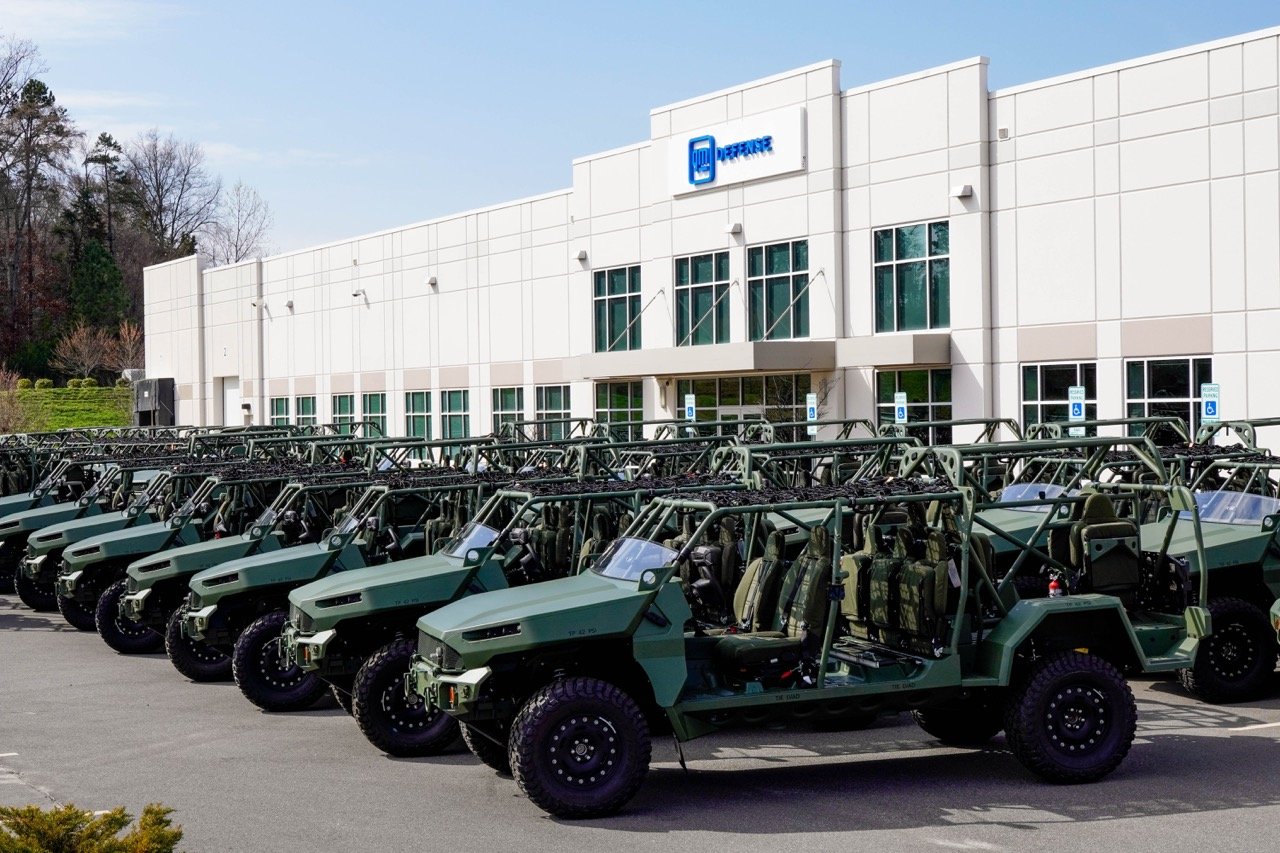
The automakers are also increasing their attention on defense manufacturing, although GM has a significant head start. GM revived its defense business several years ago after shutting the unit down for more than a decade. Since then, the company has developed military vehicles and worked on projects involving the U.S. military. Recently, the U.S. Army awarded GM a contract to produce infantry squad vehicles. The company said the contract could eventually exceed $1 billion, depending on future congressional funding.
GM expects its defense business to generate nearly $700 million in revenue during 2026. The company also expects the division to produce positive earnings before interest and taxes this year. Furthermore, GM wants to build a stronger pipeline of future defense projects. Company executives believe the business can become a more meaningful contributor to overall earnings. However, defense revenue remains relatively small compared with GM’s much larger automotive operations.
Ford has moved more recently into the defense sector and continues developing potential military opportunities. The company has not disclosed as many details about its U.S. defense strategy as GM. Nevertheless, Ford has joined other manufacturers pursuing contracts connected with military vehicle programs. It also recently partnered with General Dynamics Land Systems and engineering company Ricardo. The companies plan to compete for a future British military vehicle program.
The defense push gives both automakers another opportunity to use their manufacturing strengths. Large automotive companies already operate extensive supply chains and production networks. Those capabilities could help them produce military vehicles at significant scale. In addition, automakers have experience developing advanced vehicles for demanding operating conditions. As a result, government agencies may see value in working with established manufacturers.
At the same time, the defense industry presents different challenges than traditional vehicle manufacturing. Government contracts often depend on budgets, procurement decisions, and congressional funding. Therefore, automakers cannot assume that every potential project will become long-term revenue. The companies must also meet strict requirements involving security, technology, and domestic manufacturing. Despite those challenges, both GM and Ford see defense as a useful area for diversification.
The shift toward defense and energy comes as the U.S. automotive market faces several pressures. Vehicle sales have slowed, while manufacturers continue adjusting their plans for electric vehicles. Meanwhile, production facilities require substantial investment to remain productive. By entering additional industries, GM and Ford can potentially use existing resources more efficiently. This strategy could also reduce their dependence on traditional vehicle sales over time.
The energy storage opportunity may prove especially important because data centers require increasing amounts of electricity. Growing demand from artificial intelligence and other digital services has increased interest in reliable power infrastructure. Energy storage can help businesses manage electricity demand and provide backup capacity. Consequently, battery manufacturers and automakers see opportunities beyond traditional electric vehicles. GM and Ford are now positioning parts of their operations to benefit from that trend.
Overall, the new strategy marks another chapter in the long-running rivalry between GM and Ford. Instead of competing only for vehicle buyers, the companies are targeting emerging business opportunities. Defense contracts could provide new manufacturing work, while energy storage could create additional uses for battery facilities. Both areas remain relatively small compared with their core automotive businesses. Nevertheless, the expansion could help the automakers diversify as they navigate changes across the U.S. vehicle market.
The broader strategy also reflects how manufacturers are adapting after major electric vehicle investments. Rather than abandoning battery factories and related expertise, GM and Ford are finding alternative applications. Energy storage provides one possible path, while defense manufacturing offers another opportunity for existing production capabilities. As these businesses develop, investors will watch whether they can generate meaningful profits. For now, both companies view these markets as promising additions to their long-term growth strategies.