
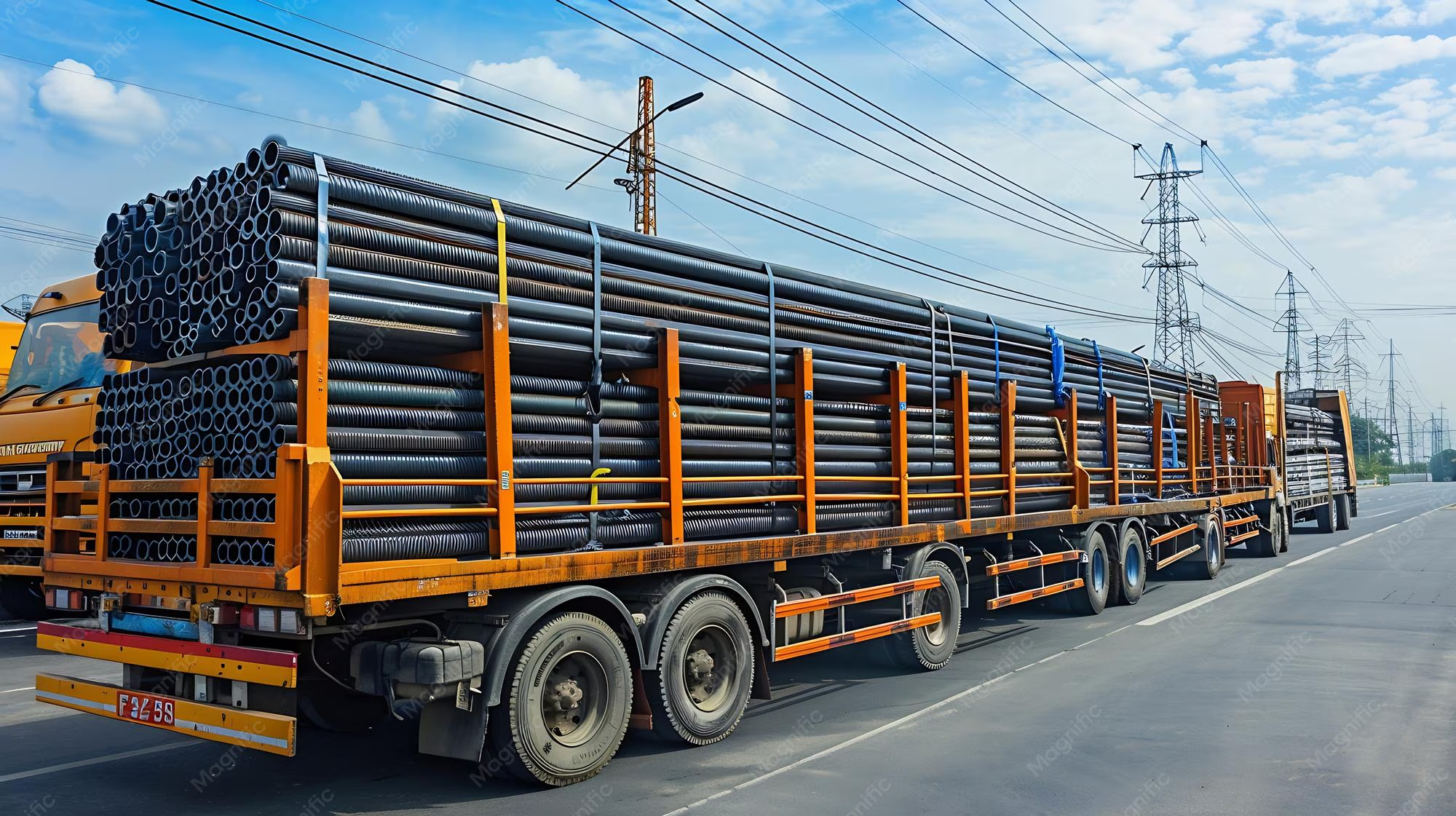
The data center boom is creating new opportunities for truckers as artificial intelligence drives construction across rural America. Meanwhile, trucking companies continue facing uneven freight demand, higher operating costs, and pressure from economic uncertainty. However, large technology projects have created additional work for carriers transporting equipment and construction materials.
Many new data centers require extensive deliveries before workers can complete their construction. These projects need generators, transformers, cooling systems, wiring, servers, racks, and other specialized equipment. Therefore, trucking companies increasingly handle freight connected with the rapid expansion of artificial intelligence infrastructure.
The growth particularly benefits flatbed and heavy-haul carriers that transport oversized construction equipment. During recent months, demand for these services has increased across several construction-heavy transportation markets. As a result, some trucking companies have experienced stronger rates and tighter capacity within specialized freight segments.
Furthermore, the expansion has changed established trucking routes because developers often choose locations outside traditional freight centers. Companies frequently consider available land, electricity supplies, and operating costs when selecting data center locations. Consequently, carriers now move more equipment through rural communities that previously handled relatively little industrial freight.
Industry observers say approximately two-thirds of planned data center developments involve rural areas. In addition, many proposed facilities could enter counties that currently have no comparable data center operations. Therefore, construction activity can introduce new freight routes while creating transportation demand across surrounding communities.
The impact also extends beyond professional truck drivers and large transportation fleets. Construction projects require diesel technicians, maintenance workers, logistics specialists, and other transportation-related employees. Consequently, growing freight volumes can create additional employment opportunities throughout the broader transportation industry.
However, trucking companies also face challenges when responding to sudden increases in demand. Smaller carriers may need additional vehicles, drivers, equipment, fuel, and maintenance services to accept larger contracts. As a result, stronger business activity can create significant pressure on company cash flow.
Smaller transportation companies sometimes face payment delays after covering expenses for major customers. Meanwhile, fuel costs, wages, maintenance bills, and equipment expenses continue requiring immediate payments. Therefore, carriers may need additional working capital before they can fully benefit from increased data center freight.
The data center boom also affects warehouses, storage facilities, rail terminals, and other supply-chain businesses. Although some large components travel by rail, trucks often complete the final portion of their journey. Thus, rail transportation does not necessarily eliminate trucking demand surrounding major construction projects.
In several states, increased construction activity has already contributed to heavier truck traffic. Georgia and Texas represent examples where new projects have influenced transportation routes and freight movement. Additionally, other rural regions could experience similar changes as developers announce more large-scale facilities.
Nevertheless, transportation companies should not assume that current demand will continue indefinitely. Data center construction creates substantial freight requirements while developers build the facilities and install major equipment. Once construction ends, however, the amount of regular truck traffic can fall considerably.
That difference creates an important concern for communities considering major infrastructure investments around data center projects. Local governments may face pressure to expand roads, services, and transportation infrastructure during construction periods. However, those investments could become harder to justify if freight volumes decline afterward.
Data center facilities typically require fewer truck deliveries after construction than traditional warehouses. Retail distribution centers, for example, regularly receive and send physical products through numerous loading docks. By comparison, completed data centers generally require considerably less routine transportation activity.
Therefore, trucking companies may need to treat the current expansion as an opportunity rather than permanent growth. Carriers can benefit from construction contracts while continuing to monitor how project activity changes over time. At the same time, companies may diversify their customers to reduce dependence on temporary construction freight.
The data center boom nevertheless provides meaningful support for a transportation sector facing difficult market conditions. Trucking businesses have dealt with weaker freight volumes, changing trade conditions, and expensive operating costs. Consequently, large infrastructure projects offer some companies a valuable source of additional revenue.
For now, demand remains concentrated around projects requiring heavy equipment and construction materials. Flatbed and specialized carriers appear especially well positioned to benefit from continued infrastructure development. However, smaller carriers must carefully manage costs while expanding their fleets or accepting larger assignments.
Ultimately, artificial intelligence is influencing trucking not only through technology but also through physical infrastructure. Every new facility requires transportation networks capable of moving enormous quantities of equipment and construction supplies. Therefore, the relationship between AI development and trucking could remain important while new projects continue entering construction.
Still, transportation companies and local communities face a key question about what happens after construction activity slows. Strong demand today does not automatically guarantee comparable freight volumes several years later. For that reason, businesses and local officials must consider both immediate opportunities and longer-term transportation needs.
The current expansion gives truckers another source of freight while technology companies continue building large computing facilities. Yet, industry observers caution that companies should avoid treating temporary construction demand as guaranteed permanent growth. As projects move from construction toward operation, trucking businesses will need to adjust their strategies accordingly.