
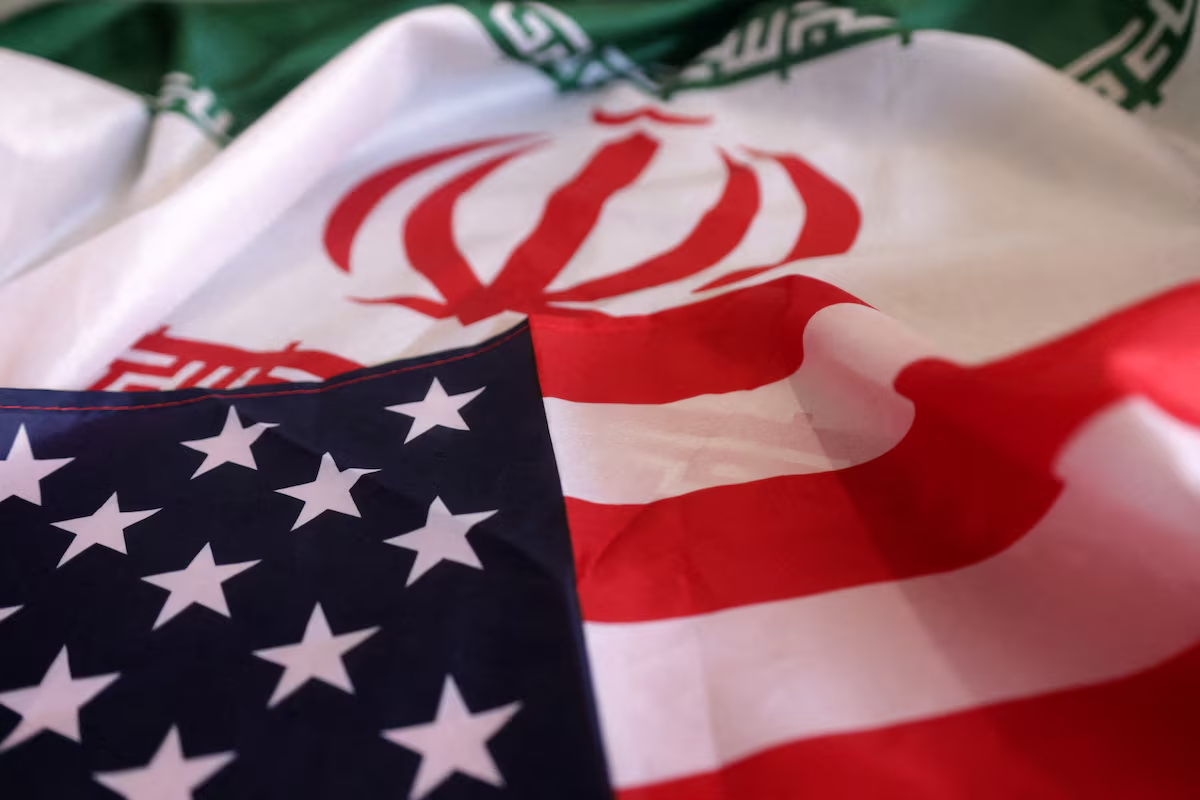
Regional tensions increased Tuesday after the United States and Iran exchanged new military strikes. The latest actions followed weeks of reduced direct fighting between the two countries. U.S. forces struck targets linked to Iran’s Islamic Revolutionary Guard Corps. American officials said the operation responded to threats involving commercial shipping and U.S. personnel in the region.
The strikes focused attention on the Strait of Hormuz and its importance to international trade. The waterway carries major energy shipments between the Persian Gulf and global markets. Iran responded with missile and drone attacks against several locations. Iranian state-linked media reported attacks targeting U.S. military positions in Jordan. Jordanian forces intercepted incoming missiles during the exchange. The developments showed how the conflict could affect countries beyond the immediate U.S.-Iran confrontation.
Meanwhile, President Donald Trump warned that Washington could take stronger action after another Iranian attack. He said the United States could respond with greater military force if Tehran continued its retaliation. Iranian officials also indicated that their response would continue. An Islamic Revolutionary Guard Corps spokesman said Tehran would no longer limit its response to U.S. interests. As a result, both governments now face pressure to manage the next stage carefully. Further military actions could increase risks for American forces and regional governments.
The Strait of Hormuz remains central to those concerns. Any major disruption there could affect commercial vessels and international energy supplies. The United States has taken military and economic measures against Iran during the broader confrontation. Those measures have also affected Iranian oil exports and the country’s energy revenues. At the same time, the latest fighting has created concerns for international energy markets. Oil prices increased as traders considered the possibility of further disruption around the waterway.
Brent crude and U.S. crude both recorded higher settlements Tuesday. Investors continue to watch shipping routes, energy facilities, and military developments across the region. Regional tensions could also affect countries that host American military personnel. Bahrain, Kuwait, Qatar, Saudi Arabia, the United Arab Emirates, and Jordan have important security ties with Washington. Iranian attacks against those locations could expand the geographic scope of the confrontation. However, regional governments have different relationships with both Washington and Tehran.
Iraq could also face additional security challenges because of its location. The country sits between Iran and several areas with U.S. military activity. Any wider fighting could therefore create pressure for Iraqi authorities. They may need to address security concerns while managing relationships with both countries. The conflict also carries potential consequences for global shipping. Commercial vessels could face higher insurance costs or changes in established routes.
Energy companies and governments could likewise prepare for possible supply disruptions. Such disruptions could affect transportation costs and energy prices in several markets. The latest exchange follows months of military and political tension between Washington and Tehran. The broader conflict began with U.S. and Israeli strikes against Iran on Feb. 28. Earlier fighting focused heavily on Iran’s nuclear program and military capabilities. However, shipping security and regional military deployments have since become increasingly important.
Diplomatic efforts remain another part of the situation. Iranian President Masoud Pezeshkian has indicated that Tehran remains open to discussions under certain conditions. However, the latest strikes could make renewed negotiations more difficult. Both governments must now consider military, political, and economic consequences. Regional tensions therefore remain closely connected to diplomatic developments. A reduction in attacks could create more space for negotiations between the two sides.
Conversely, another exchange could increase pressure on both governments. Additional strikes could also involve more countries or military forces. For now, the United States and Iran continue to exchange threats and military actions. Neither side has indicated that the confrontation has reached a final resolution. The situation remains particularly important for countries near the Persian Gulf. Their governments must monitor military movements, shipping activity, and possible threats to critical infrastructure.
International markets will also continue watching developments around the Strait of Hormuz. The waterway remains essential to global energy transportation and regional commerce. The latest exchange has therefore increased uncertainty across the region. However, the scale of any future escalation will depend on decisions made by both governments. For now, regional tensions remain the central concern surrounding the latest U.S.-Iran confrontation. Further military action could determine whether the conflict stays limited or expands.