
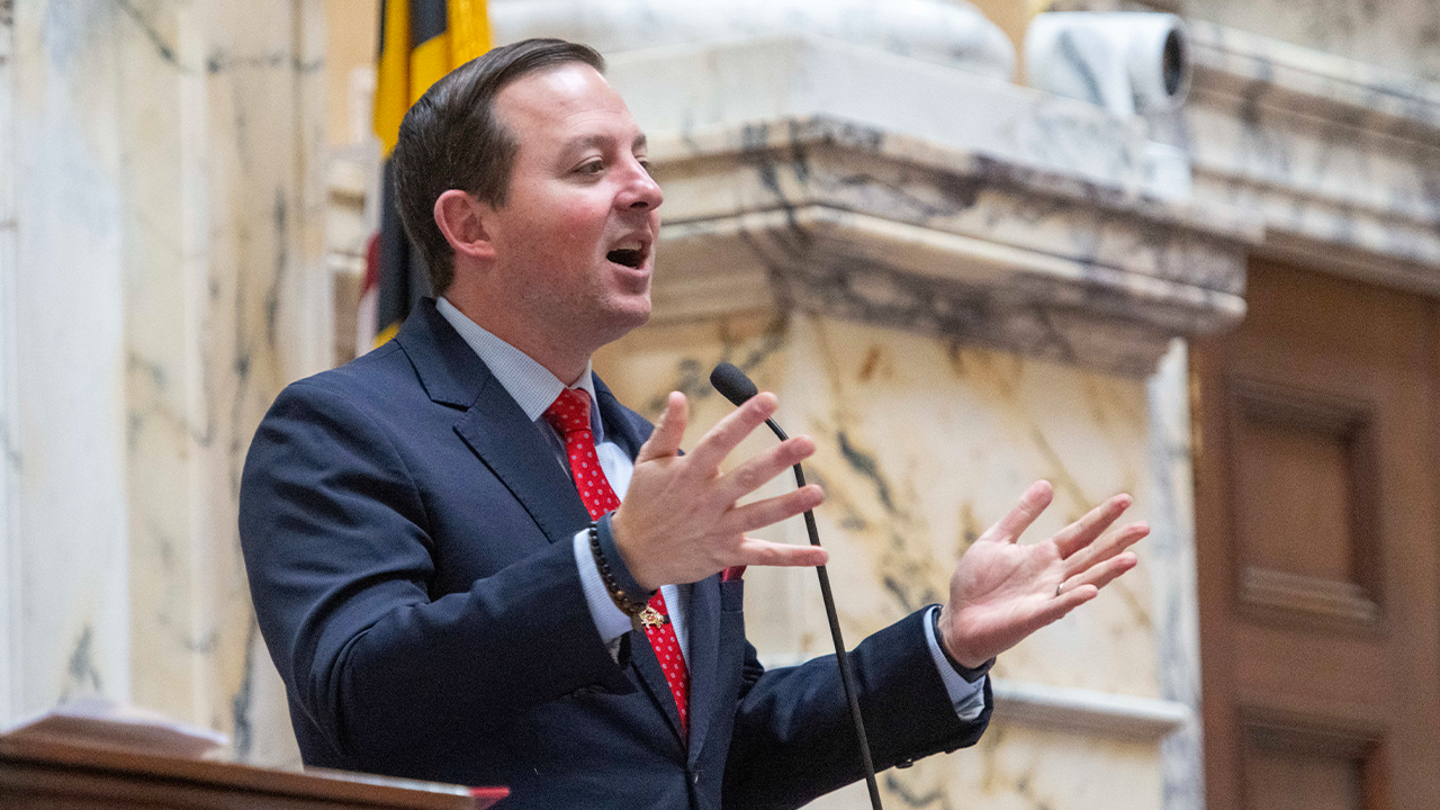
Maryland Primary Victory secured another term for Senate President Bill Ferguson after he defeated a progressive challenger in one of the state’s most closely watched legislative races.
Although state Senate contests rarely attract widespread attention, the race drew significant interest because of Ferguson’s opponent, activist Bobby LaPin. Known online by the nickname “Captain Bobby,” LaPin built his campaign around criticism of Democratic establishment leaders and positioned himself as a progressive alternative.
LaPin, an Army veteran, charter boat owner, and social media personality, frequently compared himself to Senator Bernie Sanders while contrasting Ferguson with Senate Democratic leadership. Throughout the campaign, he argued that Ferguson represented a more traditional political approach that limited progressive priorities.
When votes were counted, Ferguson defeated LaPin with 56.6% of the vote compared with LaPin’s 43.4%. The result effectively guarantees Ferguson another term representing Maryland Senate District 46, a heavily Democratic district centered in Baltimore.
The campaign focused heavily on disagreements surrounding congressional redistricting efforts in Maryland. LaPin repeatedly criticized Ferguson for opposing a proposal that would have eliminated the state’s only Republican congressional district.
According to LaPin’s campaign platform, Ferguson blocked efforts supported by Democratic leaders at both the state and national levels. The proposal emerged as part of a broader discussion about congressional district boundaries and political representation.
As Senate president, Ferguson resisted pressure from prominent Democrats, including Governor Wes Moore, to support the redistricting plan. Ferguson argued that the proposed map faced significant constitutional concerns and carried substantial legal risks.
He publicly stated that the proposal presented serious challenges and could create damaging consequences for Democrats if courts rejected it. Those comments generated criticism from some Democratic activists and elected officials who favored the redistricting effort.
The disagreement also attracted attention because Moore declined to endorse Ferguson during the primary campaign. Observers noted the absence of support given Ferguson’s position as one of Maryland’s most influential Democratic leaders.
Despite the controversy, Ferguson maintained a significant fundraising advantage throughout the race. His campaign resources and longstanding political network helped reinforce support across the district.
The Maryland Primary Victory also highlighted Ferguson’s long tenure in state politics. He first won election to the Maryland Senate in 2011 at age 27, becoming the youngest state senator in Maryland history.
In 2020, fellow lawmakers unanimously elected Ferguson president of the Maryland Senate. That achievement made him the second-youngest individual to hold the position in state history.
Beyond politics, Ferguson built his professional career in education before earning a law degree from the University of Maryland School of Law. His legislative leadership has made him one of the most prominent figures in Maryland government.
The Maryland Primary Victory concludes a competitive contest that drew unusual attention for a state legislative race. With the primary now decided, Ferguson remains positioned to continue leading the Maryland Senate while representing District 46 in Annapolis.