
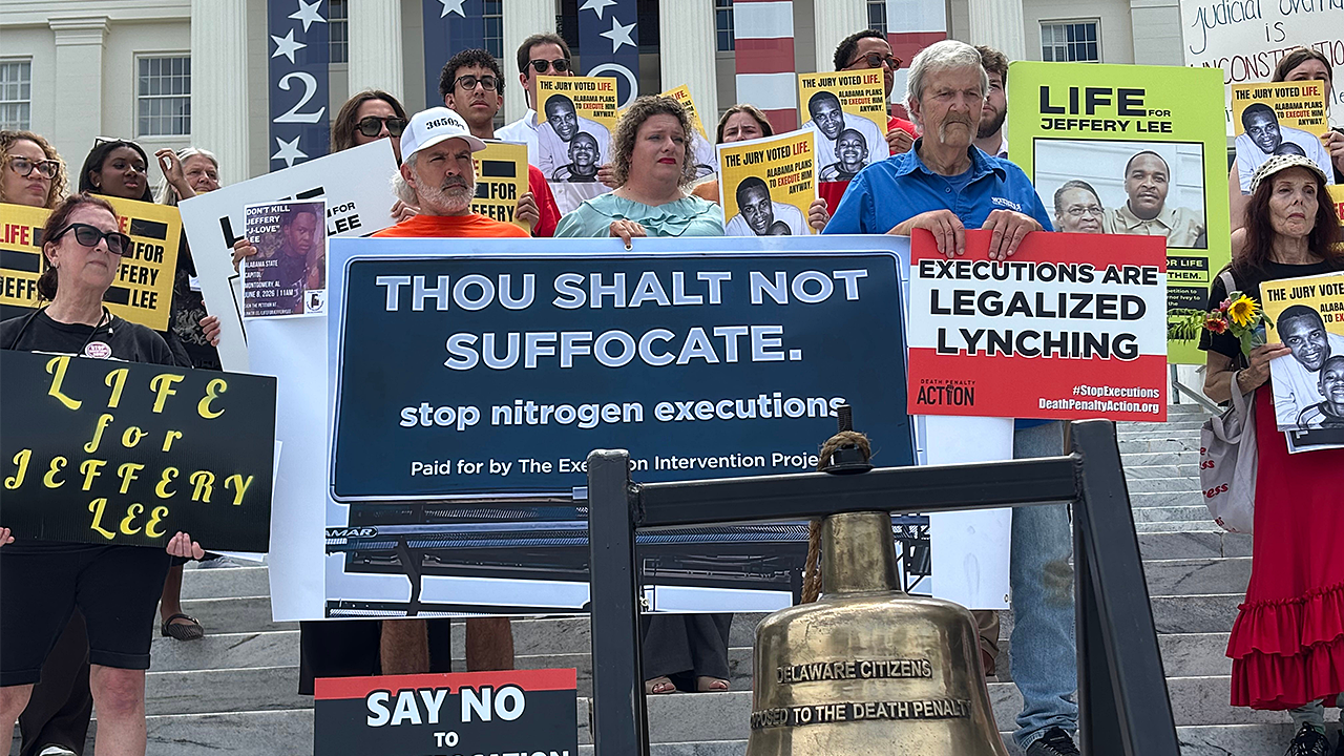
Nitrogen Execution became the focus of a major legal ruling after a federal judge halted Alabama’s planned execution of a death row inmate. The decision arrived just days before the scheduled execution and immediately reshaped the state’s plans moving forward.
The ruling centered on Jeffrey Lee, a 49-year-old inmate who was scheduled for execution later this week. However, the court concluded that Alabama’s nitrogen-based execution protocol presents an unconstitutional risk of severe suffering. As a result, the judge permanently prohibited state officials from using that specific method against Lee.
Furthermore, the decision followed a recent appellate court ruling that questioned the constitutionality of the procedure. Judges reviewing the case determined that the process could leave an inmate conscious for several minutes before losing awareness. Consequently, the court found that such circumstances may expose prisoners to unacceptable levels of suffering.
The judge stated that evidence presented during the legal challenge demonstrated a substantial risk of serious harm. Therefore, the court determined that the procedure violated constitutional protections against cruel and unusual punishment. The ruling specifically applies to the planned Nitrogen Execution involving Lee rather than banning all executions in Alabama.
Additionally, the court noted that Alabama still maintains other legally authorized execution methods. State officials may continue pursuing execution through alternatives such as lethal injection or the electric chair. The decision only prevents authorities from using the challenged nitrogen protocol in this particular case.
Meanwhile, Alabama’s attorney general has already begun efforts to challenge the ruling through the appeals process. State officials continue defending the protocol and maintain that the procedure complies with constitutional requirements. Consequently, legal observers expect the dispute to continue through higher courts.
The case has also intensified the broader national debate surrounding execution procedures and constitutional standards. Supporters of the ruling argue that prolonged awareness during an execution raises serious humanitarian concerns. On the other hand, state officials contend that no execution method can eliminate every possibility of discomfort or pain.
Alabama first introduced nitrogen-based executions in early 2024 and became the first state to use the method. The procedure works by replacing breathable air with pure nitrogen, ultimately causing death through oxygen deprivation. Since then, several executions have occurred under the protocol, drawing significant public attention and legal scrutiny.
Moreover, critics have consistently challenged the method, arguing that it creates unnecessary suffering during the execution process. Advocacy groups and legal experts have repeatedly questioned whether the procedure meets constitutional standards. Therefore, this latest court decision may influence future challenges involving similar cases.
Lee remains incarcerated for his conviction in a 1998 pawnshop robbery that resulted in two fatalities. During sentencing, jurors recommended life imprisonment, yet the presiding judge imposed a death sentence instead. Alabama later changed its laws and ended the practice of overriding jury sentencing recommendations in death penalty cases.
The Nitrogen Execution ruling now adds another significant chapter to ongoing legal disputes over execution methods nationwide. As appeals move forward, courts will continue examining whether the protocol satisfies constitutional protections. Consequently, the outcome could shape future death penalty procedures far beyond Alabama’s borders.

