
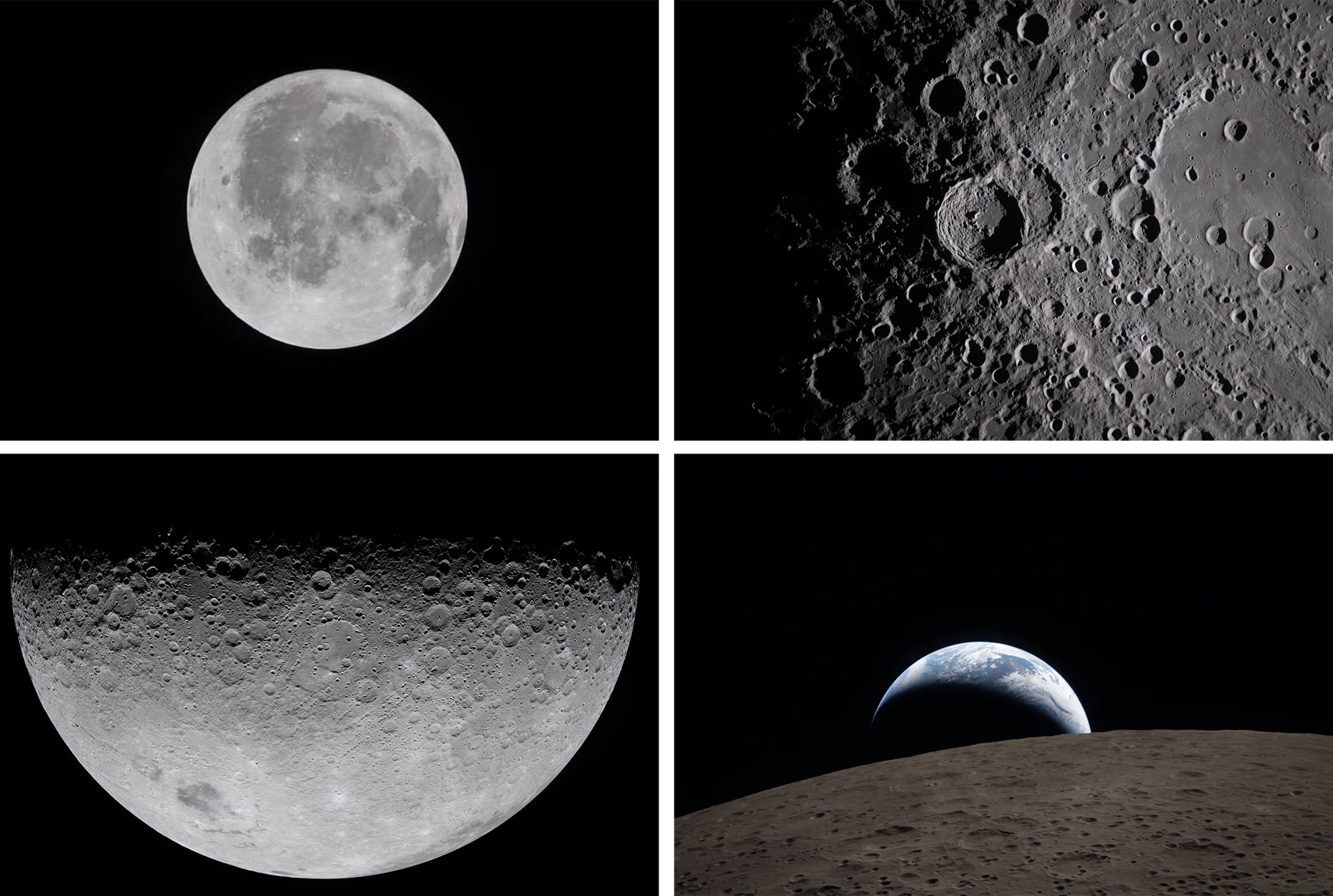
The Artemis mission reached a historic milestone as astronauts completed a lunar journey and returned safely to Earth. The mission highlighted advanced space exploration capabilities and renewed global interest in deep space travel. The Artemis mission demonstrated new achievements in human spaceflight.
The crew completed a ten-day journey that took them farther from Earth than any humans before. They traveled around the far side of the Moon and captured rare images of unexplored lunar regions during their flight.
The spacecraft launched from Florida and marked the first crewed lunar flight in more than five decades. The Artemis mission included astronauts from multiple countries who worked together throughout the journey.
The rocket and capsule underwent several delays before launch due to technical inspections and safety checks. Once cleared, the launch proceeded successfully and drew large crowds to viewing locations across the region.
During the early phase of flight, the spacecraft executed a key engine burn that set it on a lunar trajectory. This maneuver allowed the crew to escape Earth’s orbit and begin their journey toward deep space.
The astronauts then spent several days traveling through space before reaching the Moon’s gravitational influence. They observed surface features and documented areas never previously seen up close by humans.
One of the most significant moments occurred when the crew flew behind the Moon and captured detailed images. These photographs showed craters, volcanic plains, and rugged terrain along the lunar surface.
The Artemis mission also provided a rare view of Earth disappearing behind the Moon during orbital alignment. This visual moment offered scientific value and symbolic significance for space exploration history.
Additionally, the crew observed the Moon’s terminator line where light and darkness divide sharply across the surface. Astronauts reported striking visual contrasts and complex geological formations during this phase.
The mission included observations of large impact basins that help scientists study lunar history and formation processes. Researchers plan to analyze the collected images to better understand surface evolution over time.
The astronauts also documented the Moon’s south polar region, which remains a key target for future exploration missions. This area may contain ice deposits that could support long term human presence.
During the return journey, the crew witnessed a rare solar eclipse from space and recorded detailed observations. They also reported seeing brief flashes on the lunar surface caused by meteor impacts.
The Artemis mission included careful coordination between spacecraft systems and mission control teams throughout all phases. Engineers monitored performance closely to ensure safety during the high-speed return to Earth.
As the spacecraft reentered Earth’s atmosphere, it endured extreme temperatures and structural stress. The heat shield protected the capsule while it slowed down through controlled atmospheric descent.
Parachutes deployed successfully and guided the capsule toward a safe landing in the Pacific Ocean. Recovery teams quickly reached the landing site and confirmed the crew’s safe return.
The Artemis mission concluded with a successful splashdown and marked a major step toward future lunar exploration goals. Officials confirmed that the data collected will support upcoming missions and long-term space planning.

