
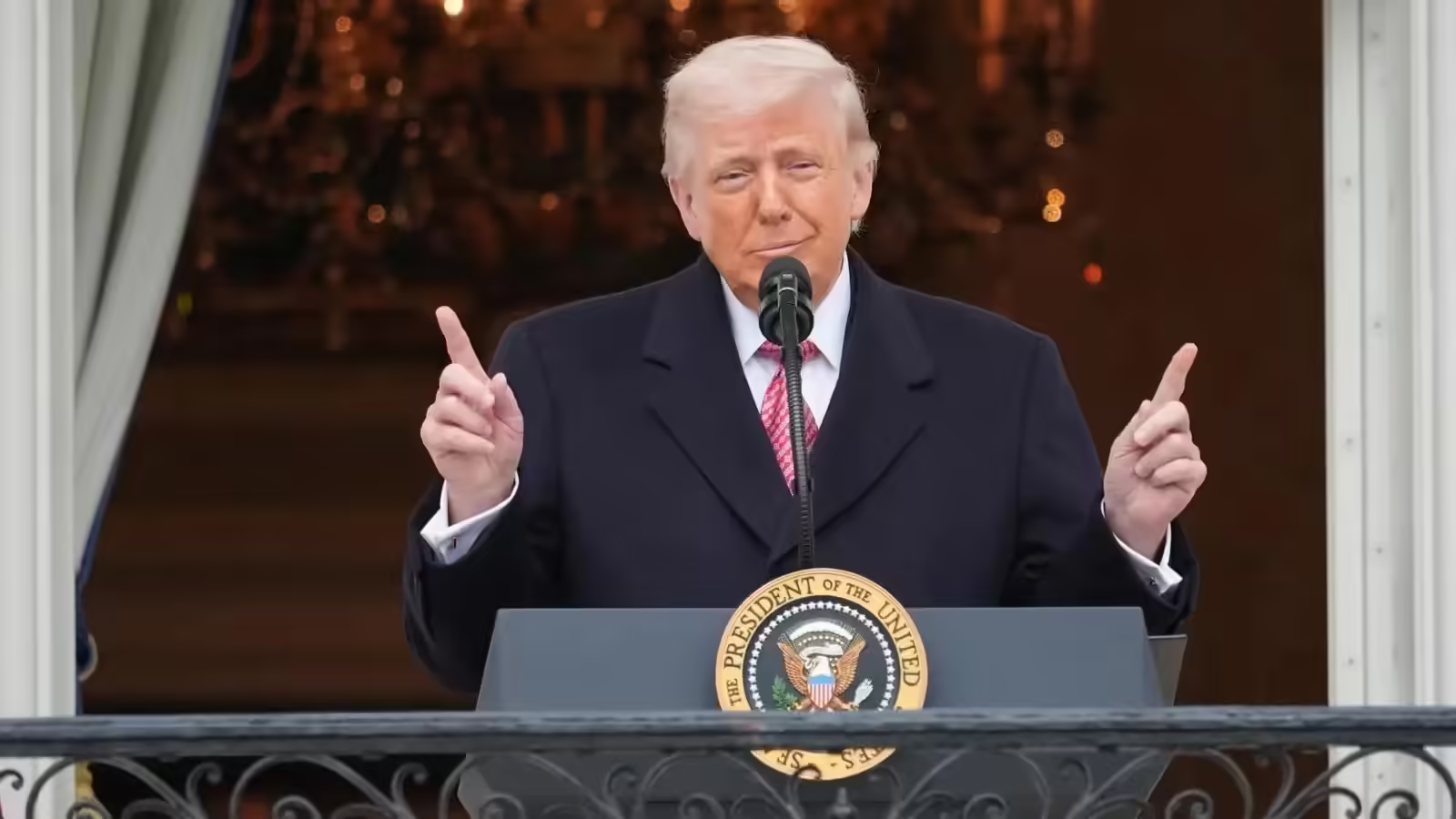
President Donald Trump unveiled a sweeping defense budget plan proposing $1.5 trillion in military spending. The defense budget plan prioritizes strengthening national security and countering emerging global threats from China, Russia, and other nations. It also cuts billions from domestic programs, signaling a significant shift in federal spending toward defense priorities.
The proposal allocates roughly $1.1 trillion in base discretionary funding to the Department of Defense. Additionally, it designates $350 billion in mandatory funding to support munitions production and expand the domestic defense industrial base. Officials say these steps will restore U.S. military readiness and capabilities.
Weapons modernization forms a central pillar of the defense budget plan, funding nuclear systems, munitions, and naval shipbuilding programs. The plan requests $65.8 billion to build 18 Navy battle force ships and 16 non-battle vessels, boosting maritime strength. The F-47 sixth-generation fighter also receives continued support, with a first flight targeted as early as 2028.
The proposal emphasizes emerging technologies, including artificial intelligence, drones, and counter-drone systems. Officials continue funding the “Golden Dome” missile defense system to create a layered homeland defense. Defense leaders argue these investments will help maintain strategic advantages against adversaries.
While defense funding rises sharply, the plan reduces nondefense discretionary programs by 10%, lowering overall funding to roughly $660 billion. NASA, the State Department, the EPA, Labor, and Housing and Urban Development would face deep cuts. Lawmakers are likely to challenge these reductions, especially those affecting scientific research, housing, and foreign aid.
The budget also increases funding for border security and domestic law enforcement. It expands resources for the Department of Homeland Security, the Department of Justice, detention capacity, Coast Guard operations, and countering violent crime, drug trafficking, and cartel activity. The plan establishes a $5 billion fund to strengthen strategic partnerships with allied nations.
Officials tie industrial policy directly to national security, promoting domestic production of critical minerals and investments in advanced computing. Analysts say these initiatives will reduce reliance on foreign suppliers and improve long-term U.S. competitiveness. The plan assumes steady economic growth near 3% annually and inflation around 2%, though outside experts may scrutinize these projections.
The defense budget plan now moves to Congress, where lawmakers will debate the proposed spending increases and domestic cuts. Although presidents rarely see budgets passed exactly as written, this proposal clearly communicates the administration’s priorities for the upcoming fiscal year.

