
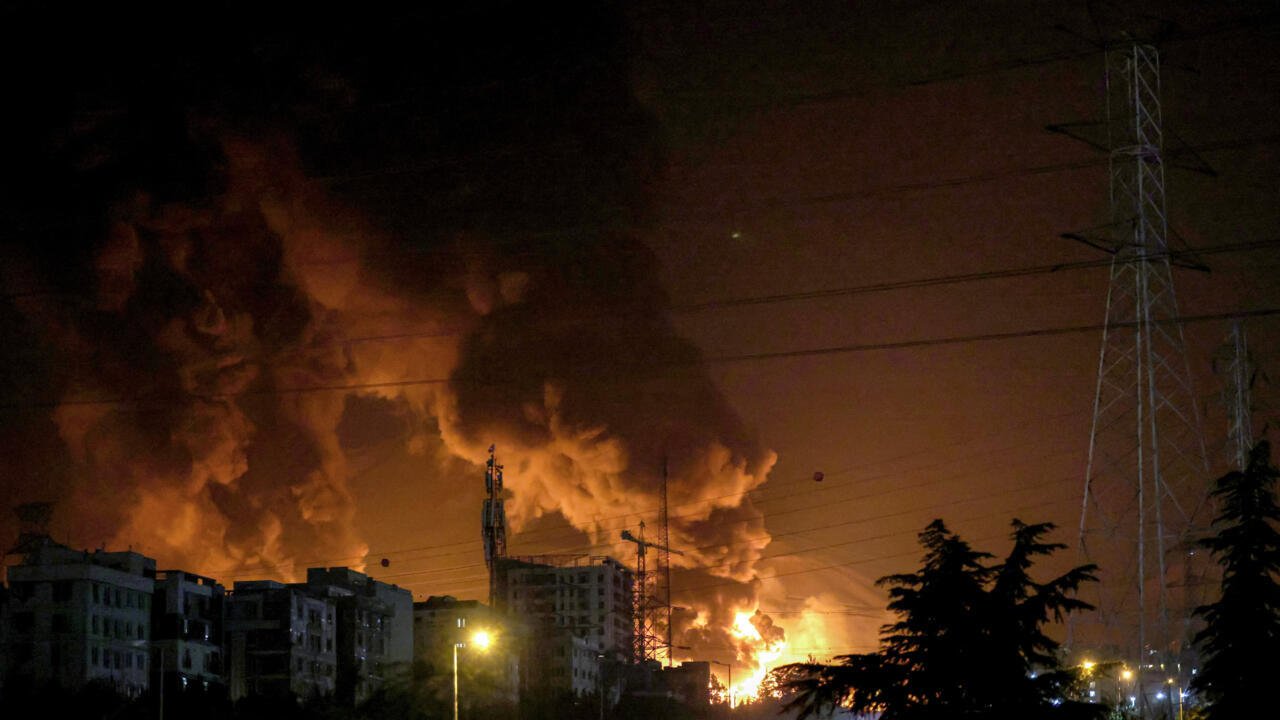
Iran Missile Response intensified sharply as Tehran launched fresh missile salvos while preparing funeral ceremonies for Supreme Leader Ayatollah Ali Khamenei on the war’s second day. The escalating confrontation between Iran, the United States, and Israel signaled a widening regional crisis with mounting civilian and military risks.
Iranian forces targeted ships and multiple countries across the Middle East with coordinated missile strikes overnight. Israeli emergency services confirmed that at least eight people died during the latest barrage.
Meanwhile, American officials reported no confirmed U.S. casualties following the initial joint strikes. However, Washington increased security measures across regional installations as tensions surged dramatically.
Crowds gathered in Tehran and other cities for the funeral of Ayatollah Khamenei. The longtime leader died alongside roughly forty senior officials during coordinated American and Israeli air operations.
State authorities organized large processions while promising retaliation against both Washington and Tel Aviv. Many supporters mourned publicly, although some Iranians celebrated the fall of the theocratic leadership.
At the same time, protests erupted in several neighborhoods condemning foreign military intervention. Demonstrators carried banners criticizing both the United States and Israel for escalating violence.
The remaining leadership quickly announced interim governance arrangements to maintain stability during uncertainty. President Masoud Pezeshkian assumed a central coordinating role within the transitional structure.
Across Israel, air raid sirens sounded repeatedly as missiles crossed into Israeli territory. Defense systems intercepted many projectiles, yet several struck populated areas, causing fatalities and structural damage.
Furthermore, Iran warned regional governments hosting American forces that they could face additional attacks. Analysts cautioned that expanding hostilities might disrupt shipping lanes and energy infrastructure.
In Jerusalem, the United States Embassy issued a security alert urging Americans to shelter immediately. Officials stated that they could not evacuate or directly assist U.S. citizens seeking departure.
The embassy ordered government personnel and their families to remain near their residences. Authorities also announced the closure of consular services in both Jerusalem and Tel Aviv.
Officials confirmed that Ben Gurion Airport remained closed to all civilian flights. Travelers faced uncertainty as airlines suspended operations amid ongoing missile threats.
The embassy reminded citizens to identify nearby shelters and remain vigilant at all times. Security conditions, officials emphasized, could deteriorate rapidly without prior warning.
During last year’s conflict between Israel and Iran, many Americans struggled to leave. Some arranged costly private evacuations through neighboring Jordan or maritime routes.
Now, Iran Missile Response defines a volatile second day of war across the region. Governments worldwide monitor developments closely as the conflict threatens broader destabilization.