
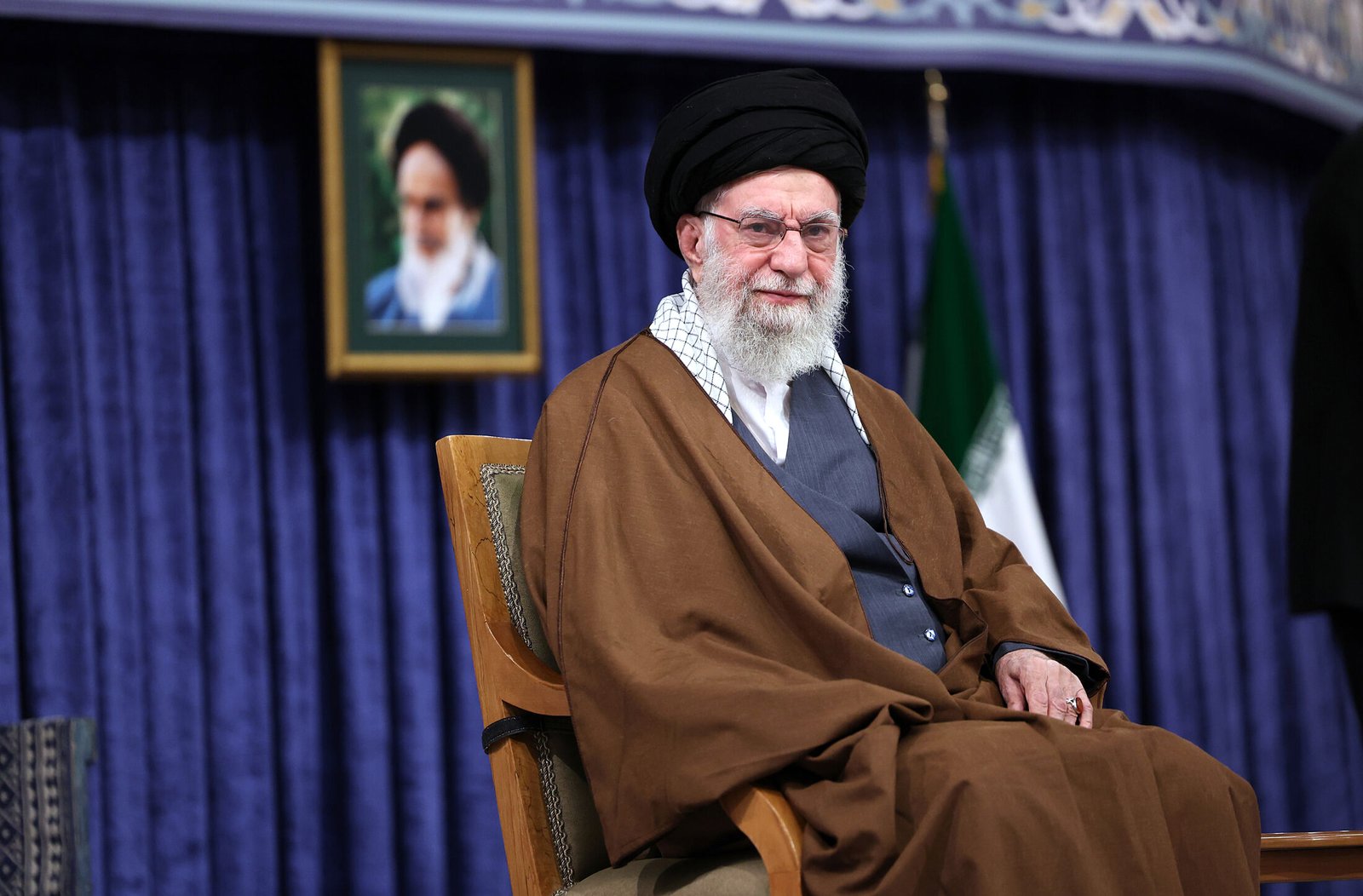
Iran Strikes Fallout deepened dramatically after President Donald Trump announced that Iran’s Supreme Leader Ayatollah Ali Khamenei died in coordinated American and Israeli airstrikes targeting Tehran. The unprecedented operation reshaped Middle Eastern geopolitics overnight and triggered immediate retaliation across several regional capitals.
President Trump declared that US intelligence tracked Khamenei precisely before launching the decisive assault alongside Israeli forces. He described the Iranian leader as historically dangerous and framed the strike as justice for Americans and Iranians alike.
Meanwhile, satellite imagery revealed extensive destruction inside the supreme leader’s heavily guarded compound in Tehran. Blackened structures, scattered debris, and visible smoke columns suggested intense bombardment during the coordinated aerial offensive.
Israeli Prime Minister Benjamin Netanyahu signaled confidence about Khamenei’s fate before Iranian authorities acknowledged the death publicly. Eventually, state television confirmed the news and announced a forty-day national mourning period.
However, Iranian officials immediately condemned Washington and Tel Aviv, calling the operation illegal and provocative. The foreign ministry accused both governments of launching an unprovoked war that violated international norms.
Furthermore, the United Nations Security Council convened an emergency session to address escalating tensions. Several global leaders urged restraint and warned that broader conflict could destabilize energy markets worldwide.
At the same time, Iran Strikes Fallout spread across the region as Tehran launched missiles and drones toward multiple targets. Reports described explosions near American facilities in Bahrain and Qatar, alongside incidents in Kuwait, Iraq, and Jordan.
Additionally, a missile struck the Tel Aviv area, killing at least one person and injuring others. Iranian media also warned that authorities would close the strategic Strait of Hormuz following the attacks.
Military officials in Israel stated that approximately two hundred fighter jets struck hundreds of objectives across Iran. Explosions rocked Tehran, Isfahan, Qom, Karaj, and Kermanshah as successive waves targeted strategic infrastructure.
Tragically, Iranian emergency services reported more than two hundred deaths and hundreds of injuries nationwide. A strike on a girls’ school in Minab reportedly killed over one hundred people near an IRGC base.
Consequently, panic gripped Tehran as residents rushed for fuel and attempted to leave. Videos circulating online showed chaotic scenes near blast sites with frightened civilians fleeing shattered streets.
Earlier diplomatic efforts had aimed to limit Iran’s nuclear program through renewed negotiations. Although mediators described progress, President Trump expressed dissatisfaction and ultimately authorized military action.
Now, Iran Strikes Fallout threatens to transform regional alliances and redraw strategic calculations permanently. Leaders across the Middle East weigh responses carefully as markets, militaries, and civilians brace for further escalation.

