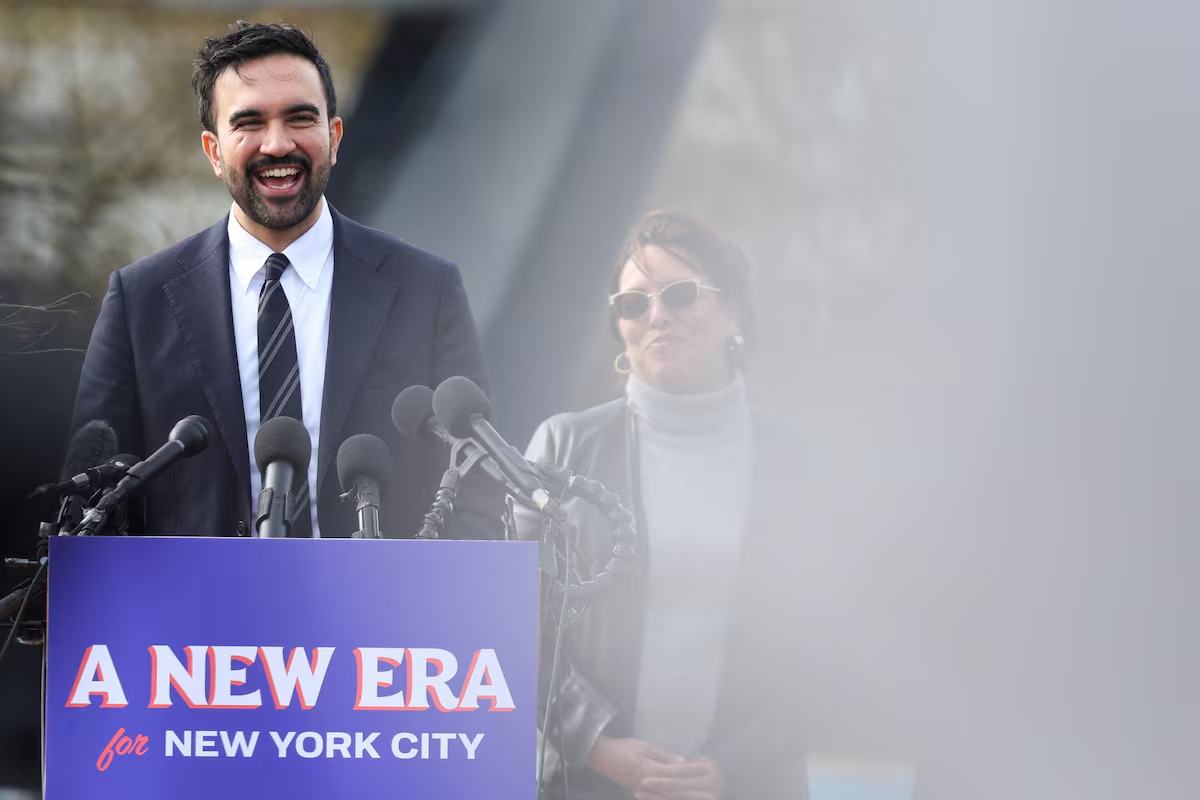
New York City faces mounting debate over the potential Rent Freeze Impact of Mayor Zohran Mamdani’s housing agenda.
Economists warn that combining a rent freeze with higher property taxes could severely disrupt the city’s housing market. Moreover, they argue that landlords would face shrinking revenues while expenses climb steadily. Consequently, analysts describe the proposal as a double blow to property owners and investors.
Zohran Mamdani centered his campaign on affordability and tenant relief across the city. His plan would freeze rents for roughly two million stabilized apartments immediately. In addition, his broader budget envisions tax increases on corporations and high earners.
The proposed fiscal framework totals approximately 127 billion dollars in spending commitments. Furthermore, the plan includes a potential 9.5 percent property tax hike. If state lawmakers decline to intervene, city officials could implement that increase locally.
Edward Pinto of the American Enterprise Institute Housing Center criticized the combined measures strongly. He argued that capping rents while raising taxes would compress landlord income dramatically. Therefore, he predicted declining multifamily property values across the five boroughs.
Pinto also warned that single-family homeowners could feel secondary effects. As market values adjust downward, broader neighborhood property prices might weaken. Consequently, homeowners unrelated to rent stabilization could still experience financial strain.
E.J. Antoni from the Heritage Foundation echoed similar concerns about price controls. He stated that economists across ideological lines often link rent controls with housing shortages. Additionally, he warned that property quality tends to decline when owners cannot recover rising costs.
Emily Hamilton of the Mercatus Center expanded on the supply argument. She contended that existing rent regulations already constrain investment and maintenance decisions. Thus, she believes the Rent Freeze Impact would further reduce available rent-stabilized units.
Supporters of the mayor note that the proposal also includes building two hundred thousand affordable units. However, critics argue that regulatory barriers, including the 1961 zoning framework, already limit new development opportunities. Therefore, they maintain that easing construction rules might address root supply shortages more effectively.
With billions in property value and millions of renters involved, the stakes remain enormous. Ultimately, the Rent Freeze Impact could shape New York City’s housing market trajectory for decades.