
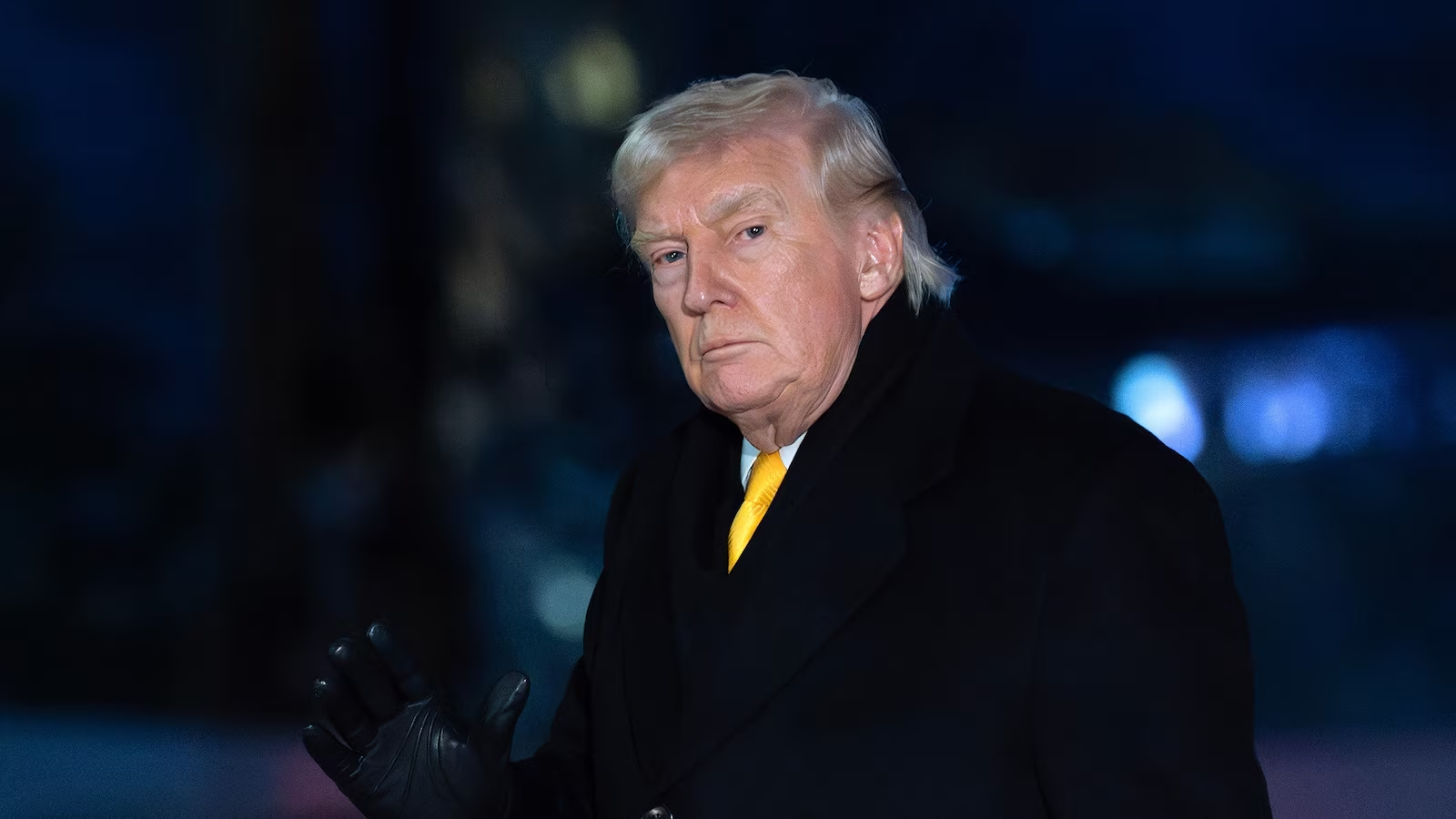
The National Governors Association will not hold a formal meeting with President Donald Trump this month. The organization made the decision after the White House reportedly excluded Democratic governors from the event. This annual gathering historically brings together leaders from both parties. The cancellation marks a significant break from a longstanding tradition of federal-state collaboration.
Brandon Tatum, the chief executive of the National Governors Association, expressed disappointment in a formal statement. However, he confirmed the White House shifted the event to a partisan occasion. The administration disinvited individual governors from the sessions. Therefore, Tatum argued this move undermines productive federal-state collaboration opportunities. He emphasized the need for institutions to stand for unity and constructive engagement.
Oklahoma Governor Kevin Stitt serves as the association’s chairman. He informed fellow governors the organization would no longer facilitate the event. The gathering was scheduled for February 20 in Washington. Furthermore, Stitt stressed the association represents all governors equally. This includes leaders from all 50 states and five United States territories. The decision therefore reflects the organization’s commitment to bipartisanship.
Democratic governors quickly united in response to the reported snub. Kentucky Governor Andy Beshear leads the Democratic Governors Association. He joined 17 other Democratic governors in a joint statement. Moreover,the group included Michigan’s Gretchen Whitmer and California’s Gavin Newsom. The governors affirmed they would not attend any White House events. They described the administration’s approach as divisive and disappointing.
The governors emphasized their record of working across party lines. They argued President Trump creates chaos and division at every turn. Therefore, the bipartisan governors meeting has historically provided productive collaboration opportunities. The governors stated they remain committed to protecting their constituents. However they will not participate in an exclusionary event.
The White House did not immediately respond to requests for comment. This silence leaves questions about the administration’s intentions unanswered. Also, the National Governors Association continues its regular operations without the White House session. The organization maintains its focus on serving all governors equally.
Tensions between the White House and Democratic governors are not new. President Trump clashed with Maine Governor Janet Mills during last year’s gathering. Therefore, the dispute centered on transgender athlete participation policies. Mills told the president her state would see him in court. Trump predicted the confrontation would end her political career. Mills is now running for the United States Senate.
The bipartisan governors meeting has endured through multiple administrations. Both Republican and Democratic presidents previously hosted the event. Moreover, the tradition symbolized a commitment to collaboration regardless of party control. This year’s cancellation therefore carries symbolic weight beyond the immediate dispute. It signals a deepening divide between the White House and state leaders.
Governors from both parties must still address pressing state issues. Federal partnerships remain essential for disaster response and infrastructure funding. The breakdown of this annual meeting removes a key communication channel. State leaders now face uncertainty about alternative collaboration methods. The White House has not proposed a replacement event.
The National Governors Association will proceed with its scheduled Washington meetings. However, he organization will host events from February 19 through February 21. However the traditional White House dinner will not occur. Governors will conduct business without the presidential address. This adjustment changes the tone of the annual gathering significantly.
Observers note the cancellation affects more than ceremonial traditions. Governors rely on these meetings to discuss mutual challenges. They coordinate responses to natural disasters and economic issues. The absence of White House participation limits these discussions. State leaders must now find informal ways to communicate federal needs.
Therefore, the coming weeks will reveal the broader political implications. Other bipartisan institutions may face similar pressures. The National Governors Association prioritized its commitment to equal representation. This decision reinforces the value of nonpartisan governance. The organization declined to facilitate an event that excluded members. That principle guided the cancellation of the bipartisan governors meeting.
Furthermore, President Trump frequently emphasizes loyalty within his administration. His approach to bipartisan events reflects this priority. The decision to invite only Republican governors aligns with his governing style. Yet it breaks with presidential precedent dating back decades. Former presidents actively sought input from governors of both parties. This change represents a significant shift in executive branch engagement.
Democratic governors continue their unified stance against the exclusion. Their joint statement emphasized collective refusal to participate. This solidarity prevents the White House from dividing state leaders. Moreover, it also sends a clear message about expectations for presidential conduct. Therefore, the governors demand equal treatment regardless of party affiliation.
The bipartisan governors meeting will not occur this year. Its absence leaves a void in Washington’s winter calendar. More importantly it removes a platform for productive dialogue. Also, Governors and the president now lack a formal venue for collaboration. The relationship between state and federal leadership faces new strains. Both sides must determine how to rebuild trust moving forward.