
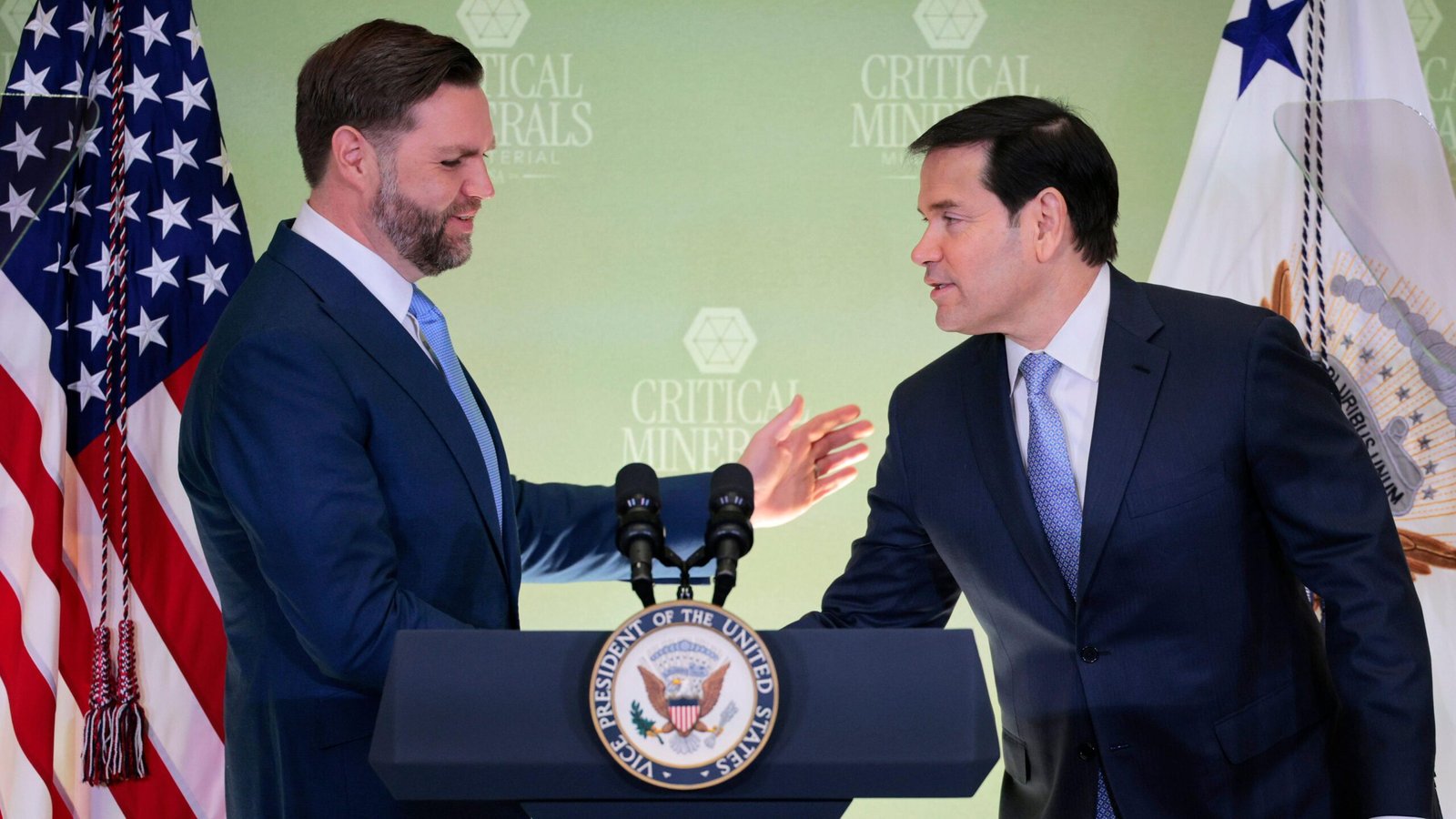
The United States has launched a new plan to secure critical minerals. These minerals are essential for smartphones, electric vehicle batteries, and weapons. Therefore, the U.S. aims to reduce dependence on foreign sources and boost domestic production. Recently, the first Critical Minerals Ministerial brought together representatives from the UK, Japan, India, South Korea, Australia, the European Union, and the Democratic Republic of Congo.
During the meeting, delegates discussed access to minerals vital for modern technology. Vice President JD Vance and Secretary of State Marco Rubio spoke at the event. They highlighted that foreign supply often floods the market, making it hard for countries with deposits to attract investment. Moreover, they avoided naming any country directly.
The U.S. will use tariffs to prevent mineral prices from falling too low. This step aims to encourage investment in domestic mining projects. Additionally, David Copley, a special assistant to the President, stated that the government will invest hundreds of billions of dollars into mining. Already, companies like MP Materials and Lithium Americas have received funding. Furthermore, trade policies are a key part of the strategy. U.S. Trade Representative Jamieson Greer said the U.S., Japan, and the European Commission will coordinate to prevent problems in mineral supply. By working together, they hope to secure access to essential materials.
Earlier, the U.S. announced a critical mineral reserve called Project Vault. This reserve, valued at nearly $12 billion, will store important minerals for future use. As a result, industry leaders welcomed the move, saying it strengthens the country’s capabilities. However, China continues to dominate rare earth mining and processing. Recently, Beijing limited exports, which put pressure on U.S. industries. Therefore, analysts believe China uses this control as leverage in trade negotiations.
In addition, the ministerial event occurred on the same day as a phone call between U.S. President Trump and Chinese President Xi Jinping. The call was described as very positive. Consequently, the U.S. is combining investment, trade coordination, and strategic reserves to ensure stable critical mineral supply. Experts note that controlling critical minerals is crucial for national security and economic growth. By taking these steps, the U.S. hopes to rely less on foreign sources while promoting domestic production.

