
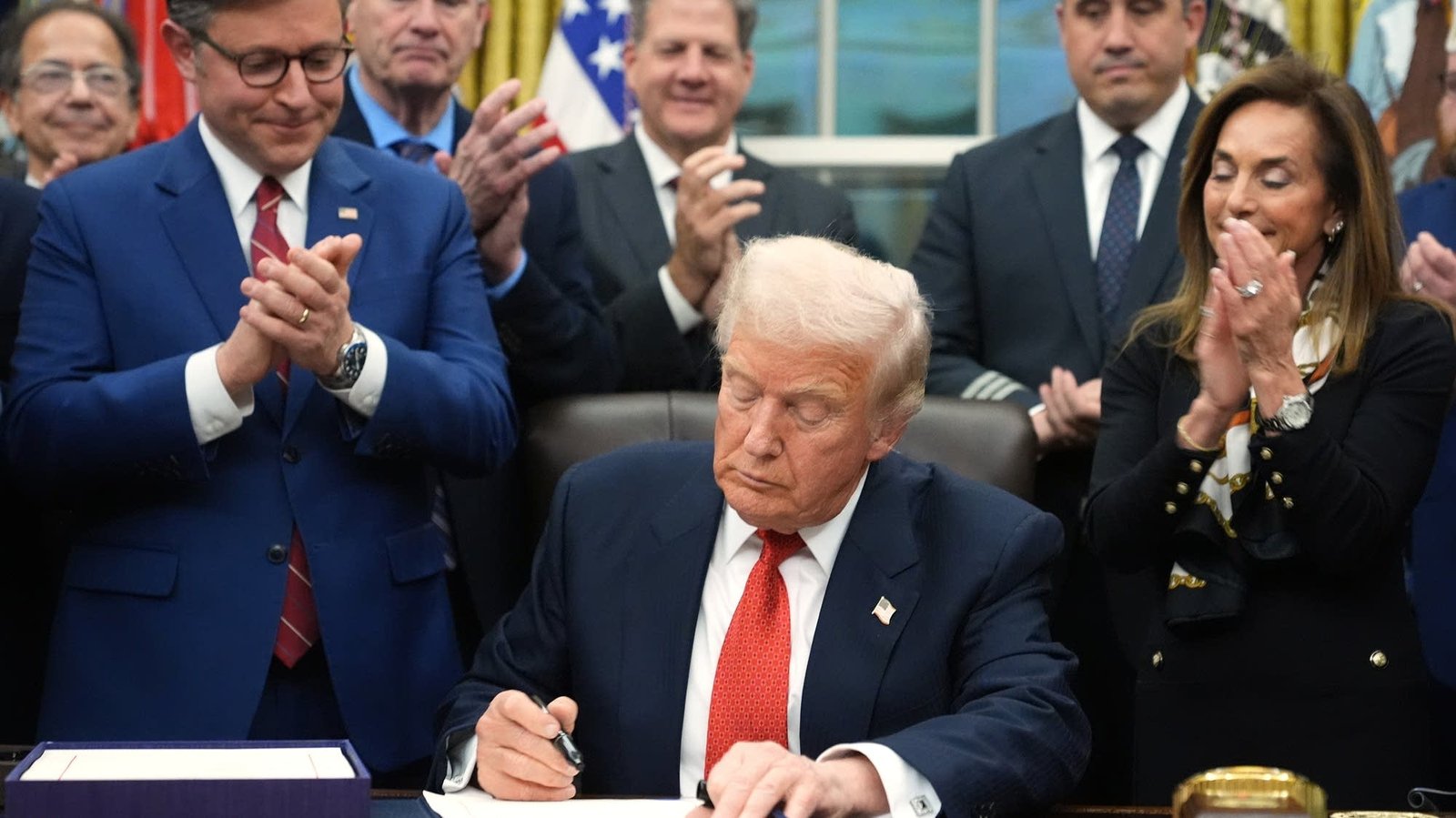
President Donald Trump officially ended the longest government shutdown in U.S. history this week, bringing relief to millions. The government shutdown end ensures federal employees receive back pay and restores services disrupted by the lapse. Lawmakers and citizens alike welcomed the action after weeks of halted operations.
Trump signed the legislation on Wednesday evening after both the House and Senate approved the measure earlier in the week. The bill maintains funding at fiscal year 2025 levels through January 30, giving Congress time to negotiate the 2026 budget. Officials said the temporary funding prevents further economic disruption and restores stability to federal programs.
The legislation also secured funding for the Supplemental Nutrition Assistance Program, which supports more than 42 million Americans. The program helps low-income individuals and families buy groceries. By keeping SNAP active, the government shutdown directly prevents hardship for vulnerable households across the country.
Federal workers who missed paychecks during the shutdown will now receive compensation for lost wages. The bill also reverses previously planned layoffs announced earlier in October. Airline operations and other essential services, which faced delays and interruptions, will resume normal schedules.
Experts said the government shutdown end underscores the importance of timely congressional negotiations. They noted that prolonged funding gaps can disrupt federal operations, affect economic stability, and undermine public confidence in governance. Analysts also highlighted that the temporary bill provides lawmakers with additional time to craft a full appropriations package for the next fiscal year.
In addition to restoring funding, officials emphasized that ending the shutdown helps avoid broader economic consequences. Government contractors, grant recipients, and social services benefit from the continuity of operations. Treasury and transportation sectors also gain stability, preventing cascading delays in critical infrastructure and financial systems.
Lawmakers now face the challenge of negotiating a longer-term budget before the January 30 deadline. Analysts predict further debate over spending priorities and program allocations, but the immediate pressure on federal workers and citizens has eased. The government shutdown’s end demonstrates how swift legislative action can mitigate economic disruption and restore confidence in federal operations.
For more business updates, visit DC Brief.

