
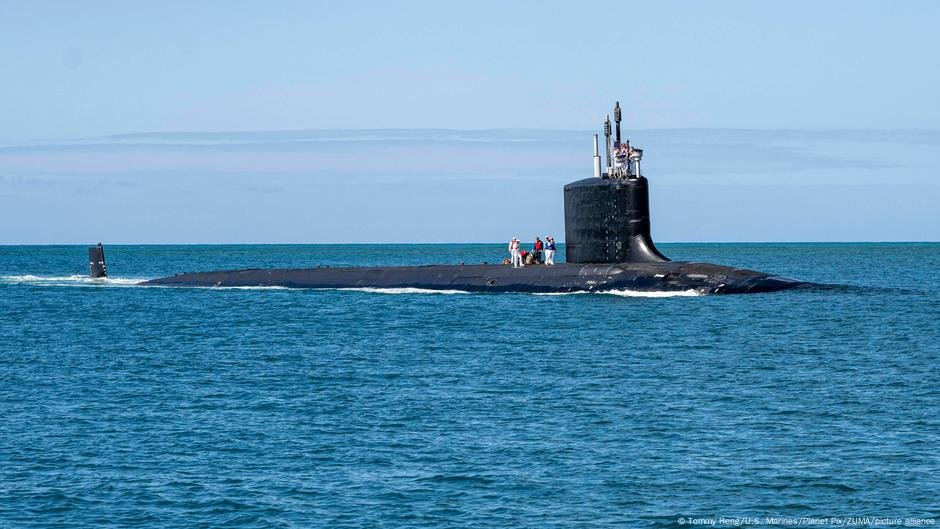
Trump’s nuclear submarine move has intensified global tensions just days before a crucial ceasefire deadline for Russia. On Sunday, President Donald Trump confirmed the submarines were already in position. Speaking before boarding Air Force One in Pennsylvania, Trump addressed the military deployment. He had ordered two nuclear submarines to counter threats from Russia. His order followed remarks from former Russian president Dmitry Medvedev about possible war with the U.S.
“I’ve already said they’re in the region where they need to be,” Trump told reporters. This confirmation came as U.S. special envoy Steve Witkoff prepares for a visit to Russia later this week. Trump announced Friday as the deadline for Russian President Vladimir Putin to reach a ceasefire with Ukraine. If Russia fails to comply, Trump threatened more tariffs and sanctions.
Trump also warned that countries buying Russian energy could face penalties. “They’re clever at dodging sanctions,” he said, suggesting stronger enforcement could follow. A reporter asked Trump how Russia could avoid sanctions. Trump gave a blunt answer: “Yeah, get a deal where people stop getting killed.” He said Russian and Ukrainian soldiers still suffer heavy losses on the battlefield.
“This war is ridiculous,” Trump said. “We’ve stopped wars before. We can stop this one too.” Trump earlier warned Medvedev to lower his aggressive rhetoric. Medvedev criticized Trump for cutting the ceasefire deadline. He also mentioned Russia’s Cold War-era nuclear system, the “Dead Hand.”
Despite Trump’s warning, Medvedev repeated his threats. He claimed Trump’s deadline targeted not just Ukraine, but Russia directly. Trump’s nuclear submarine move drew a mixed response from Moscow. Kremlin spokesman Dmitry Peskov downplayed the threat, calling U.S. submarine patrols a “constant process.” He denied the deployment marked an escalation.
Peskov also stated that Russia remains committed to nuclear restraint. “We treat nuclear issues with extreme caution,” he said during a press conference. Meanwhile, Russia and China are conducting joint military drills in the Sea of Japan. Four Chinese warships are involved, simulating air defense and maritime combat scenarios.
Beijing insisted the drills were routine. China’s defense ministry said the training does not target any specific country or current conflict. However, tensions between China and the U.S. also continue to grow. American forces are running their largest-ever Pacific military exercise, “Resolute Force,” alongside allies like Japan.
China accused the U.S. of using drills to provoke and pressure regional powers. A Chinese spokesperson said the U.S. aims to “undermine peace” with military posturing. Meanwhile, Trump continues to press economic pressure on multiple fronts. He recently imposed a 25% tariff on India, criticizing its trade barriers and energy purchases from Russia.
Trump’s nuclear submarine move has sparked heated debate over global security, presidential authority, and the next steps in U.S. foreign policy. With the ceasefire deadline approaching, the world waits for Putin’s response.
For more political updates, visit DC Brief.

